
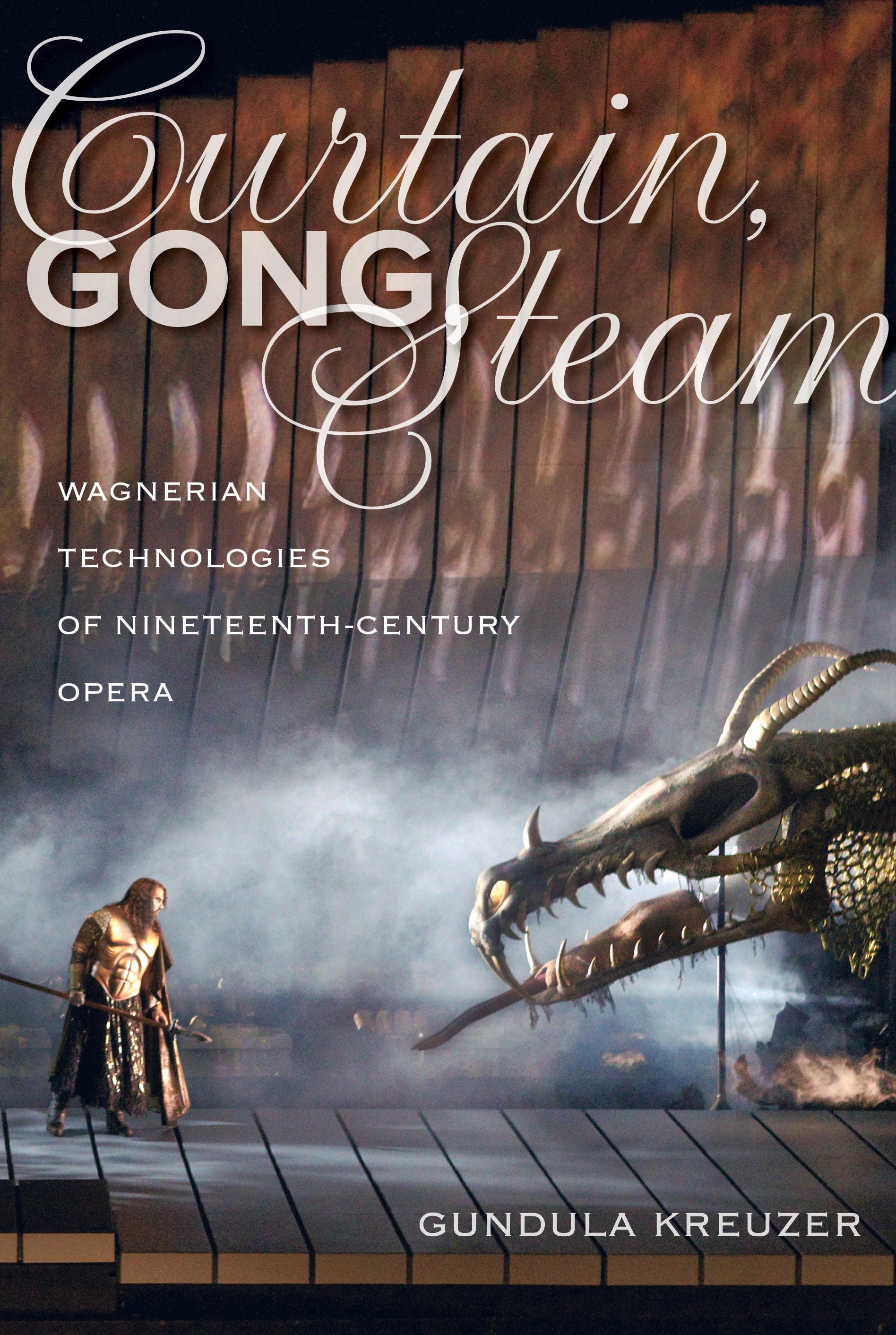
In this innovative book, Gundula Kreuzer argues for the foundational role of technologies in the conception, production, and study of nineteenth-century opera. She shows how composers increasingly incorporated novel audiovisual effects in their works and how the uses and meanings of the required apparatuses changed through the twentieth century, sometimes still resonating in stagings, performance art, and popular culture today. Focusing on devices (which she dubs “Wagnerian technologies”) intended to amalgamate opera’s various media while veiling their mechanics, Kreuzer offers a practical counternarrative to Wagner’s idealist theories of total illusionism. At the same time, Curtain, Gong, Steam’s multifaceted exploration of the three titular technologies repositions Wagner as catalyst more than inventor in the history of operatic production. With its broad chronological and geographical scope, this book deepens our understanding of the material and mechanical conditions of historical operatic practice as well as of individual works, both well known and obscure.
Pay easily by card, Klarna, Apple Pay or Google Pay. Not happy? You always have a 14-day money-back guarantee. Read more in our terms. If you have any questions, email us at hello@memmo.org.
Memmo makes studying easier – wherever you are in the world. We bring your course books and smart study tools together in one place: summaries, quizzes, podcasts and flashcards. Plus Ted, your study buddy who answers anything you wonder. Over 75,000 students already study here – built to help you learn faster and stress less.
You might also like
Buy the book0