
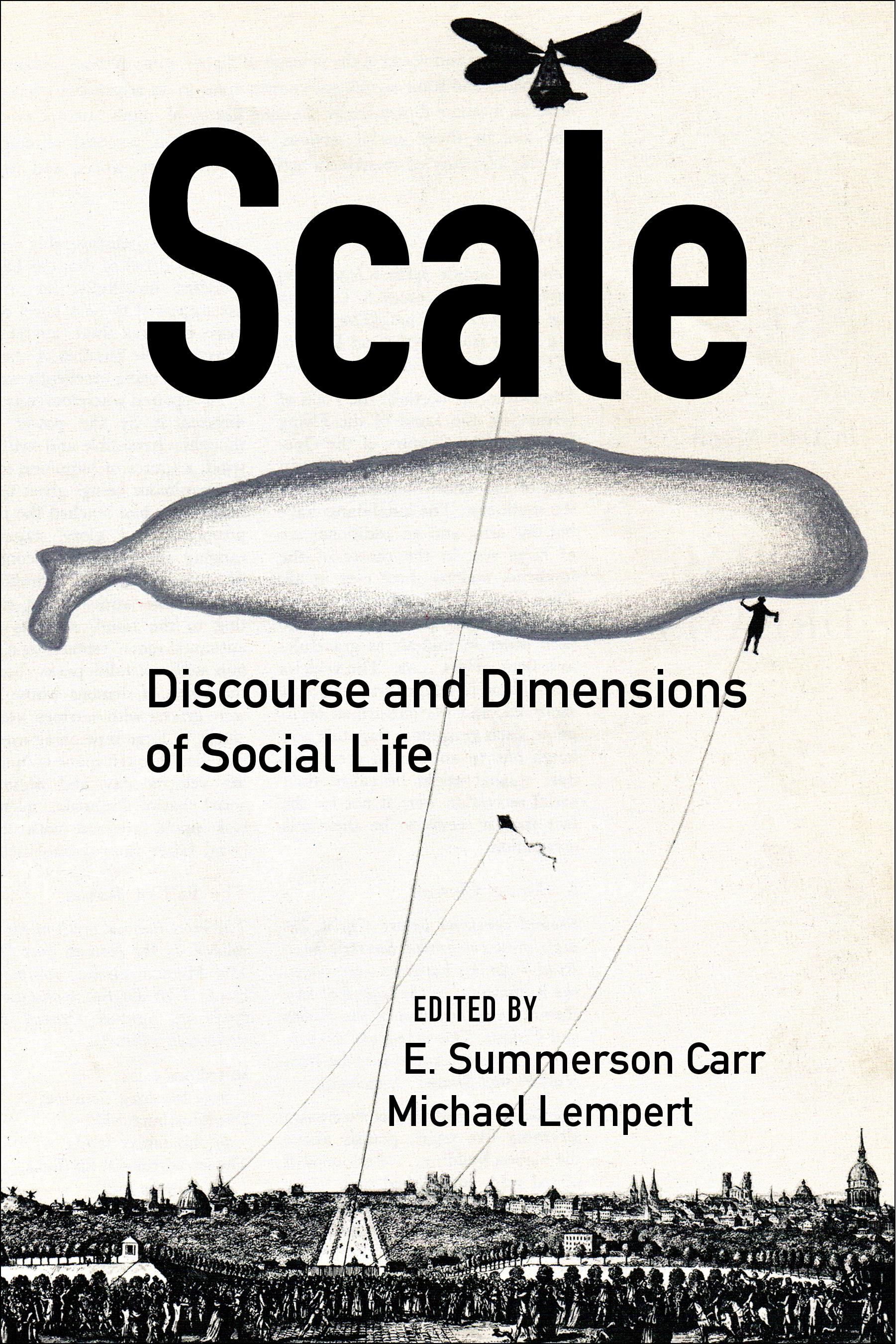
A free book version of this title is available through Luminos, University of California Press’s Open Access publishing program for monographs. Visit www.luminosoa.org to learn more.
Wherever we turn, we see diverse things scaled for us, from cities to economies, from history to love. We know scale by many names and through many familiar antinomies: local and global,micro and macroevents to name a few. Even the most critical among us often proceed with our analysis as if such scales were the ready-made platforms of social life, rather than asking how, why, and to what effect are scalar distinctions forged in the first place.
How do scalar distinctions help actors and analysts alike make sense of and navigate their social worlds? What do these distinctions reveal and what do they conceal? How are scales construed and what effects do they have on the way those who abide by them think and act? This pathbreaking volume attends to the practical labor of scale-making and the communicative practices this labor requires. From an ethnographic perspective, the authors demonstrate that scale is practice and process before it becomes product, whether in the work of projecting the commons, claiming access to the big picture, or scaling the seriousness of a crime.
Wherever we turn, we see diverse things scaled for us, from cities to economies, from history to love. We know scale by many names and through many familiar antinomies: local and global,micro and macroevents to name a few. Even the most critical among us often proceed with our analysis as if such scales were the ready-made platforms of social life, rather than asking how, why, and to what effect are scalar distinctions forged in the first place.
How do scalar distinctions help actors and analysts alike make sense of and navigate their social worlds? What do these distinctions reveal and what do they conceal? How are scales construed and what effects do they have on the way those who abide by them think and act? This pathbreaking volume attends to the practical labor of scale-making and the communicative practices this labor requires. From an ethnographic perspective, the authors demonstrate that scale is practice and process before it becomes product, whether in the work of projecting the commons, claiming access to the big picture, or scaling the seriousness of a crime.
Pay easily by card, Klarna, Apple Pay or Google Pay. Not happy? You always have a 14-day money-back guarantee. Read more in our terms. If you have any questions, email us at hello@memmo.org.
Memmo makes studying easier – wherever you are in the world. We bring your course books and smart study tools together in one place: summaries, quizzes, podcasts and flashcards. Plus Ted, your study buddy who answers anything you wonder. Over 50,000 students already study here – built to help you learn faster and stress less.
You might also like
Buy the book0