
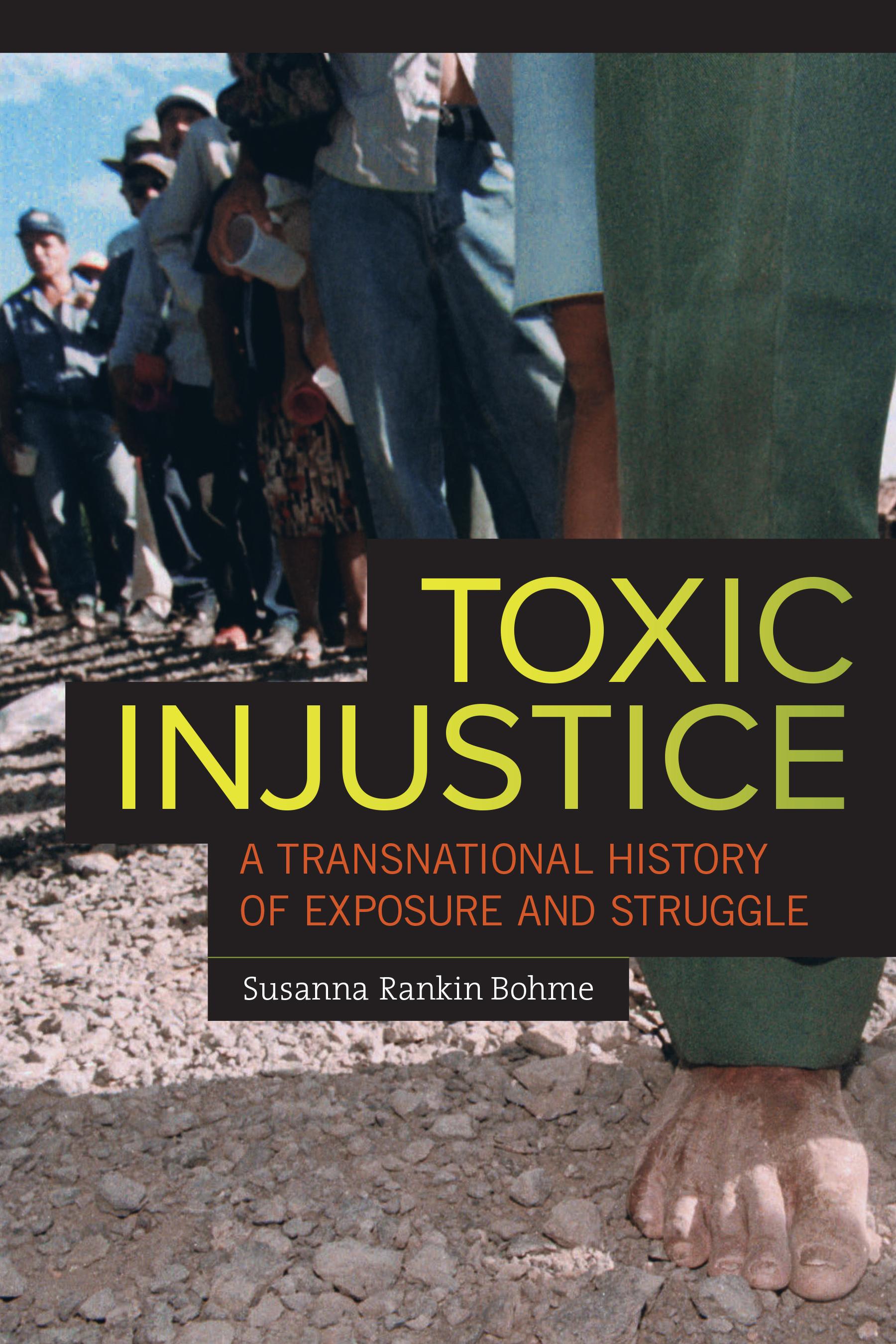
The pesticide dibromochloropropane, known as DBCP, was developed by the chemical companies Dow and Shell in the 1950s to target wormlike, soil-dwelling creatures called nematodes. Despite signs that the chemical was dangerous, it was widely used in U.S. agriculture and on Chiquita and Dole banana plantations in Central America. In the late 1970s, DBCP was linked to male sterility, but an uneven regulatory process left many workers—especially on Dole’s banana farms—exposed for years after health risks were known.
Susanna Rankin Bohme tells an intriguing, multilayered history that spans fifty years, highlighting the transnational reach of corporations and social justice movements. Toxic Injustice links health inequalities and worker struggles as it charts how people excluded from workplace and legal protections have found ways to challenge power structures and seek justice from states and transnational corporations alike.
Susanna Rankin Bohme tells an intriguing, multilayered history that spans fifty years, highlighting the transnational reach of corporations and social justice movements. Toxic Injustice links health inequalities and worker struggles as it charts how people excluded from workplace and legal protections have found ways to challenge power structures and seek justice from states and transnational corporations alike.
Pay easily by card, Klarna, Apple Pay or Google Pay. Not happy? You always have a 14-day money-back guarantee. Read more in our terms. If you have any questions, email us at hello@memmo.org.
Memmo makes studying easier – wherever you are in the world. We bring your course books and smart study tools together in one place: summaries, quizzes, podcasts and flashcards. Plus Ted, your study buddy who answers anything you wonder. Over 50,000 students already study here – built to help you learn faster and stress less.
You might also like
Buy the book0