
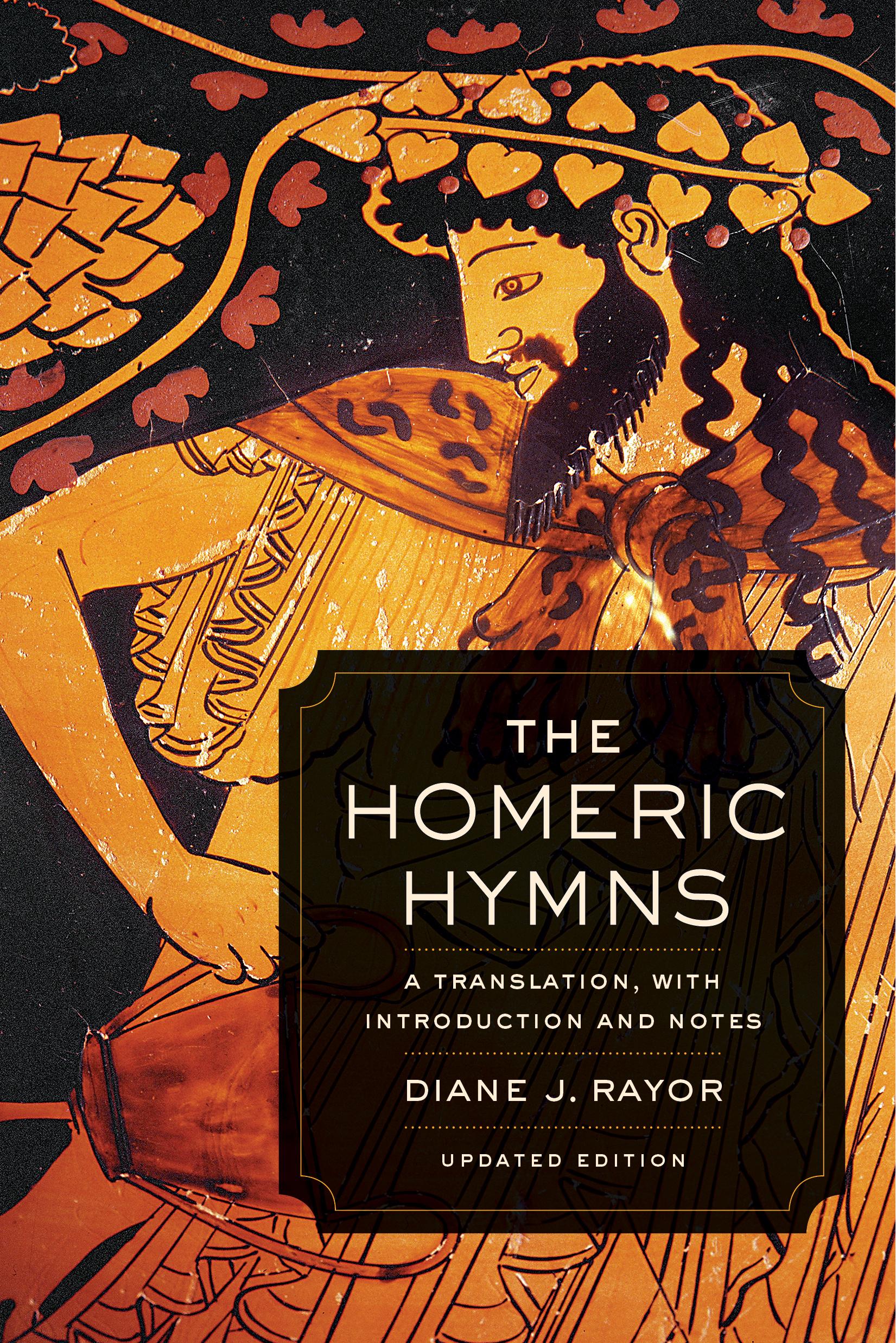
The Homeric Hymns have survived for two and a half millennia because of their captivating stories, beautiful language, and religious significance. Well before the advent of writing in Greece, they were performed by traveling bards at religious events, competitions, banquets, and festivals. These thirty-four poems invoking and celebrating the gods of ancient Greece raise questions that humanity still struggles with—questions about our place among others and in the world.
Known as "Homeric" because they were composed in the same meter, dialect, and style as Homer’s Iliad and Odyssey, these hymns were created to be sung aloud. In this superb translation by Diane J. Rayor, which deftly combines accuracy and poetry, the ancient music of the hymns comes alive for the modern reader. Here is the birth of Apollo, god of prophecy, healing, and music and founder of Delphi, the most famous oracular shrine in ancient Greece. Here is Zeus, inflicting upon Aphrodite her own mighty power to cause gods to mate with humans, and here is Demeter rescuing her daughter Persephone from the underworld and initiating the rites of the Eleusinian Mysteries.
This updated edition incorporates twenty-eight new lines in the first Hymn to Dionysos, along with expanded notes, a new preface, and an enhanced bibliography. With her introduction and notes, Rayor places the hymns in their historical and aesthetic context, providing the information needed to read, interpret, and fully appreciate these literary windows on an ancient world. As introductions to the Greek gods, entrancing stories, exquisite poetry, and early literary records of key religious rituals and sites, the Homeric Hymns should be read by any student of mythology, classical literature, ancient religion, women in antiquity, or the Greek language.
Known as "Homeric" because they were composed in the same meter, dialect, and style as Homer’s Iliad and Odyssey, these hymns were created to be sung aloud. In this superb translation by Diane J. Rayor, which deftly combines accuracy and poetry, the ancient music of the hymns comes alive for the modern reader. Here is the birth of Apollo, god of prophecy, healing, and music and founder of Delphi, the most famous oracular shrine in ancient Greece. Here is Zeus, inflicting upon Aphrodite her own mighty power to cause gods to mate with humans, and here is Demeter rescuing her daughter Persephone from the underworld and initiating the rites of the Eleusinian Mysteries.
This updated edition incorporates twenty-eight new lines in the first Hymn to Dionysos, along with expanded notes, a new preface, and an enhanced bibliography. With her introduction and notes, Rayor places the hymns in their historical and aesthetic context, providing the information needed to read, interpret, and fully appreciate these literary windows on an ancient world. As introductions to the Greek gods, entrancing stories, exquisite poetry, and early literary records of key religious rituals and sites, the Homeric Hymns should be read by any student of mythology, classical literature, ancient religion, women in antiquity, or the Greek language.
Pay easily by card, Klarna, Apple Pay or Google Pay. Not happy? You always have a 14-day money-back guarantee. Read more in our terms. If you have any questions, email us at hello@memmo.org.
Memmo makes studying easier – wherever you are in the world. We bring your course books and smart study tools together in one place: summaries, quizzes, podcasts and flashcards. Plus Ted, your study buddy who answers anything you wonder. Over 75,000 students already study here – built to help you learn faster and stress less.
You might also like
Buy the book0