
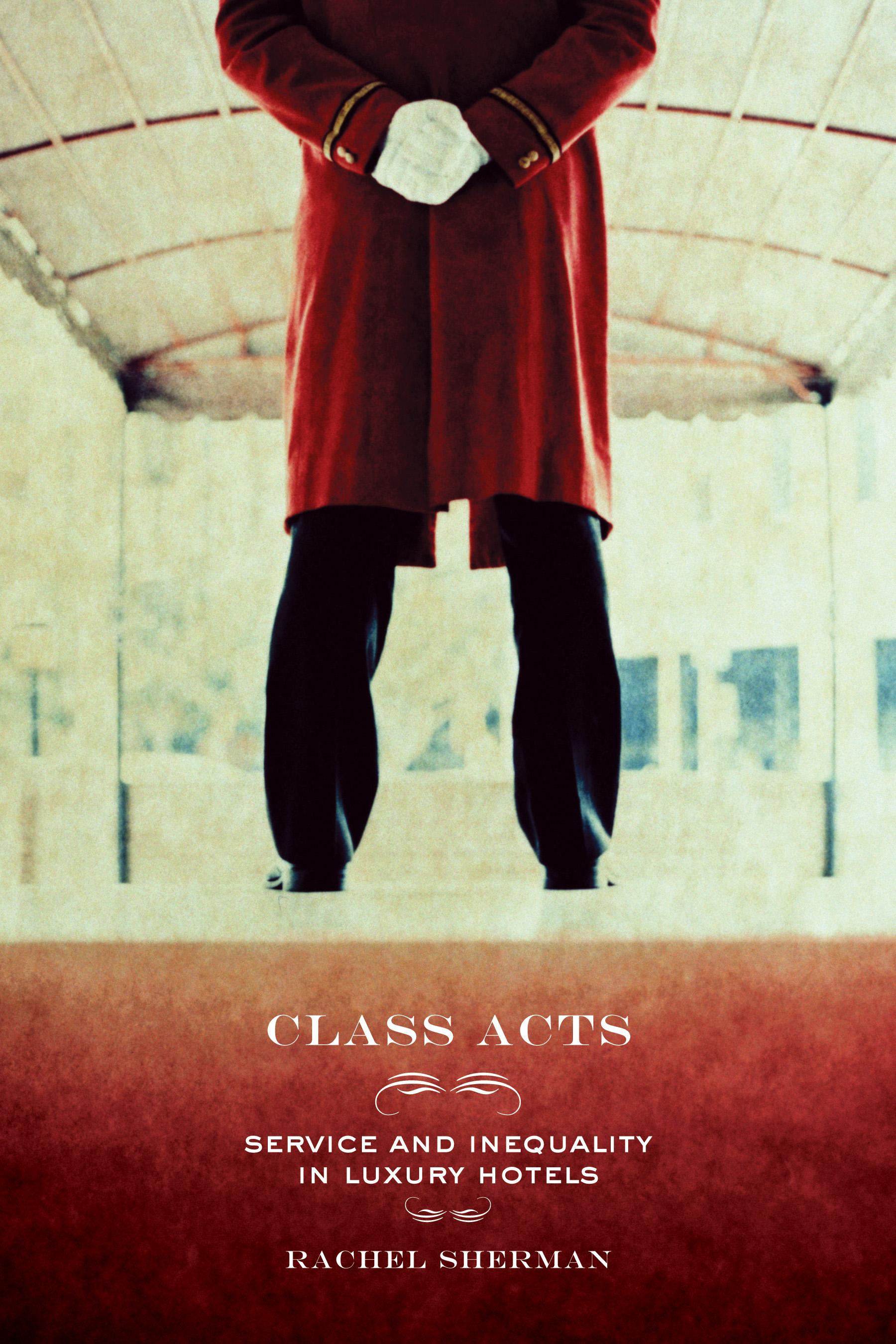
In this lively study, Rachel Sherman goes behind the scenes in two urban luxury hotels to give a nuanced picture of the workers who care for and cater to wealthy guests by providing seemingly unlimited personal attention. Drawing on in-depth interviews and extended ethnographic research in a range of hotel jobs, including concierge, bellperson, and housekeeper, Sherman gives an insightful analysis of what exactly luxury service consists of, how managers organize its production, and how workers and guests negotiate the inequality between them. She finds that workers employ a variety of practices to assert a powerful sense of self, including playing games, comparing themselves to other workers and guests, and forming meaningful and reciprocal relations with guests. Through their contact with hotel staff, guests learn how to behave in the luxury environment and come to see themselves as deserving of luxury consumption. These practices, Sherman argues, help make class inequality seem normal, something to be taken for granted. Throughout, Class Acts sheds new light on the complex relationship between class and service work, an increasingly relevant topic in light of the growing economic inequality in the United States that underlies luxury consumption.
Pay easily by card, Klarna, Apple Pay or Google Pay. Not happy? You always have a 14-day money-back guarantee. Read more in our terms. If you have any questions, email us at hello@memmo.org.
Memmo makes studying easier – wherever you are in the world. We bring your course books and smart study tools together in one place: summaries, quizzes, podcasts and flashcards. Plus Ted, your study buddy who answers anything you wonder. Over 50,000 students already study here – built to help you learn faster and stress less.
You might also like
Buy the book0