
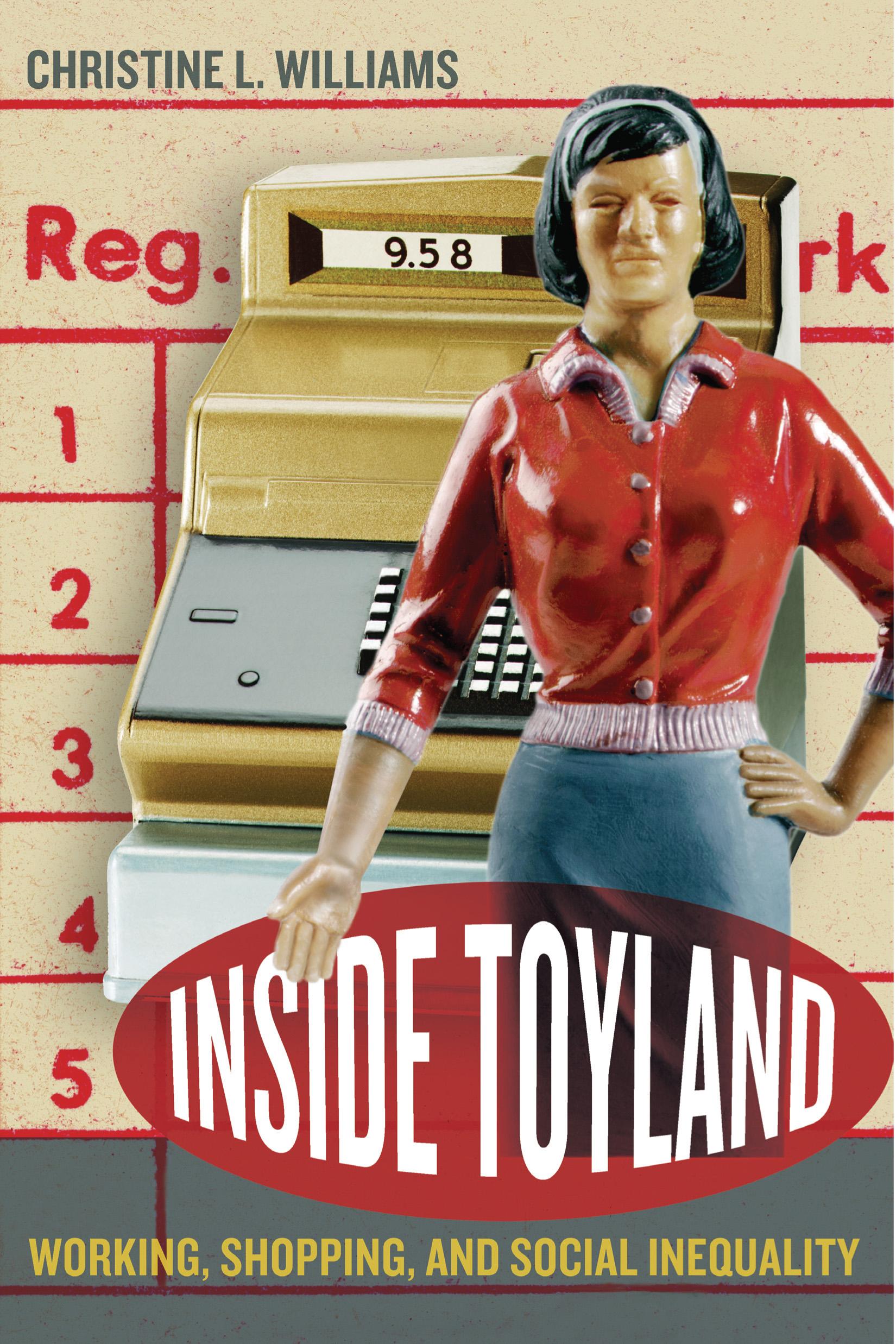
"I got my first job working in a toy store when I was 41 years old." So begins sociologist Christine Williams's description of her stint as a low-wage worker at two national toy store chains: one upscale shop and one big box outlet. In this provocative, perceptive, and lively book, studded with rich observations from the shop floor, Williams chronicles her experiences as a cashier, salesperson, and stocker and provides broad-ranging, often startling, insights into the social impact of shopping for toys. Taking a new look at what selling and buying for kids are all about, she illuminates the politics of how we shop, exposes the realities of low-wage retail work, and discovers how class, race, and gender manifest and reproduce themselves in our shopping-mall culture.
Despite their differences, Williams finds that both toy stores perpetuate social inequality in a variety of ways. She observes that workers are often assigned to different tasks and functions on the basis of gender and race; that racial dynamics between black staff and white customers can play out in complex and intense ways; that unions can't protect workers from harassment from supervisors or demeaning customers even in the upscale toy store. And she discovers how lessons that adults teach to children about shopping can legitimize economic and social hierarchies. In the end, however, Inside Toyland is not an anticonsumer diatribe. Williams discusses specific changes in labor law and in the organization of the retail industry that can better promote social justice.
Despite their differences, Williams finds that both toy stores perpetuate social inequality in a variety of ways. She observes that workers are often assigned to different tasks and functions on the basis of gender and race; that racial dynamics between black staff and white customers can play out in complex and intense ways; that unions can't protect workers from harassment from supervisors or demeaning customers even in the upscale toy store. And she discovers how lessons that adults teach to children about shopping can legitimize economic and social hierarchies. In the end, however, Inside Toyland is not an anticonsumer diatribe. Williams discusses specific changes in labor law and in the organization of the retail industry that can better promote social justice.
Pay easily by card, Klarna, Apple Pay or Google Pay. Not happy? You always have a 14-day money-back guarantee. Read more in our terms. If you have any questions, email us at hello@memmo.org.
Memmo makes studying easier – wherever you are in the world. We bring your course books and smart study tools together in one place: summaries, quizzes, podcasts and flashcards. Plus Ted, your study buddy who answers anything you wonder. Over 50,000 students already study here – built to help you learn faster and stress less.
You might also like
Buy the book0