
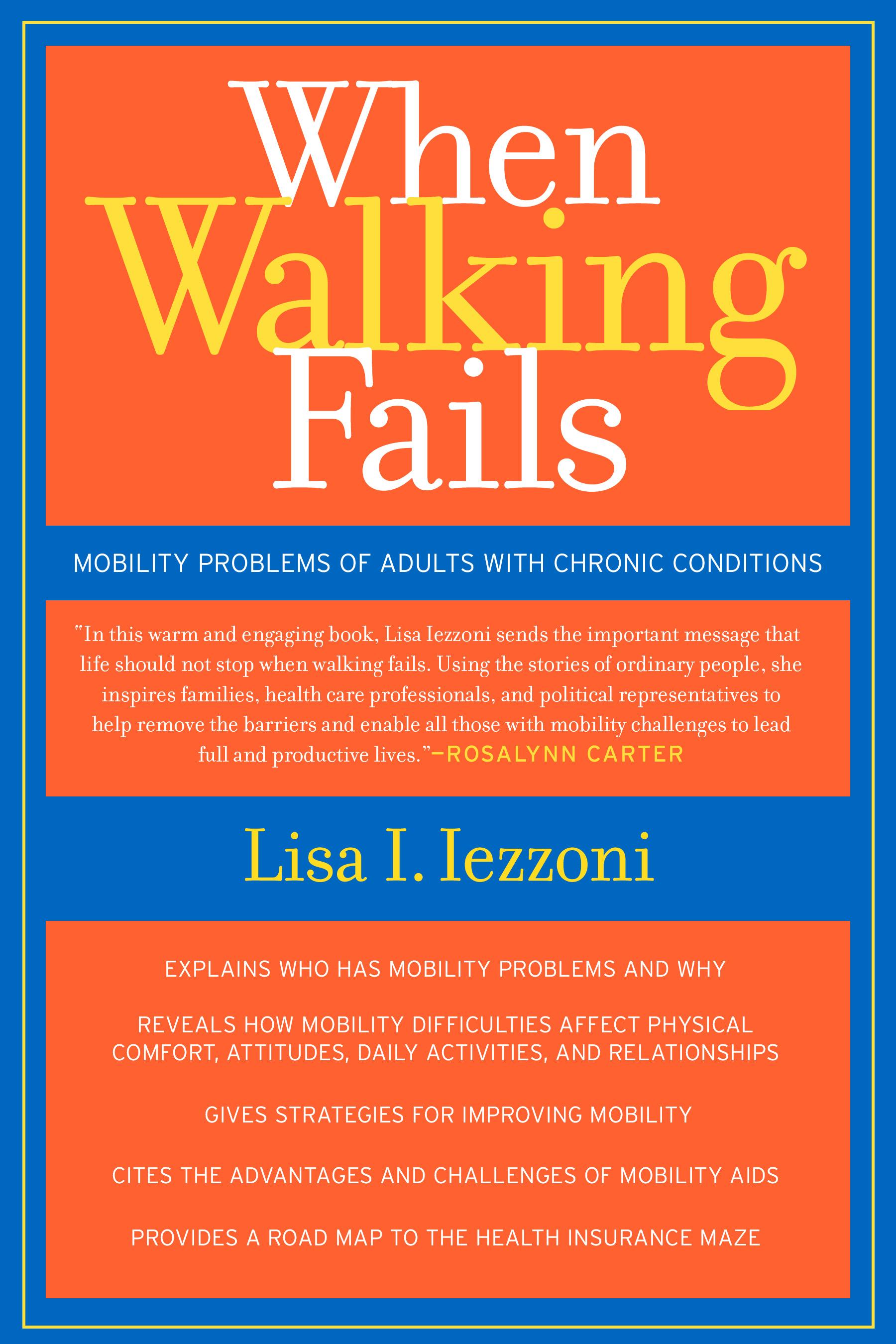
Roughly one in ten adult Americans find their walking slowed by progressive chronic conditions like arthritis, back problems, heart and lung diseases, and diabetes. In this passionate and deeply informed book, Lisa I. Iezzoni describes the personal experiences of and societal responses to adults whose mobility makes it difficult for them to live as they wish—partly because of physical and emotional conditions and partly because of persisting societal and environmental barriers.
Basing her conclusions on personal experience, a wealth of survey data, and extensive interviews with dozens of people from a wide social spectrum, Iezzoni explains who has mobility problems and why; how mobility difficulties affect people's physical comfort, attitudes, daily activities, and relationships with family and friends throughout their communities; strategies for improving mobility; and how the health care system addresses mobility difficulties, providing and financing services and assistive technologies.
Iezzoni claims that, although strategies exist to improve mobility, many people do not know where to turn for advice. She addresses the need to inform policymakers about areas where changes will better accommodate people with difficulty walking. This straightforward and engaging narrative clearly demonstrates that improving people's ability to move freely and independently will enhance overall health and quality of life, not only for these persons, but also for society as a whole.
Basing her conclusions on personal experience, a wealth of survey data, and extensive interviews with dozens of people from a wide social spectrum, Iezzoni explains who has mobility problems and why; how mobility difficulties affect people's physical comfort, attitudes, daily activities, and relationships with family and friends throughout their communities; strategies for improving mobility; and how the health care system addresses mobility difficulties, providing and financing services and assistive technologies.
Iezzoni claims that, although strategies exist to improve mobility, many people do not know where to turn for advice. She addresses the need to inform policymakers about areas where changes will better accommodate people with difficulty walking. This straightforward and engaging narrative clearly demonstrates that improving people's ability to move freely and independently will enhance overall health and quality of life, not only for these persons, but also for society as a whole.
Pay easily by card, Klarna, Apple Pay or Google Pay. Not happy? You always have a 14-day money-back guarantee. Read more in our terms. If you have any questions, email us at hello@memmo.org.
Memmo makes studying easier – wherever you are in the world. We bring your course books and smart study tools together in one place: summaries, quizzes, podcasts and flashcards. Plus Ted, your study buddy who answers anything you wonder. Over 50,000 students already study here – built to help you learn faster and stress less.
You might also like
Buy the book0