
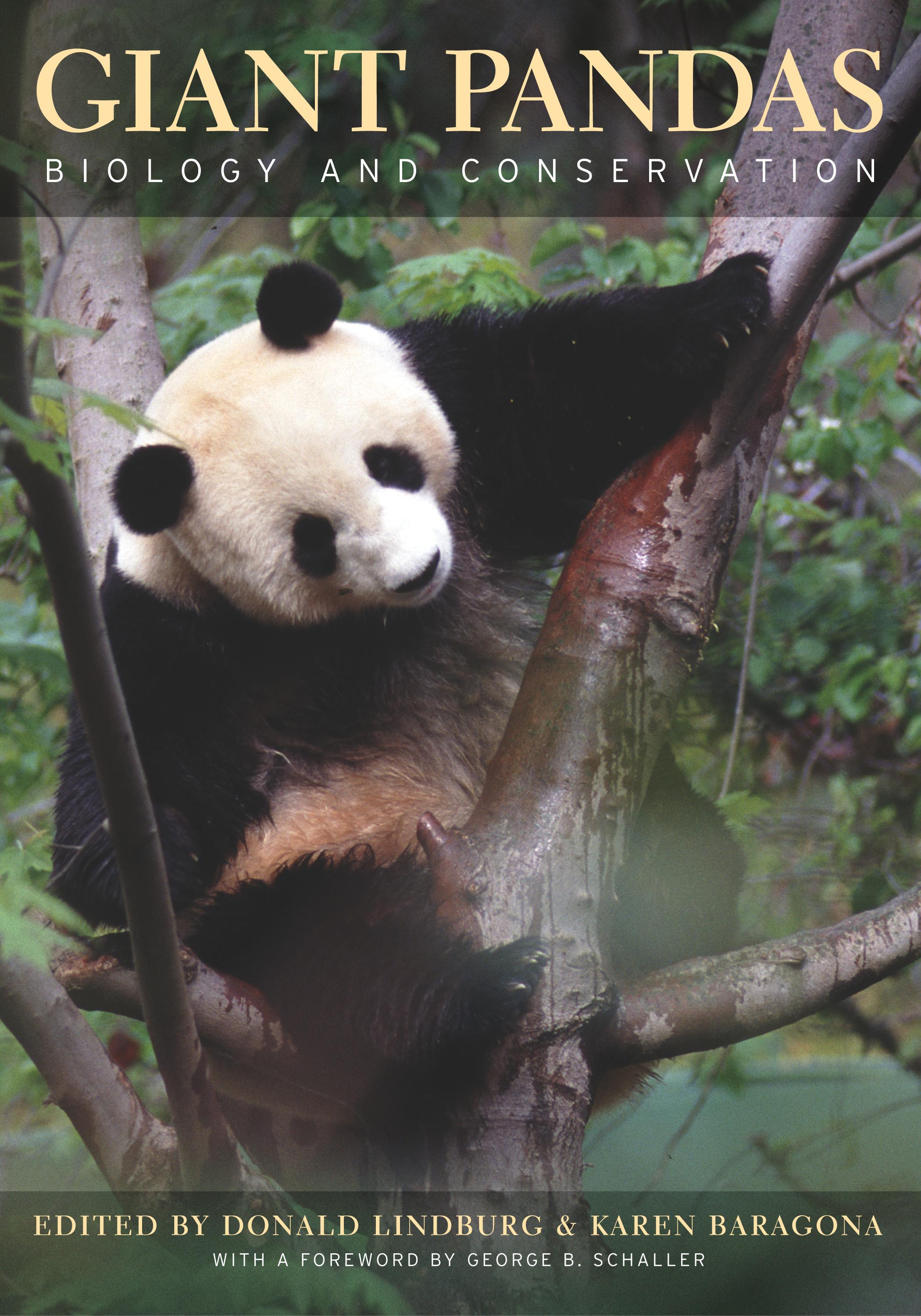
The much-loved giant panda, a secretive denizen of the dense bamboo forests of western China, has become an icon worldwide of progress in conservation and research. This volume, written by an international team of scientists and conservationists including Chinese researchers whose work has not been available in English, tells the promising story of how the giant panda returned from the brink of extinction. The most important sourcebook on giant pandas to date, it is the first book since 1985 to present current panda research and the first to place the species in its biological, ecological, and political contexts. More than a progress report on a highly endangered species, Giant Pandas: Biology and Conservation details the combination of scientific understanding, local commitment, and government involvement that has been brought into play and asks what more needs to be done to ensure the panda's survival.
The book is divided into four parts—Evolutionary History of the Giant Panda, Studies of Giant Panda Biology, Pandas and Their Habitats, and Giant Panda Conservation. It combines the latest findings from the field and the laboratory together with panel and workshop summaries from a recent international conference. Taken together, the chapters highlight how international cooperation has led to better management in the wild and in captivity. The volume also shows how concepts such as buffer zones, links between forest fragments, multiple-use areas, and cooperation with local people who have a stake in the resources—highly relevant concepts for conservation problems around the world—have been key to the panda's survival.
The book is divided into four parts—Evolutionary History of the Giant Panda, Studies of Giant Panda Biology, Pandas and Their Habitats, and Giant Panda Conservation. It combines the latest findings from the field and the laboratory together with panel and workshop summaries from a recent international conference. Taken together, the chapters highlight how international cooperation has led to better management in the wild and in captivity. The volume also shows how concepts such as buffer zones, links between forest fragments, multiple-use areas, and cooperation with local people who have a stake in the resources—highly relevant concepts for conservation problems around the world—have been key to the panda's survival.
Pay easily by card, Klarna, Apple Pay or Google Pay. Not happy? You always have a 14-day money-back guarantee. Read more in our terms. If you have any questions, email us at hello@memmo.org.
Memmo makes studying easier – wherever you are in the world. We bring your course books and smart study tools together in one place: summaries, quizzes, podcasts and flashcards. Plus Ted, your study buddy who answers anything you wonder. Over 50,000 students already study here – built to help you learn faster and stress less.
You might also like
Buy the book0