
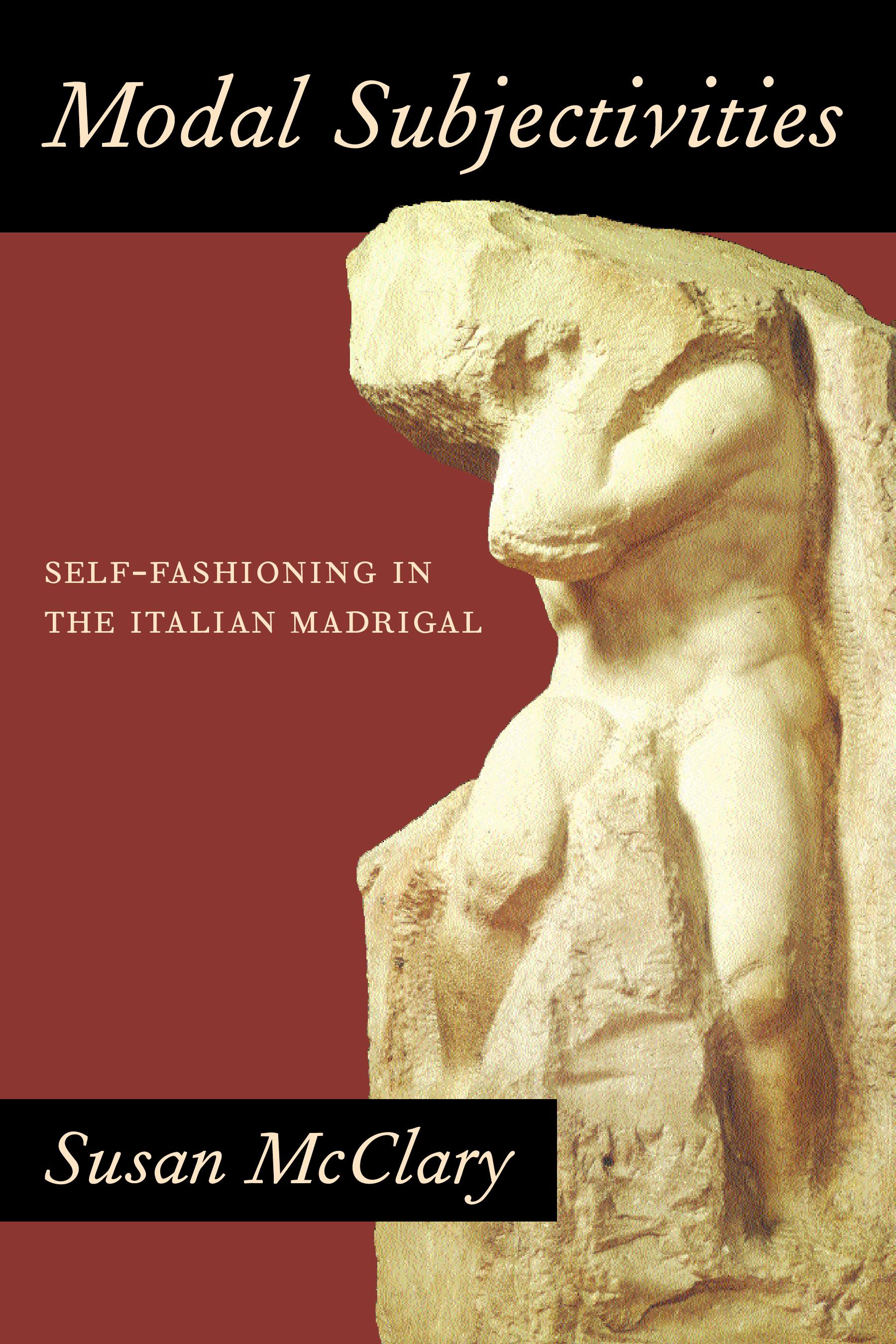
In this boldly innovative book, renowned musicologist Susan McClary presents an illuminating cultural interpretation of the Italian madrigal, one of the most influential repertories of the Renaissance. A genre that sought to produce simulations in sound of complex interiorities, the madrigal introduced into music a vast range of new signifying practices: musical representations of emotions, desire, gender stereotypes, reason, madness, tensions between mind and body, and much more. In doing so, it not only greatly expanded the expressive agendas of European music but also recorded certain assumptions of the time concerning selfhood, making it an invaluable resource for understanding the history of Western subjectivity.
Modal Subjectivities covers the span of the sixteenth-century polyphonic madrigal, from its early manifestations in Philippe Verdelot's settings of Machiavelli in the 1520s through the tortured chromatic experiments of Carlo Gesualdo. Although McClary takes the lyrics into account in shaping her readings, she focuses particularly on the details of the music itself—the principal site of the genre's self-fashionings. In order to work effectively with musical meanings in this pretonal repertory, she also develops an analytical method that allows her to unravel the sophisticated allegorical structures characteristic of the madrigal. This pathbreaking book demonstrates how we might glean insights into a culture on the basis of its nonverbal artistic enterprises.
Modal Subjectivities covers the span of the sixteenth-century polyphonic madrigal, from its early manifestations in Philippe Verdelot's settings of Machiavelli in the 1520s through the tortured chromatic experiments of Carlo Gesualdo. Although McClary takes the lyrics into account in shaping her readings, she focuses particularly on the details of the music itself—the principal site of the genre's self-fashionings. In order to work effectively with musical meanings in this pretonal repertory, she also develops an analytical method that allows her to unravel the sophisticated allegorical structures characteristic of the madrigal. This pathbreaking book demonstrates how we might glean insights into a culture on the basis of its nonverbal artistic enterprises.
Pay easily by card, Klarna, Apple Pay or Google Pay. Not happy? You always have a 14-day money-back guarantee. Read more in our terms. If you have any questions, email us at hello@memmo.org.
Memmo makes studying easier – wherever you are in the world. We bring your course books and smart study tools together in one place: summaries, quizzes, podcasts and flashcards. Plus Ted, your study buddy who answers anything you wonder. Over 50,000 students already study here – built to help you learn faster and stress less.
You might also like
Buy the book0