
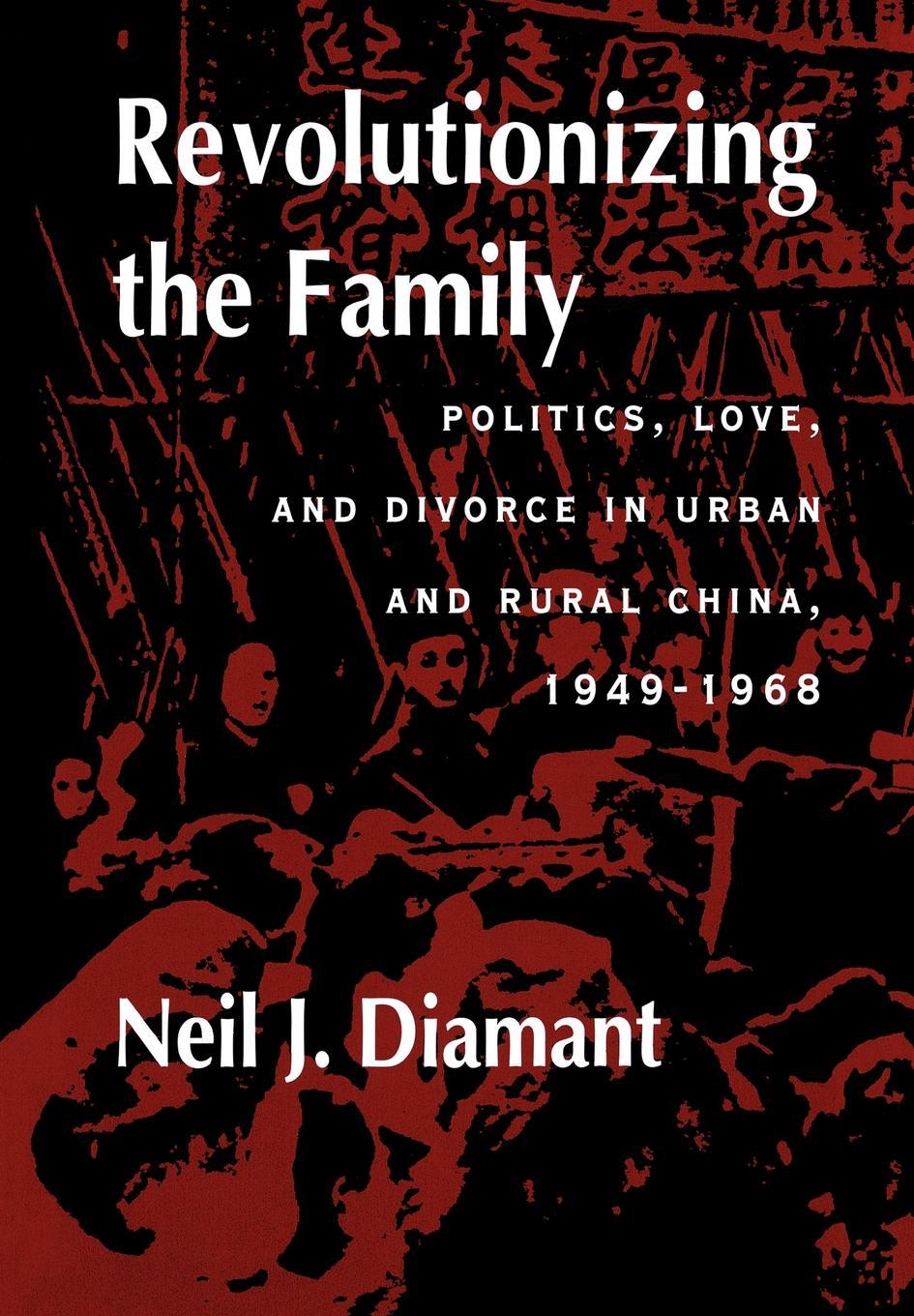
In 1950, China's new Communist government enacted a Marriage Law to allow free choice in marriage and easier access to divorce. Prohibiting arranged marriages, concubinage, and bigamy, it was one of the most dramatic efforts ever by a state to change marital and family relationships. In this comprehensive study of the effects of that law, Neil J. Diamant draws on newly opened urban and rural archival sources to offer a detailed analysis of how the law was interpreted and implemented throughout the country.
In sharp contrast to previous studies of the Marriage Law, which have argued that it had little effect in rural areas, Diamant argues that the law reshaped marriage and family relationships in significant--but often unintended--ways throughout the Maoist period. His evidence reveals a confused and often conflicted state apparatus, as well as cases of Chinese men and women taking advantage of the law to justify multiple sexual encounters, to marry for beauty, to demand expensive gifts for engagement, and to divorce on multiple occasions. Moreover, he finds, those who were best placed to use the law's more liberal provisions were not well-educated urbanites but rather illiterate peasant women who had never heard of sexual equality; and it was poor men, not women, who were those most betrayed by the peasant-based revolution.
In 1950, China's new Communist government enacted a Marriage Law to allow free choice in marriage and easier access to divorce. Prohibiting arranged marriages, concubinage, and bigamy, it was one of the most dramatic efforts ever by a state to change mari
In sharp contrast to previous studies of the Marriage Law, which have argued that it had little effect in rural areas, Diamant argues that the law reshaped marriage and family relationships in significant--but often unintended--ways throughout the Maoist period. His evidence reveals a confused and often conflicted state apparatus, as well as cases of Chinese men and women taking advantage of the law to justify multiple sexual encounters, to marry for beauty, to demand expensive gifts for engagement, and to divorce on multiple occasions. Moreover, he finds, those who were best placed to use the law's more liberal provisions were not well-educated urbanites but rather illiterate peasant women who had never heard of sexual equality; and it was poor men, not women, who were those most betrayed by the peasant-based revolution.
In 1950, China's new Communist government enacted a Marriage Law to allow free choice in marriage and easier access to divorce. Prohibiting arranged marriages, concubinage, and bigamy, it was one of the most dramatic efforts ever by a state to change mari
Pay easily by card, Klarna, Apple Pay or Google Pay. Not happy? You always have a 14-day money-back guarantee. Read more in our terms. If you have any questions, email us at hello@memmo.org.
Memmo makes studying easier – wherever you are in the world. We bring your course books and smart study tools together in one place: summaries, quizzes, podcasts and flashcards. Plus Ted, your study buddy who answers anything you wonder. Over 50,000 students already study here – built to help you learn faster and stress less.
You might also like
Buy the book0