
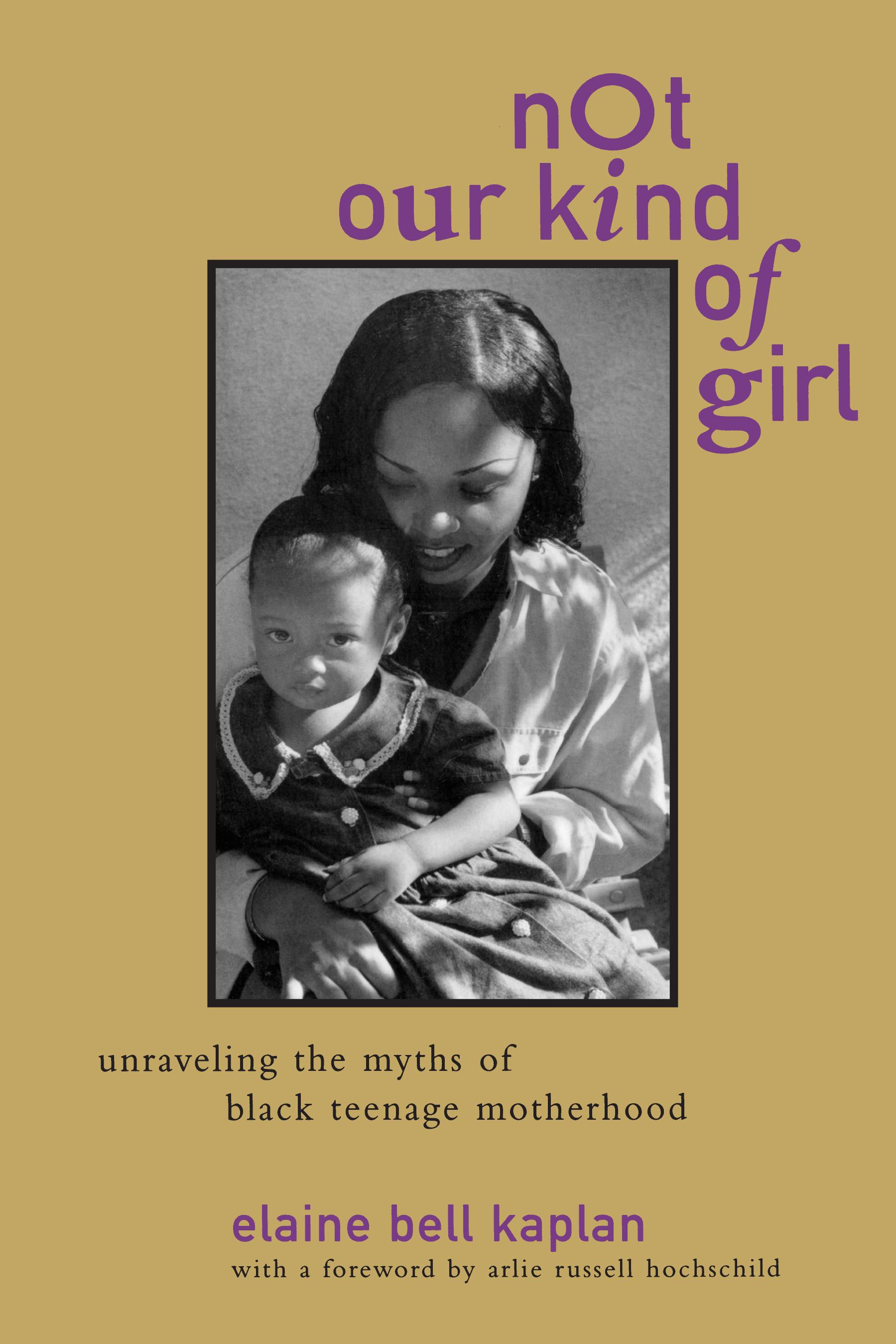
One of the most worrisome images in America today is that of the teenage mother. For the African-American community, that image is especially troubling: All the problems of the welfare system seem to spotlight the black teenage mom. Elaine Bell Kaplan's affecting and insightful book dispels common perceptions of these young women. Her interviews with the women themselves, and with their mothers and grandmothers, provide a vivid picture of lives caught in the intersection of race, class, and gender.
Kaplan challenges the assumption conveyed in the popular media that the African-American community condones teen pregnancy, single parenting, and reliance on welfare. Especially telling are the feelings of frustration, anger, and disappointment expressed by the mothers and grandmothers Kaplan interviewed. And in listening to teenage mothers discuss their problems, Kaplan hears first-hand of their misunderstandings regarding sex, their fraught relationships with men, and their difficulties with the educational system—all factors that bear heavily on their status as young parents.
Kaplan's own experience as an African-American teenage mother adds a personal dimension to this book, and she offers substantial proposals for rethinking and reassessing the class factors, gender relations, and racism that influence black teenagers to become mothers.
One of the most worrisome images in America today is that of the teenage mother. For the African-American community, that image is especially troubling: All the problems of the welfare system seem to spotlight the black teenage mom. Elaine Bell Kaplan's a
Kaplan challenges the assumption conveyed in the popular media that the African-American community condones teen pregnancy, single parenting, and reliance on welfare. Especially telling are the feelings of frustration, anger, and disappointment expressed by the mothers and grandmothers Kaplan interviewed. And in listening to teenage mothers discuss their problems, Kaplan hears first-hand of their misunderstandings regarding sex, their fraught relationships with men, and their difficulties with the educational system—all factors that bear heavily on their status as young parents.
Kaplan's own experience as an African-American teenage mother adds a personal dimension to this book, and she offers substantial proposals for rethinking and reassessing the class factors, gender relations, and racism that influence black teenagers to become mothers.
One of the most worrisome images in America today is that of the teenage mother. For the African-American community, that image is especially troubling: All the problems of the welfare system seem to spotlight the black teenage mom. Elaine Bell Kaplan's a
Pay easily by card, Klarna, Apple Pay or Google Pay. Not happy? You always have a 14-day money-back guarantee. Read more in our terms. If you have any questions, email us at hello@memmo.org.
Memmo makes studying easier – wherever you are in the world. We bring your course books and smart study tools together in one place: summaries, quizzes, podcasts and flashcards. Plus Ted, your study buddy who answers anything you wonder. Over 50,000 students already study here – built to help you learn faster and stress less.
You might also like
Buy the book0