
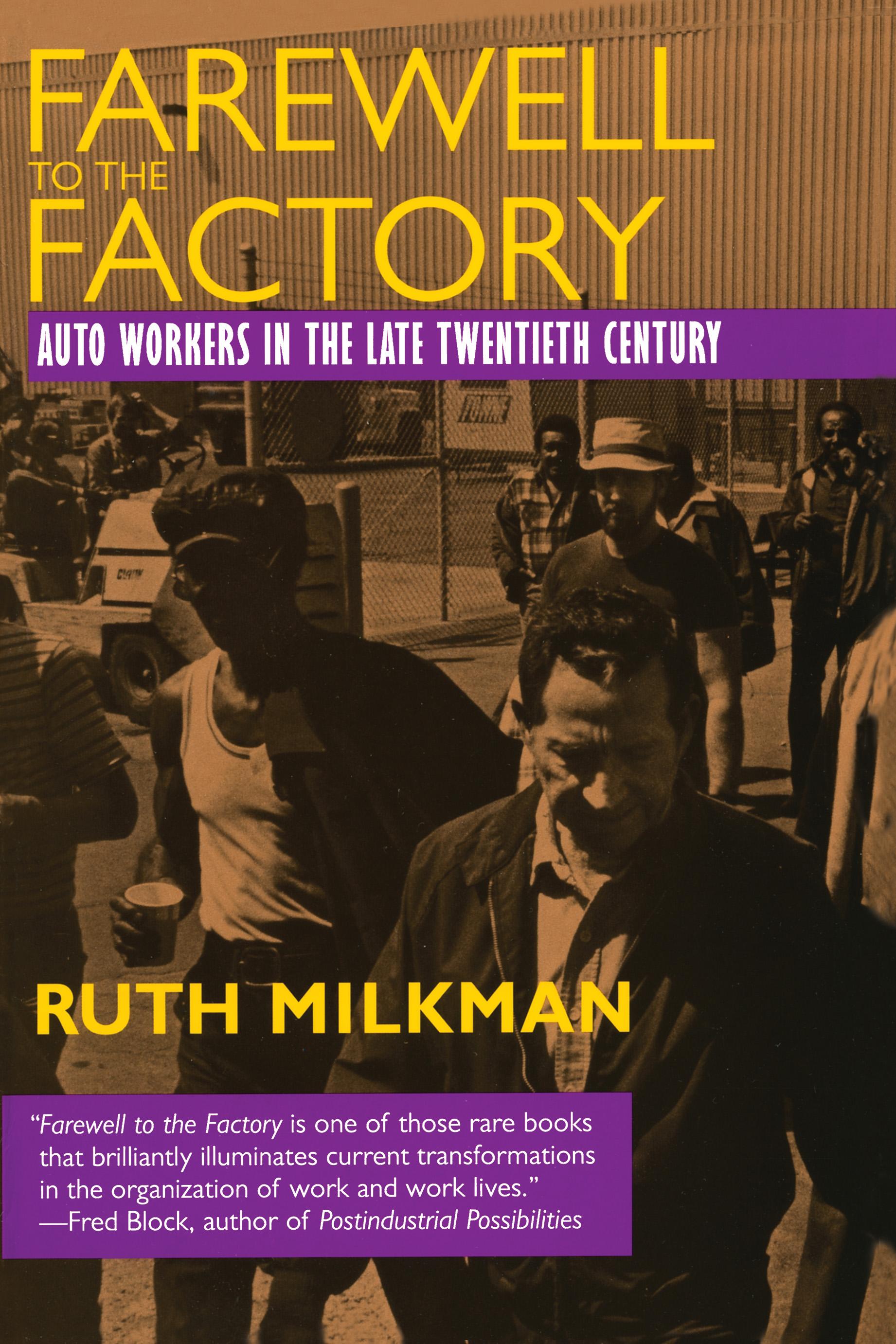
This study exposes the human side of the decline of the U.S. auto industry, tracing the experiences of two key groups of General Motors workers: those who took a cash buyout and left the factory, and those who remained and felt the effects of new technology and other workplace changes. Milkman's extensive interviews and surveys of workers from the Linden, New Jersey, GM plant reveal their profound hatred for the factory regime—a longstanding discontent made worse by the decline of the auto workers' union in the 1980s. One of the leading social historians of the auto industry, Ruth Milkman moves between changes in the wider industry and those in the Linden plant, bringing both a workers' perspective and a historical perspective to the study.
Milkman finds that, contrary to the assumption in much of the literature on deindustrialization, the Linden buyout-takers express no nostalgia for the high-paying manufacturing jobs they left behind. Given the chance to make a new start in the late 1980s, they were eager to leave the plant with its authoritarian, prison-like conditions, and few have any regrets about their decision five years later. Despite the fact that the factory was retooled for robotics and that the management hoped to introduce a new participatory system of industrial relations, workers who remained express much less satisfaction with their lives and jobs.
Milkman is adamant about allowing the workers to speak for themselves, and their hopes, frustrations, and insights add fresh and powerful perspectives to a debate that is often carried out over the heads of those whose lives are most affected by changes in the industry.
This study exposes the human side of the decline of the U.S. auto industry, tracing the experiences of two key groups of General Motors workers: those who took a cash buyout and left the factory, and those who remained and felt the effects of new technolo
Milkman finds that, contrary to the assumption in much of the literature on deindustrialization, the Linden buyout-takers express no nostalgia for the high-paying manufacturing jobs they left behind. Given the chance to make a new start in the late 1980s, they were eager to leave the plant with its authoritarian, prison-like conditions, and few have any regrets about their decision five years later. Despite the fact that the factory was retooled for robotics and that the management hoped to introduce a new participatory system of industrial relations, workers who remained express much less satisfaction with their lives and jobs.
Milkman is adamant about allowing the workers to speak for themselves, and their hopes, frustrations, and insights add fresh and powerful perspectives to a debate that is often carried out over the heads of those whose lives are most affected by changes in the industry.
This study exposes the human side of the decline of the U.S. auto industry, tracing the experiences of two key groups of General Motors workers: those who took a cash buyout and left the factory, and those who remained and felt the effects of new technolo
Pay easily by card, Klarna, Apple Pay or Google Pay. Not happy? You always have a 14-day money-back guarantee. Read more in our terms. If you have any questions, email us at hello@memmo.org.
Memmo makes studying easier – wherever you are in the world. We bring your course books and smart study tools together in one place: summaries, quizzes, podcasts and flashcards. Plus Ted, your study buddy who answers anything you wonder. Over 50,000 students already study here – built to help you learn faster and stress less.
You might also like
Buy the book0