
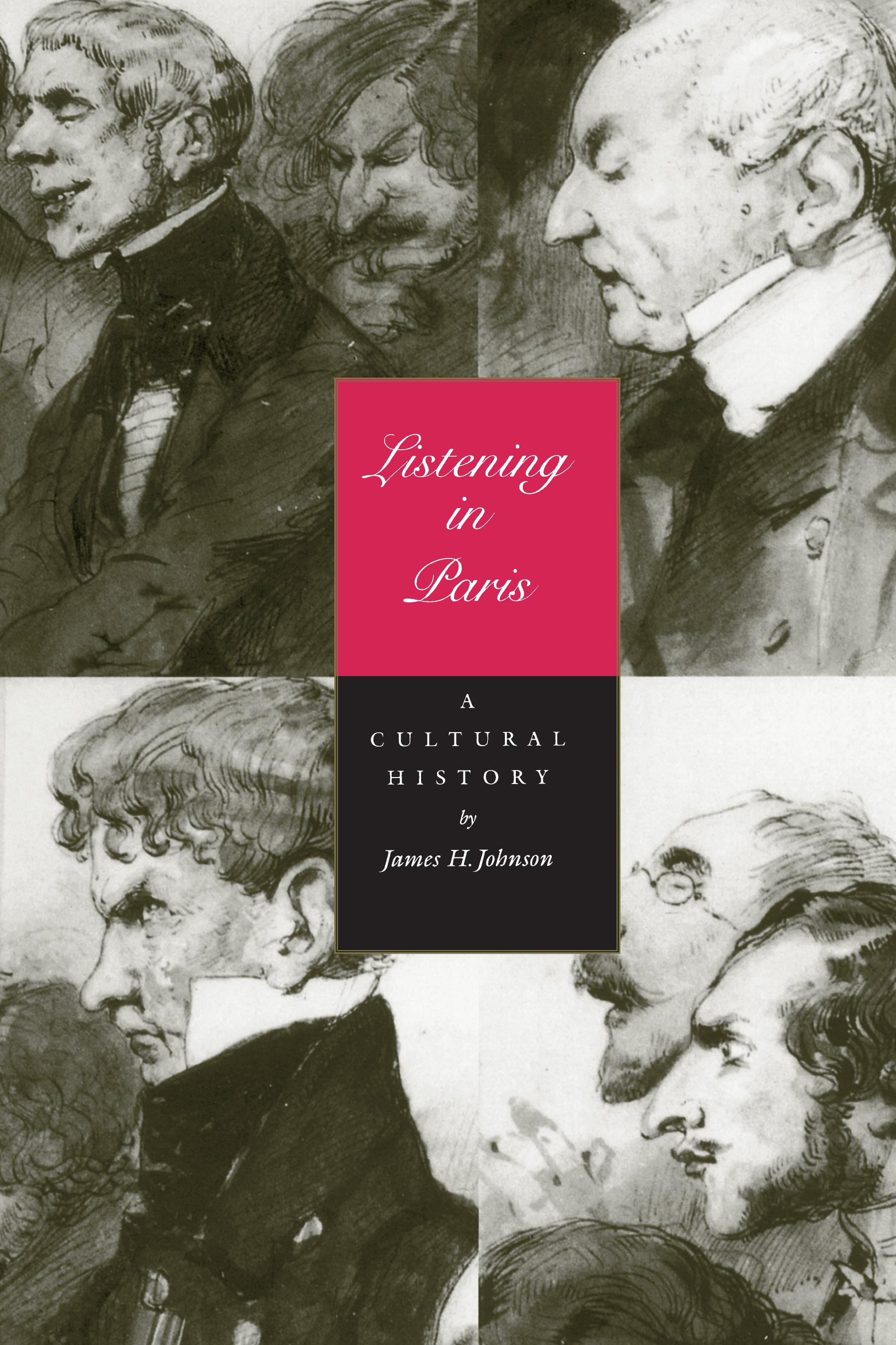
Beginning with the simple question, "Why did audiences grow silent?" Listening in Paris gives a spectator's-eye view of opera and concert life from the Old Regime to the Romantic era, describing the transformation in musical experience from social event to profound aesthetic encounter. James H. Johnson recreates the experience of audiences during these rich decades with brio and wit. Woven into the narrative is an analysis of the political, musical, and aesthetic factors that produced more engaged listening. Johnson shows the gradual pacification of audiences from loud and unruly listeners to the attentive public we know today.
Drawing from a wide range of sources—novels, memoirs, police files, personal correspondence, newspaper reviews, architectural plans, and the like—Johnson brings the performances to life: the hubbub of eighteenth-century opera, the exuberance of Revolutionary audiences, Napoleon's musical authoritarianism, the bourgeoisie's polite consideration. He singles out the music of Gluck, Haydn, Rossini, and Beethoven as especially important in forging new ways of hearing. This book's theoretical edge will appeal to cultural and intellectual historians in many fields and periods.
Beginning with the simple question, "Why did audiences grow silent?" Listening in Paris gives a spectator's-eye view of opera and concert life from the Old Regime to the Romantic era, describing the transformation in musical experience from social
Drawing from a wide range of sources—novels, memoirs, police files, personal correspondence, newspaper reviews, architectural plans, and the like—Johnson brings the performances to life: the hubbub of eighteenth-century opera, the exuberance of Revolutionary audiences, Napoleon's musical authoritarianism, the bourgeoisie's polite consideration. He singles out the music of Gluck, Haydn, Rossini, and Beethoven as especially important in forging new ways of hearing. This book's theoretical edge will appeal to cultural and intellectual historians in many fields and periods.
Beginning with the simple question, "Why did audiences grow silent?" Listening in Paris gives a spectator's-eye view of opera and concert life from the Old Regime to the Romantic era, describing the transformation in musical experience from social
Pay easily by card, Klarna, Apple Pay or Google Pay. Not happy? You always have a 14-day money-back guarantee. Read more in our terms. If you have any questions, email us at hello@memmo.org.
Memmo makes studying easier – wherever you are in the world. We bring your course books and smart study tools together in one place: summaries, quizzes, podcasts and flashcards. Plus Ted, your study buddy who answers anything you wonder. Over 50,000 students already study here – built to help you learn faster and stress less.
You might also like
Buy the book0