
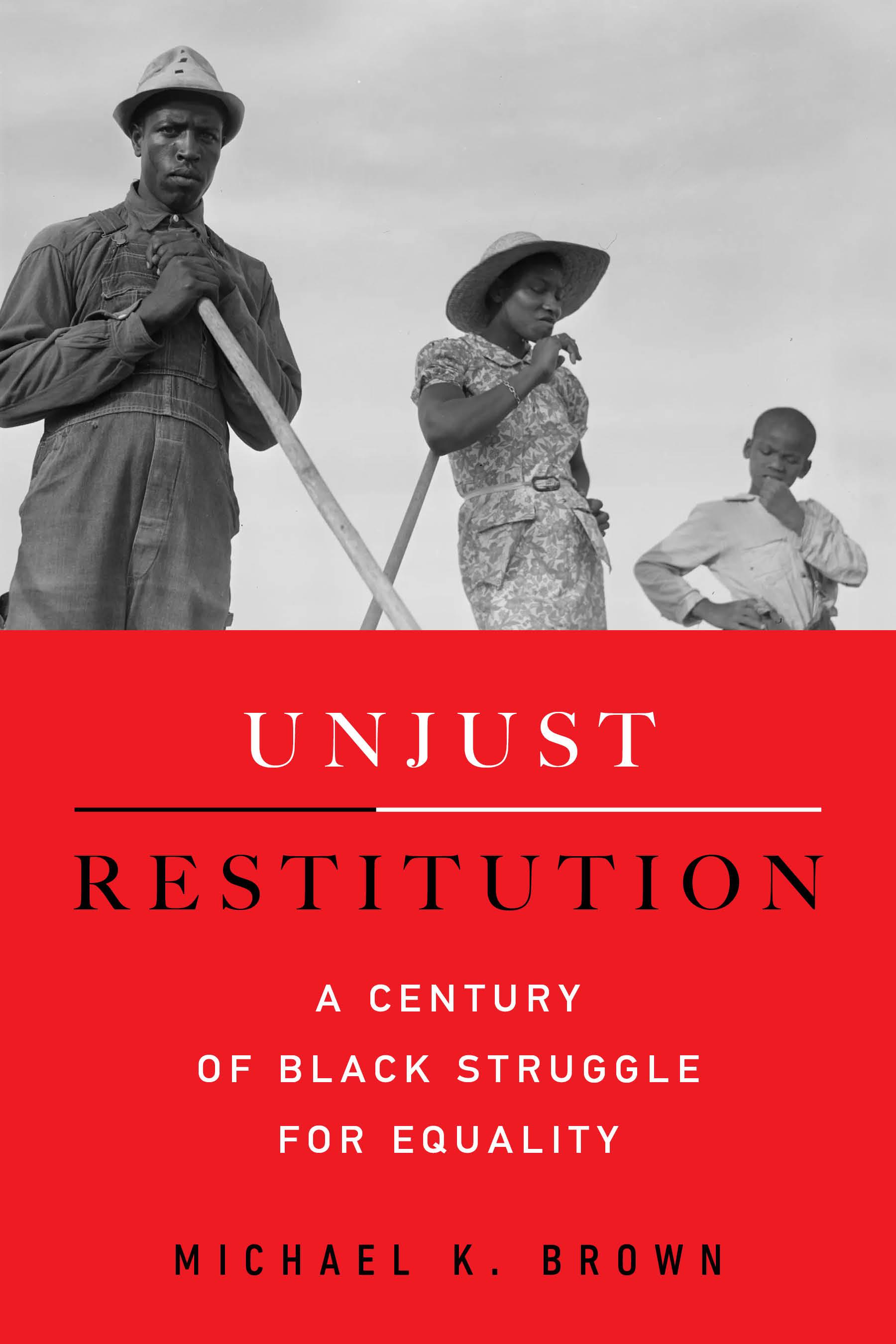
The question of economic justice for Black Americans continues to be the subject of contentious political debate. Here, Michael K. Brown examines the meaning of racial equality during three transformative periods when economic opportunity appeared to be a real possibility: Reconstruction, the New Deal, and the Great Society. Political leaders who believed slavery and Jim Crow degraded Black people enacted policies to rehabilitate formerly subjugated individuals. Black Americans, on the other hand, repudiated the idea that they were damaged people in need of repair. Repeatedly, Black people’s vision of economic justice was based on antiprivilege egalitarianism, the idea that a just restitution for their oppression required abolishing the political and legal privileges whites had acquired. Black opposition reveals what was at stake at each historical moment and what might constitute economic justice in the twenty-first century.
Pay easily by card, Klarna, Apple Pay or Google Pay. Not happy? You always have a 14-day money-back guarantee. Read more in our terms. If you have any questions, email us at hello@memmo.org.
Memmo makes studying easier – wherever you are in the world. We bring your course books and smart study tools together in one place: summaries, quizzes, podcasts and flashcards. Plus Ted, your study buddy who answers anything you wonder. Over 50,000 students already study here – built to help you learn faster and stress less.
You might also like
Buy the book0