
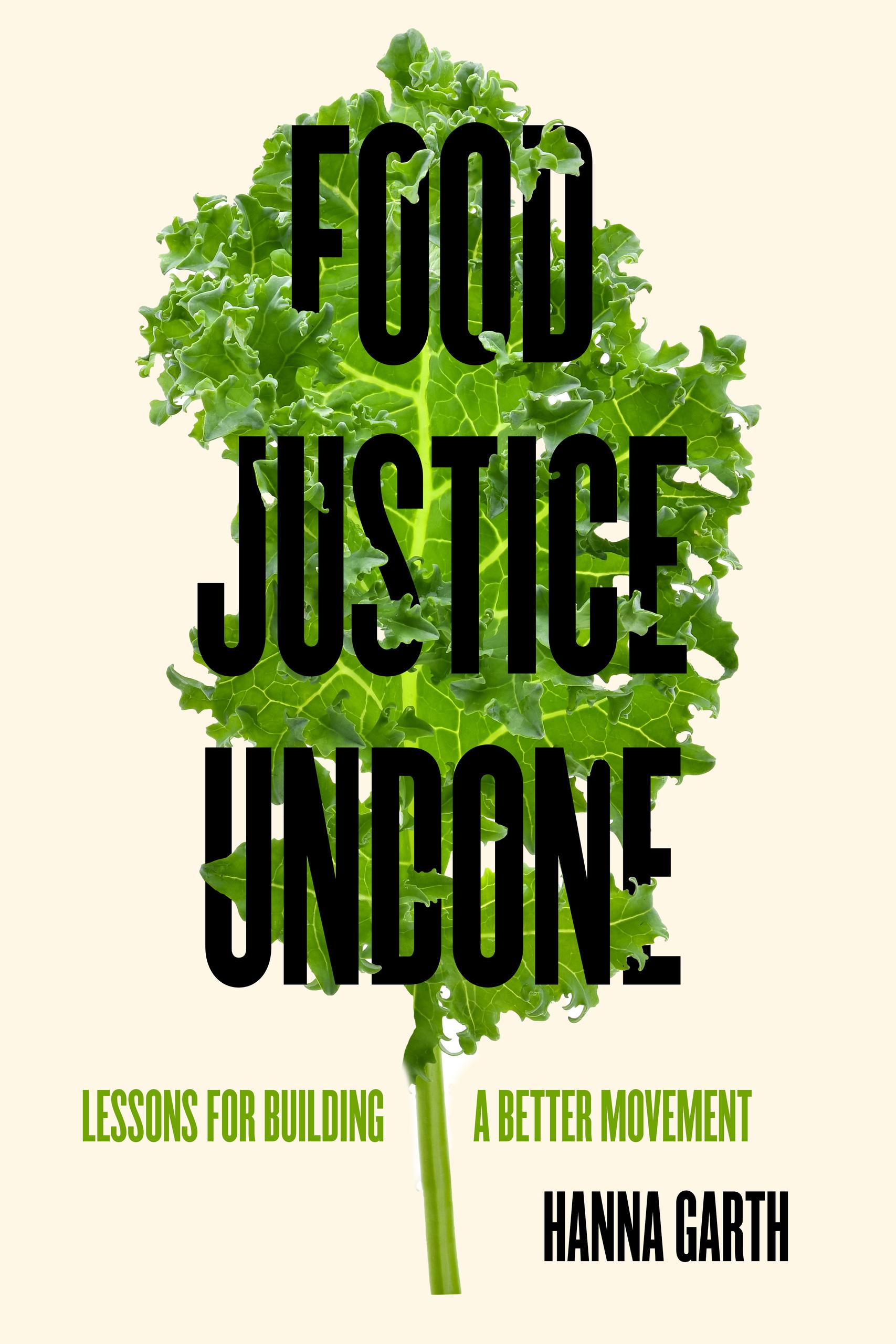
"A piercing ethnographic study of the power dynamics and misunderstandings that plague 'food justice' nonprofits."—Publishers Weekly
Breaks open the privilege and promise of food justice to envision a radical liberatory future.
Food justice activists have worked to increase access to healthy food in low-income communities of color across the United States. Yet despite their best intentions, they often perpetuate food access inequalities and racial stereotypes. Hanna Garth shows how the movement has been affected by misconceptions and assumptions about residents, as well as by unclear definitions of justice and what it means to be healthy. Focusing on broad structures and microlevel processes, Garth reveals how power dynamics shape social justice movements in particular ways.
Drawing on twelve years of ethnographic research, Garth examines what motivates people from more affluent, majority-white areas of the city to intervene in South Central Los Angeles. She argues that the concepts of "food justice" and "healthy food" operate as racially coded language, reinforcing the idea that health problems in low-income Black and Brown communities can be solved through individual behavior rather than structural change. Food Justice Undone explores the stakes of social justice and the possibility of multiracial coalitions working toward a better future.
Pay easily by card, Klarna, Apple Pay or Google Pay. Not happy? You always have a 14-day money-back guarantee. Read more in our terms. If you have any questions, email us at hello@memmo.org.
Memmo makes studying easier – wherever you are in the world. We bring your course books and smart study tools together in one place: summaries, quizzes, podcasts and flashcards. Plus Ted, your study buddy who answers anything you wonder. Over 50,000 students already study here – built to help you learn faster and stress less.