
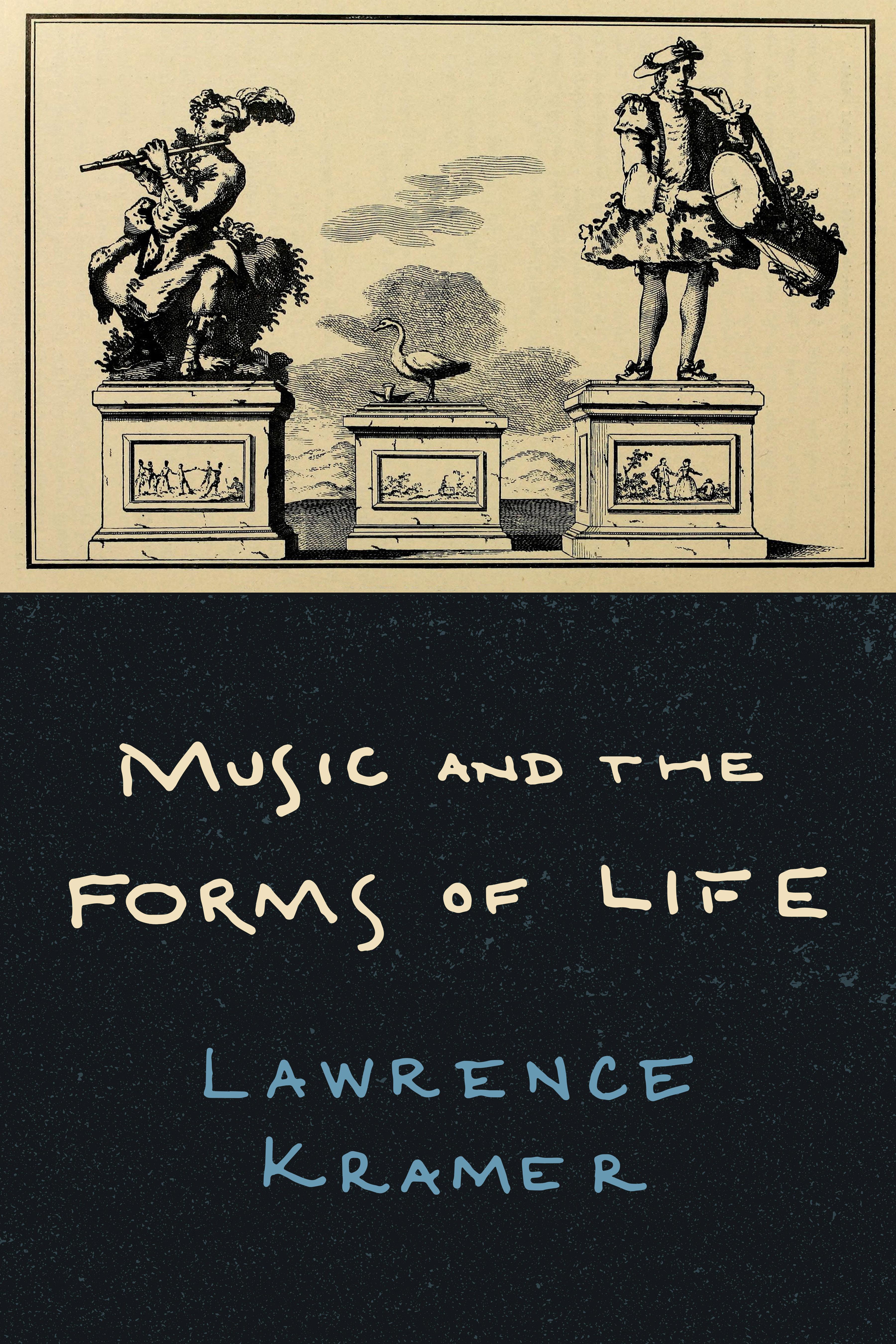
Inventors in the age of the Enlightenment created lifelike androids capable of playing music on real instruments. Music and the Forms of Life examines the link between such simulated life and music, which began in the era's scientific literature and extended into a series of famous musical works by Haydn, Mozart, and Beethoven. Music invented auditory metaphors for the scientific elements of life (drive, pulse, sensibility, irritability, even metabolism), investigated the affinities and antagonisms between life and mechanism, and explored questions of whether and how mechanisms can come to life.
The resulting changes in the conceptions of both life and music had wide cultural resonance at the time, and those concepts continued to evolve long after. A critical part of that evolution was a nineteenth-century shift in focus from moving androids to the projection of life in motion, culminating in the invention of cinema. Weaving together cultural and musical practices, Lawrence Kramer traces these developments through a collection of case studies ranging from classical symphonies to modernist projections of waltzing specters by Mahler and Ravel to a novel linking Bach's Goldberg Variations to the genetic code.
The publisher gratefully acknowledges the generous support of the AMS 75 PAYS Fund of the American Musicological Society, supported in part by the National Endowment for the Humanities and the Andrew W. Mellon Foundation.
The resulting changes in the conceptions of both life and music had wide cultural resonance at the time, and those concepts continued to evolve long after. A critical part of that evolution was a nineteenth-century shift in focus from moving androids to the projection of life in motion, culminating in the invention of cinema. Weaving together cultural and musical practices, Lawrence Kramer traces these developments through a collection of case studies ranging from classical symphonies to modernist projections of waltzing specters by Mahler and Ravel to a novel linking Bach's Goldberg Variations to the genetic code.
The publisher gratefully acknowledges the generous support of the AMS 75 PAYS Fund of the American Musicological Society, supported in part by the National Endowment for the Humanities and the Andrew W. Mellon Foundation.
Pay easily by card, Klarna, Apple Pay or Google Pay. Not happy? You always have a 14-day money-back guarantee. Read more in our terms. If you have any questions, email us at hello@memmo.org.
Memmo makes studying easier – wherever you are in the world. We bring your course books and smart study tools together in one place: summaries, quizzes, podcasts and flashcards. Plus Ted, your study buddy who answers anything you wonder. Over 50,000 students already study here – built to help you learn faster and stress less.
You might also like
Buy the book0