
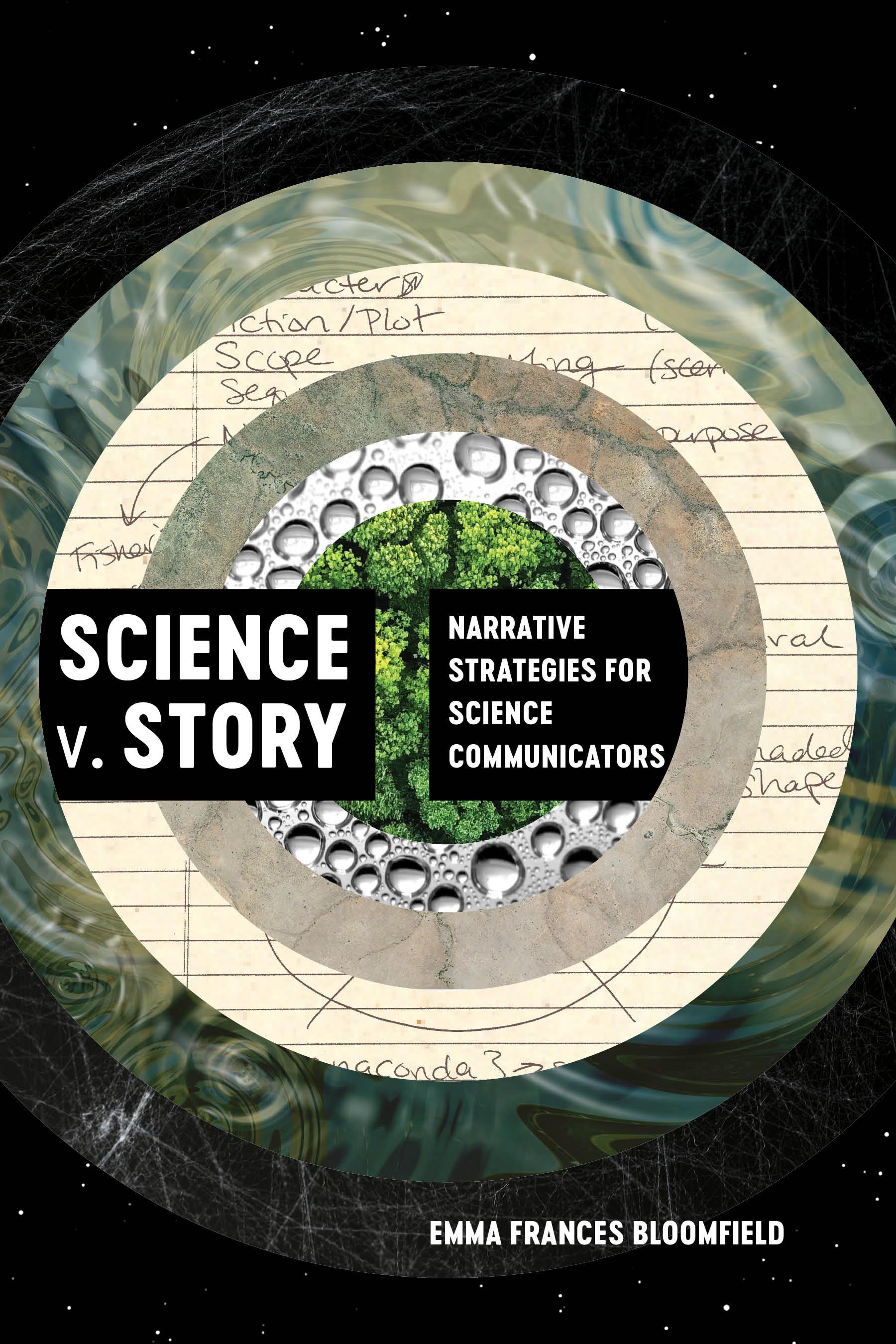
Uncovering common threads across types of science skepticism to show why these controversial narratives stick and how we can more effectively counter them through storytelling
Science v. Story analyzes four scientific controversies—climate change, evolution, vaccination, and COVID-19—through the lens of storytelling. Instead of viewing stories as adversaries to scientific practices, Emma Frances Bloomfield demonstrates how storytelling is integral to science communication. Drawing from narrative theory and rhetorical studies, Science v. Story examines scientific stories and rival stories, including disingenuous rival stories that undermine scientific conclusions and productive rival stories that work to make science more inclusive.
Science v. Story offers two tools to evaluate and build stories: narrative webs and narrative constellations. These visual mapping tools chart the features of a story (i.e., characters, action, sequence, scope, storyteller, and content) to locate opportunities for audience engagement. Bloomfield ultimately argues that we can strengthen science communication by incorporating storytelling in critical ways that are attentive to audience and context.
Science v. Story analyzes four scientific controversies—climate change, evolution, vaccination, and COVID-19—through the lens of storytelling. Instead of viewing stories as adversaries to scientific practices, Emma Frances Bloomfield demonstrates how storytelling is integral to science communication. Drawing from narrative theory and rhetorical studies, Science v. Story examines scientific stories and rival stories, including disingenuous rival stories that undermine scientific conclusions and productive rival stories that work to make science more inclusive.
Science v. Story offers two tools to evaluate and build stories: narrative webs and narrative constellations. These visual mapping tools chart the features of a story (i.e., characters, action, sequence, scope, storyteller, and content) to locate opportunities for audience engagement. Bloomfield ultimately argues that we can strengthen science communication by incorporating storytelling in critical ways that are attentive to audience and context.
Pay easily by card, Klarna, Apple Pay or Google Pay. Not happy? You always have a 14-day money-back guarantee. Read more in our terms. If you have any questions, email us at hello@memmo.org.
Memmo makes studying easier – wherever you are in the world. We bring your course books and smart study tools together in one place: summaries, quizzes, podcasts and flashcards. Plus Ted, your study buddy who answers anything you wonder. Over 75,000 students already study here – built to help you learn faster and stress less.
You might also like
Buy the book0