
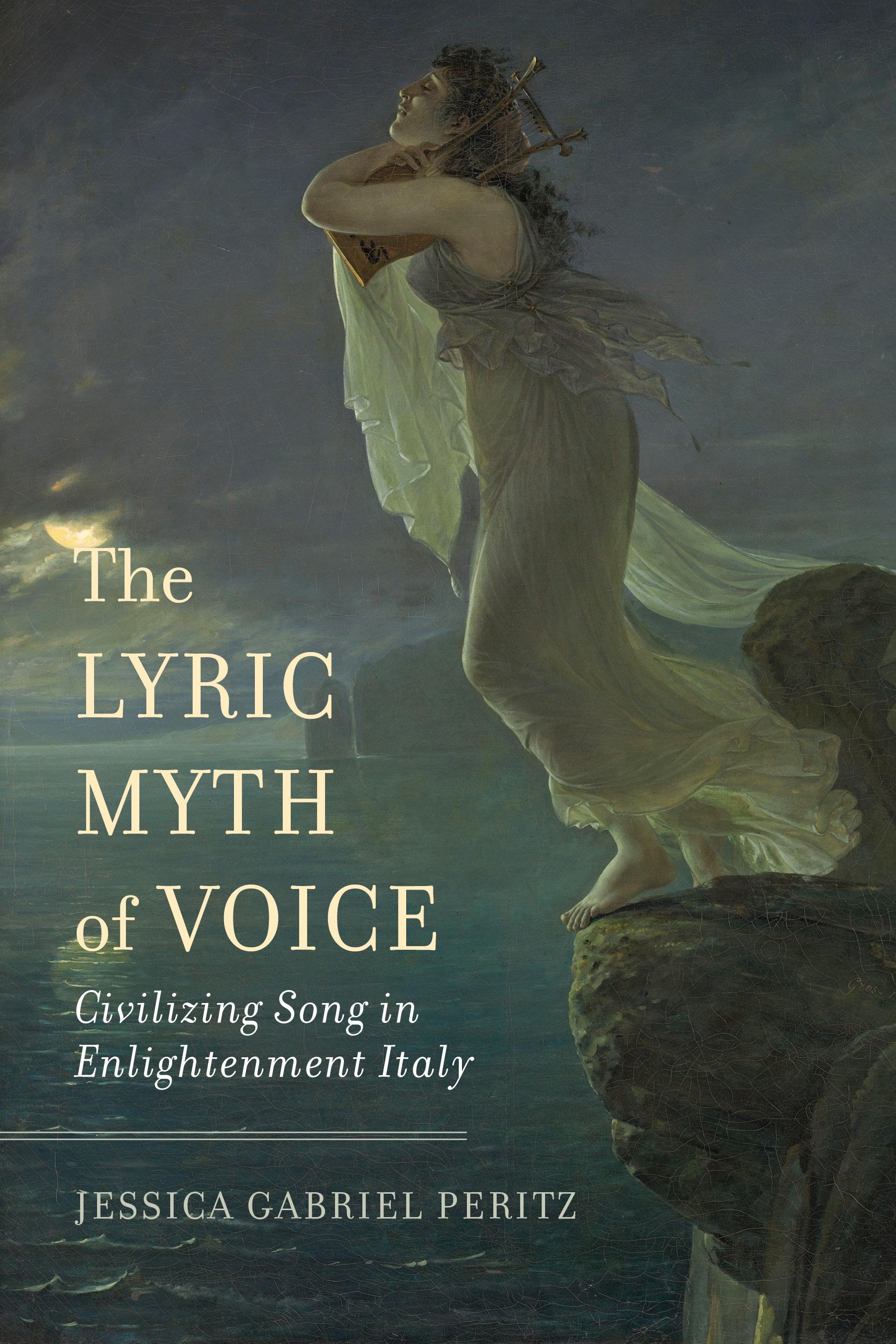
How did "voice" become a metaphor for selfhood in the Western imagination? The Lyric Myth of Voice situates the emergence of an ideological connection between voice and subjectivity in late eighteenth-century Italy, where long-standing political anxieties and new notions of cultural enlightenment collided in the mythical figure of the lyric poet-singer. Ultimately, music and literature together shaped the singing voice into a tool for civilizing modern Italian subjects. Drawing on a range of approaches and frameworks from historical musicology to gender studies, disability studies, anthropology, and literary theory, Jessica Gabriel Peritz shows how this ancient yet modern myth of voice attained interpretable form, flesh, and sound.
The publisher gratefully acknowledges the generous support of the AMS 75 PAYS Fund of the American Musicological Society, supported in part by the National Endowment for the Humanities and the Andrew W. Mellon Foundation.
The publisher gratefully acknowledges the generous support of the AMS 75 PAYS Fund of the American Musicological Society, supported in part by the National Endowment for the Humanities and the Andrew W. Mellon Foundation.
Pay easily by card, Klarna, Apple Pay or Google Pay. Not happy? You always have a 14-day money-back guarantee. Read more in our terms. If you have any questions, email us at hello@memmo.org.
Memmo makes studying easier – wherever you are in the world. We bring your course books and smart study tools together in one place: summaries, quizzes, podcasts and flashcards. Plus Ted, your study buddy who answers anything you wonder. Over 50,000 students already study here – built to help you learn faster and stress less.
You might also like
Buy the book0