
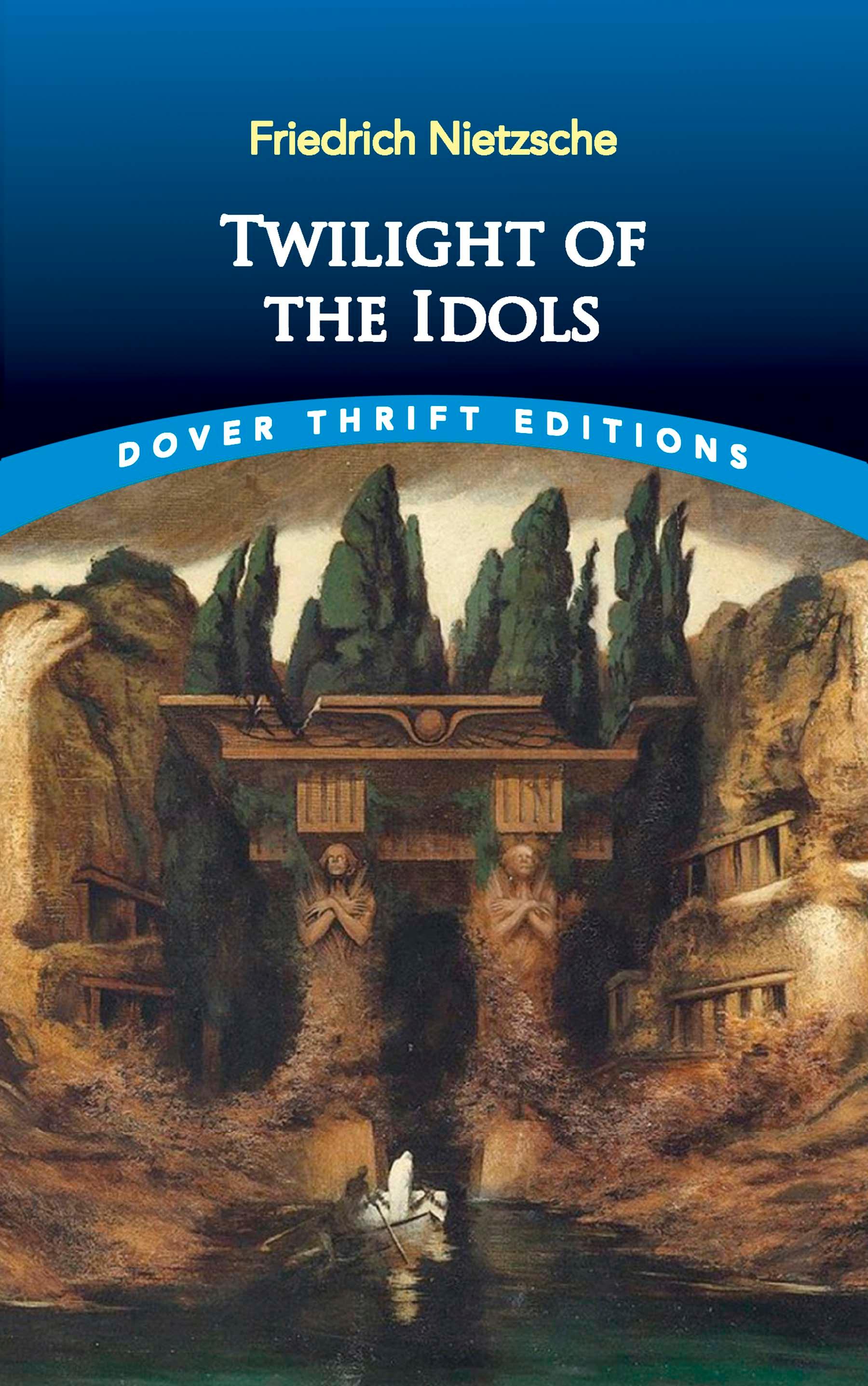
"Twilight of the Idols means that the old truth is on its last legs," declared Friedrich Nietzsche in this 1889 polemic. Forceful in his language and profound in his message, the philosopher delivered the nineteenth century's most devastating attack on Christianity. Intended by Nietzsche as a general introduction to his philosophy, it assails the "idols" of Western philosophy and culture, including the concepts of Socratic rationality and Christian morality.
Written while Nietzsche was at the peak of his powers, less than a year before the onset of the insanity that gripped him until his death in 1900, this work's proximity to the end of the author's career renders it a distinctive portrait from his later period. The source of the famous dictum, "Whatever does not kill me makes me stronger," it blazes with provocative, inflammatory rhetoric that challenges readers to reexamine what they worship and why.
Written while Nietzsche was at the peak of his powers, less than a year before the onset of the insanity that gripped him until his death in 1900, this work's proximity to the end of the author's career renders it a distinctive portrait from his later period. The source of the famous dictum, "Whatever does not kill me makes me stronger," it blazes with provocative, inflammatory rhetoric that challenges readers to reexamine what they worship and why.
Pay easily by card, Klarna, Apple Pay or Google Pay. Not happy? You always have a 14-day money-back guarantee. Read more in our terms. If you have any questions, email us at hello@memmo.org.
Memmo makes studying easier – wherever you are in the world. We bring your course books and smart study tools together in one place: summaries, quizzes, podcasts and flashcards. Plus Ted, your study buddy who answers anything you wonder. Over 50,000 students already study here – built to help you learn faster and stress less.
You might also like
Buy the book0