
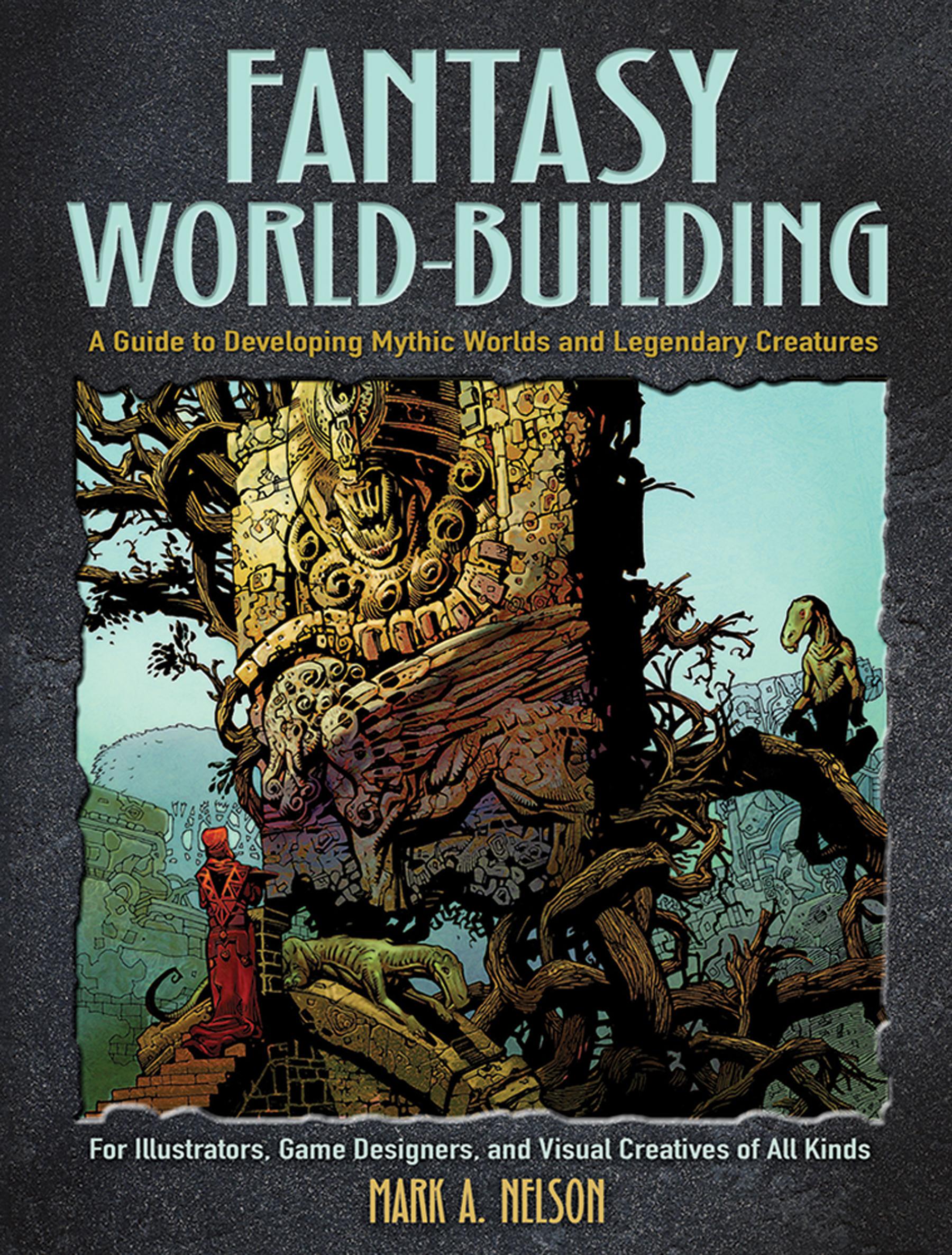
When artists and designers explore or create a fictional setting, the milieu must be completely fleshed out, explained, and designed. In this book, comic and gaming art veteran Mark A. Nelson explores and demonstrates his methods for fashioning visually stunning, believable environments for fantasy creatures and characters. Scores of images and step-by-step examples illustrate how variation and experimentation lead to fresh, original designs for otherworldly beings, their environments, and their stories.
Nelson discusses how to find ideas and borrow from history to add the strength of realism to a fantasy world. In describing the best ways to establish a habitat, he offers specifics about climate, terrain, flora, and wildlife. He shares insights into founding societies in terms of their means of survival, manner of warfare, spiritual practices, style of dress, and levels of technology. All visual creatives who work with imaginative material — illustrators, comic artists, and writers — will take a lively interest in this source of inspiration and practical knowledge.
"In sixteen breezy-yet-surprisingly-concise chapters he covers everything from visual problem solving to spirituality to warfare to transportation, not with the idea of giving the reader lessons to copy by rote but rather as prompts to develop their own original concepts. If I were suggesting three books every budding artist should have at their fingertips they would be Figure Drawing for All It's Worth by Andrew Loomis, Imaginative Realism: How to Paint What Doesn't Exist by James Gurney, and, most definitely, Mark's Fantasy World-Building." — Muddy Colors
Nelson discusses how to find ideas and borrow from history to add the strength of realism to a fantasy world. In describing the best ways to establish a habitat, he offers specifics about climate, terrain, flora, and wildlife. He shares insights into founding societies in terms of their means of survival, manner of warfare, spiritual practices, style of dress, and levels of technology. All visual creatives who work with imaginative material — illustrators, comic artists, and writers — will take a lively interest in this source of inspiration and practical knowledge.
"In sixteen breezy-yet-surprisingly-concise chapters he covers everything from visual problem solving to spirituality to warfare to transportation, not with the idea of giving the reader lessons to copy by rote but rather as prompts to develop their own original concepts. If I were suggesting three books every budding artist should have at their fingertips they would be Figure Drawing for All It's Worth by Andrew Loomis, Imaginative Realism: How to Paint What Doesn't Exist by James Gurney, and, most definitely, Mark's Fantasy World-Building." — Muddy Colors
Pay easily by card, Klarna, Apple Pay or Google Pay. Not happy? You always have a 14-day money-back guarantee. Read more in our terms. If you have any questions, email us at hello@memmo.org.
Memmo makes studying easier – wherever you are in the world. We bring your course books and smart study tools together in one place: summaries, quizzes, podcasts and flashcards. Plus Ted, your study buddy who answers anything you wonder. Over 50,000 students already study here – built to help you learn faster and stress less.
You might also like
Buy the book0