
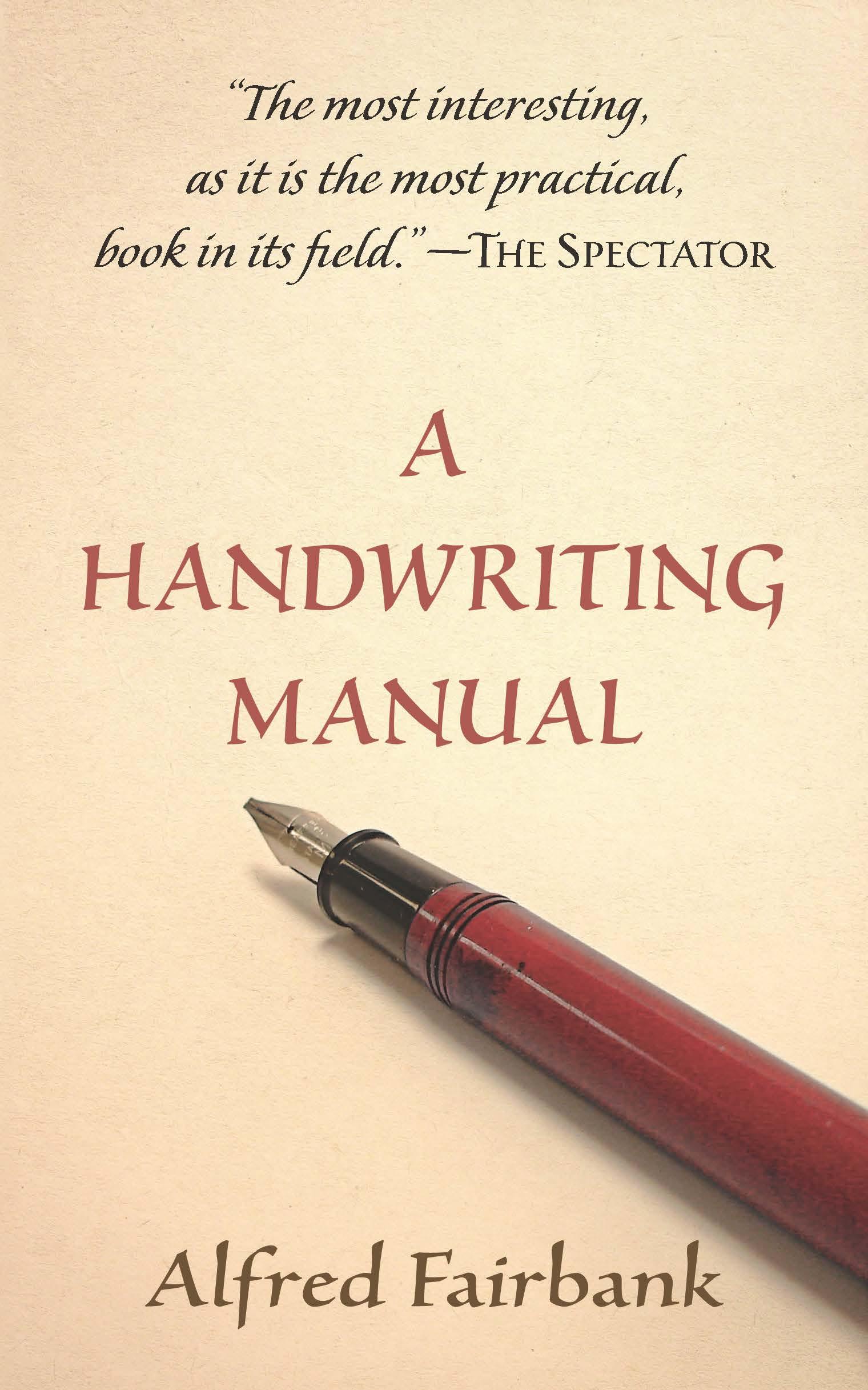
"This famous manual . . . should be read by all those professing the slightest interest in lettering, writing, or the graphic arts." — Printing World
"Despite the spate of publications on this subject, this one remains far and away the best." — Society of Industrial Artists Journal
This classic introduction presents the fundamentals behind every aspect of the art of penmanship, from the necessary equipment to the best techniques. Written by an expert calligrapher whose books were widely used in schools, it offers an essential guide to those who practice or teach lettering and graphic design.
Clearly illustrated with numerous examples and diagrams, the text begins with the development and characteristics of italic and the essentials of good penmanship: legibility, beauty, unity, speed, expedience, freedom, and control. Subsequent chapters explain the tools of penmanship and their use: pens and penholders, pencils, felt-tipped pens, chalks, paper, and ink as well as hand movements, pressure, and touch. Discussions and examples of technique focus on strokes, joins, rhythms, angularity slant, and spacing in addition to how to write capitals, minuscules, numerals, stops, and contractions.
"Despite the spate of publications on this subject, this one remains far and away the best." — Society of Industrial Artists Journal
This classic introduction presents the fundamentals behind every aspect of the art of penmanship, from the necessary equipment to the best techniques. Written by an expert calligrapher whose books were widely used in schools, it offers an essential guide to those who practice or teach lettering and graphic design.
Clearly illustrated with numerous examples and diagrams, the text begins with the development and characteristics of italic and the essentials of good penmanship: legibility, beauty, unity, speed, expedience, freedom, and control. Subsequent chapters explain the tools of penmanship and their use: pens and penholders, pencils, felt-tipped pens, chalks, paper, and ink as well as hand movements, pressure, and touch. Discussions and examples of technique focus on strokes, joins, rhythms, angularity slant, and spacing in addition to how to write capitals, minuscules, numerals, stops, and contractions.
Pay easily by card, Klarna, Apple Pay or Google Pay. Not happy? You always have a 14-day money-back guarantee. Read more in our terms. If you have any questions, email us at hello@memmo.org.
Memmo makes studying easier – wherever you are in the world. We bring your course books and smart study tools together in one place: summaries, quizzes, podcasts and flashcards. Plus Ted, your study buddy who answers anything you wonder. Over 50,000 students already study here – built to help you learn faster and stress less.
You might also like
Buy the book0