
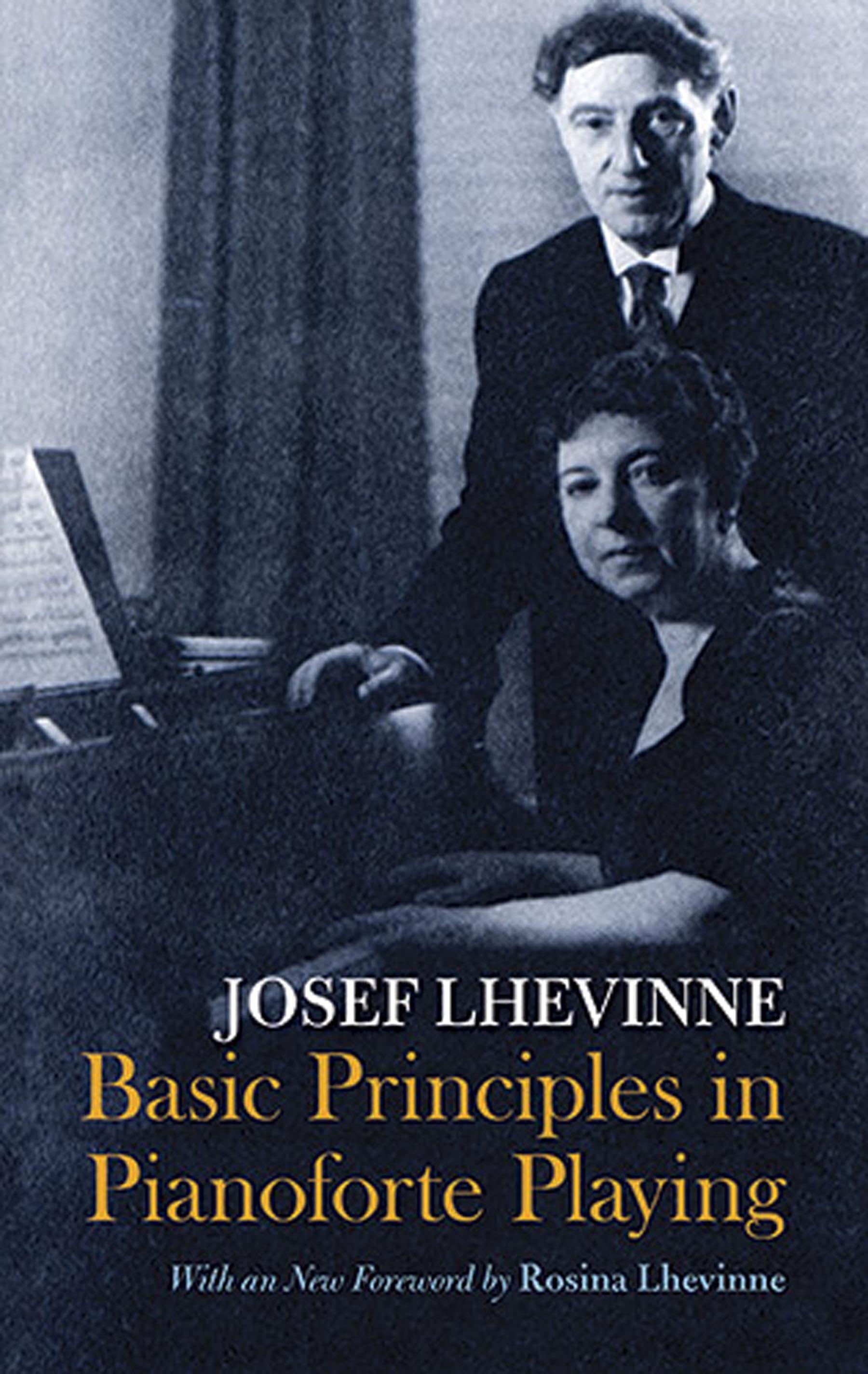
This little book, written at the height of his career by Josef Lhevinne, the "inward poet of the piano," is a clear statement of principles based on his lifelong experience in performance and teaching. Lhevinne was, with Rachmaninoff, Schnabel, and Hoffman, one of the great modern masters, and was the first artist invited to teach at the newly formed Julliard Graduate School of Music.
Technique, through essential, must be subordinate to musical understanding. Complete knowledge of scales, apprehended not mechanically but musically; understanding of the uses of rests and silence, which Mozart considered the greatest effect in music; a feeling for rhythm and training of the ear; these are the basic elements of a thorough grounding in musicianship and are accordingly emphasized in the opening chapters.
The heart of the book is devoted to the attainment of a beautiful tone. Anyone who has heard Lhevinne play or has listened to one of his recordings will know how great were his achievements in that area. The secret lay, at least in part, in the technique he called "the arm floating in air," and in the use of the wrists as natural shock absorbers. The achievement of varieties of tone, of the singing, ringing tone, of brilliancy, of delicacy, and of power are all explained in terms of a careful analysis of the ways in which the fingers, hand, wrist, arm, and indeed the whole body function in striking the keys. There are further remarks about how to get a clear staccato and an unblurred legato, about the dangers of undue emphasis on memorization and the need for variety in practicing, and special comments on the use of the pedal, which should be employed with as much precision as the keys.
Throughout, specific musical examples are presented as illustrations. The author draws not only upon his own experiences and methods, but upon the examples of Anton Rubenstein and of his teacher, Safonoff, for this remarkably lucid and concise formulation of basic principles.
Pay easily by card, Klarna, Apple Pay or Google Pay. Not happy? You always have a 14-day money-back guarantee. Read more in our terms. If you have any questions, email us at hello@memmo.org.
Memmo makes studying easier – wherever you are in the world. We bring your course books and smart study tools together in one place: summaries, quizzes, podcasts and flashcards. Plus Ted, your study buddy who answers anything you wonder. Over 50,000 students already study here – built to help you learn faster and stress less.