
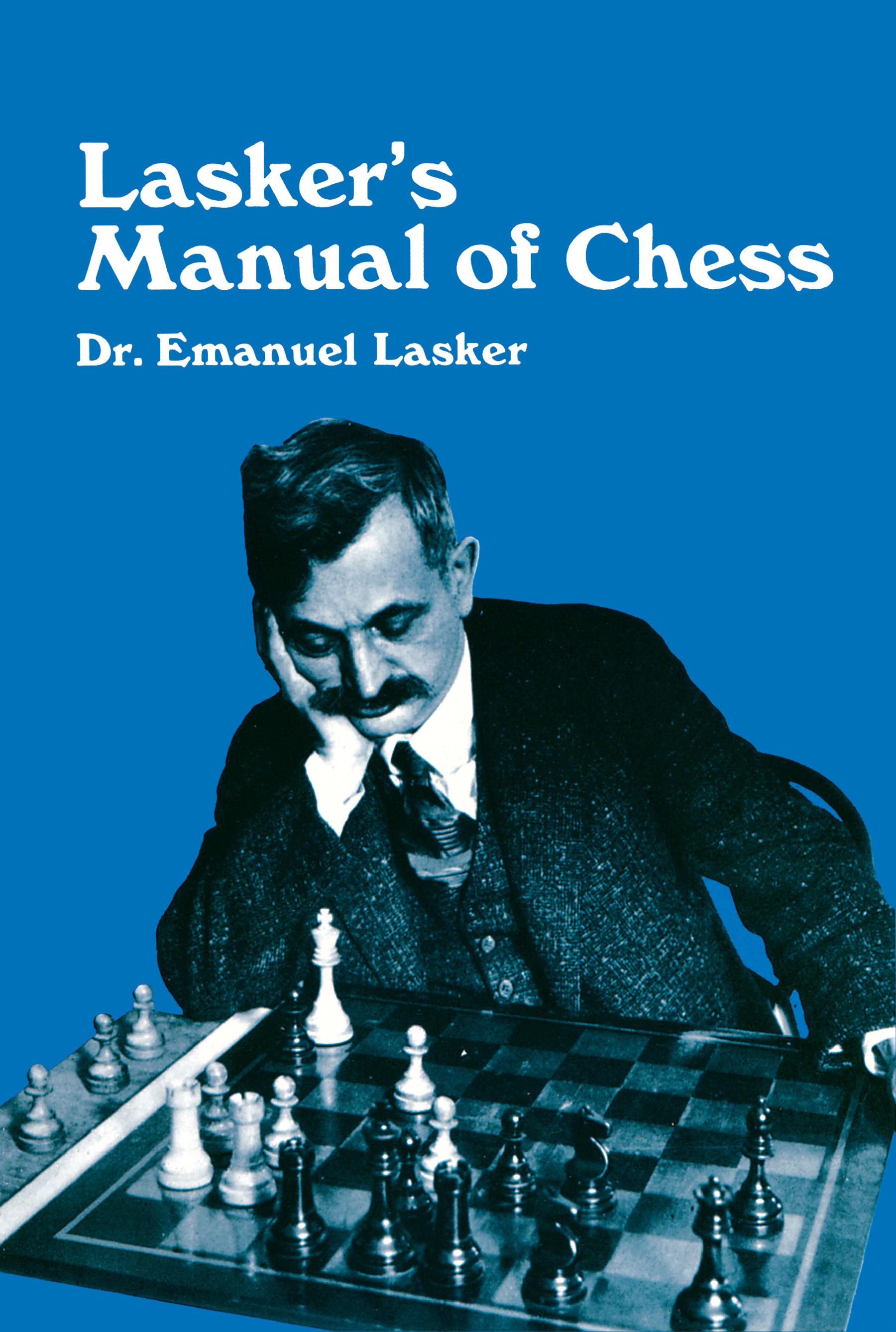
Emanuel Lasker was probably the greatest chess player of modern times. Certainly no man has ever held the world championship longer — 28 years — or kept his powers so long. In his sixties, Lasker began what amounted to a fresh career in chess by playing his first serious game in ten years, and defeating Max Euwe, the man who was the following year to become world champion. The secret behind his extraordinary abilities may perhaps be found in Lasker’s wide knowledge of every phase of the game, and his ability to be independent of schools or fashions.
This knowledge is reflected in the Manual of Chess, making it one of the great studies of the game, acclaimed by the chess world almost from the day it appeared. The book is one of the most thorough studies ever written, and though its main appeal is to the intermediate to skilled player, it begins its explanations at a level that can be understood by the beginner. Lasker analyzes basic methods of gaining advantages, exchange value of pieces, combinations, position play, the aesthetics of chess, and almost every other important aspect of the game. He examines dozens of different openings, including the Petroff Defense, the Hungarian Defense, King’s Bishop, Ponziani, Giuoco Piano, and Four Knights’ Game. He constantly illustrates his discussions with games played by the great modern masters. Lasker is always delightful reading, revealing a mind as quick to entertain and philosophize as it is to explain.
One of the most rewarding features of the book is Lasker’s illumination and elaboration of the theories of William Steinitz. An interesting sidelight is that although Lasker always thought of himself as a disciple of Steinitz, he was actually an original, more versatile player, inclined to take calculated risks. His exposition of Steinitz’s thought and maxims, his principles of attack and evaluation, however, cannot help but be profitable to any chess player.
Pay easily by card, Klarna, Apple Pay or Google Pay. Not happy? You always have a 14-day money-back guarantee. Read more in our terms. If you have any questions, email us at hello@memmo.org.
Memmo makes studying easier – wherever you are in the world. We bring your course books and smart study tools together in one place: summaries, quizzes, podcasts and flashcards. Plus Ted, your study buddy who answers anything you wonder. Over 75,000 students already study here – built to help you learn faster and stress less.