
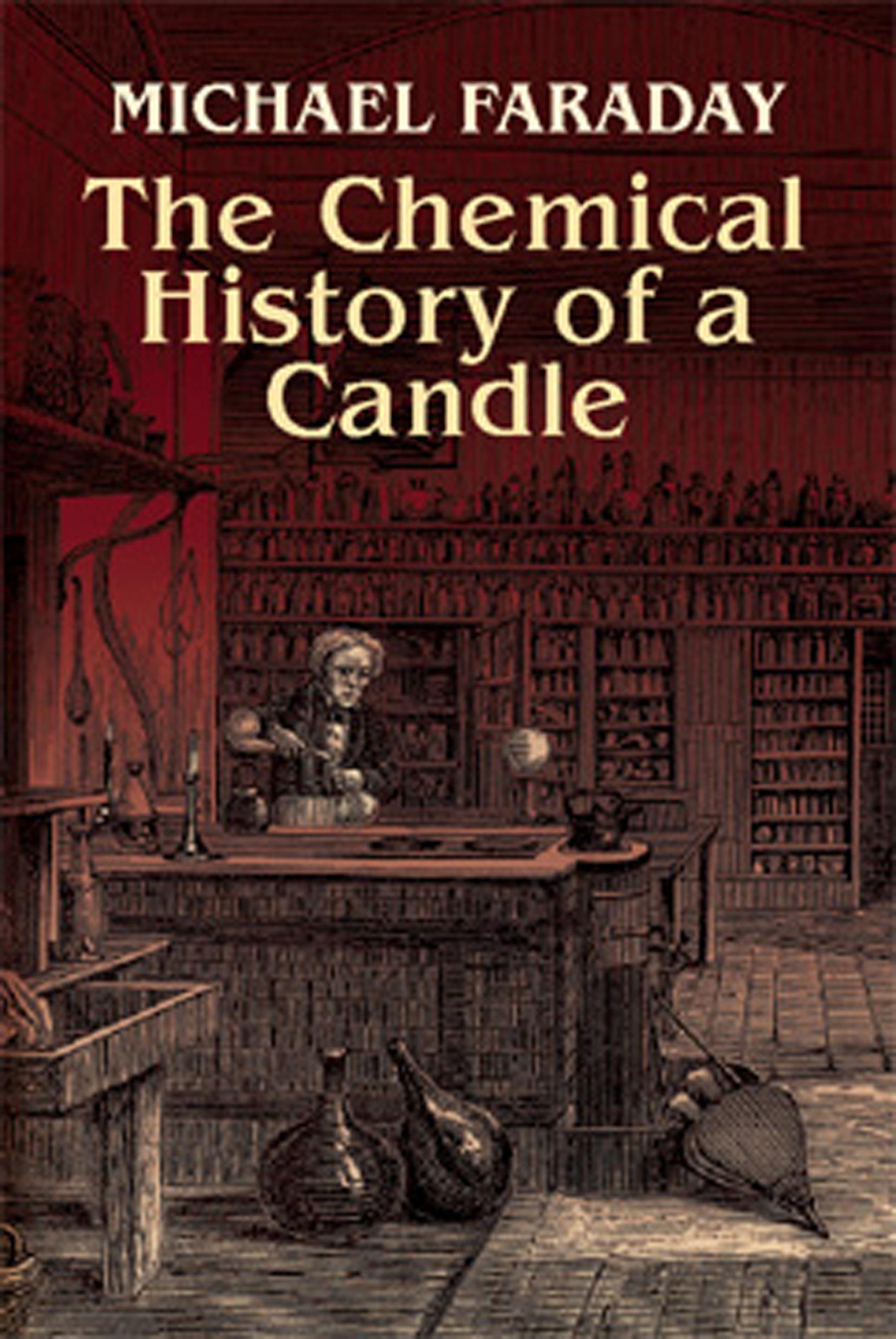
One of the greatest experimental scientists of all time, Michael Faraday (1791–1867) developed the first electric motor, electric generator, and dynamo — essentially creating the science of electrochemistry. This book, the result of six lectures he delivered to young students at London’s Royal Institution, concerns another form of energy — candlelight.
Faraday titled the lectures "The Chemical History of a Candle," choosing the subject because, as he explained, "There is not a law under which any part of this universe is governed which does not come into play and is not touched upon [during the time a candle burns]."
That statement is the foundation for a book that describes, with great clarity, the components, function and weight of the atmosphere; the function of a candle wick; capillary attraction; the carbon content in oxygen and living bodies; the production of carbon dioxide from coal gas and sugar; the properties of carbonic acid; respiration and its analogy to the burning of a candle; and much more. There is also a chapter comprising Faraday's "Lecture on Platinum."
A useful classroom teaching tool, this classic text will also appeal to a wide audience interested in scientific inquiry.
Pay easily by card, Klarna, Apple Pay or Google Pay. Not happy? You always have a 14-day money-back guarantee. Read more in our terms. If you have any questions, email us at hello@memmo.org.
Memmo makes studying easier – wherever you are in the world. We bring your course books and smart study tools together in one place: summaries, quizzes, podcasts and flashcards. Plus Ted, your study buddy who answers anything you wonder. Over 75,000 students already study here – built to help you learn faster and stress less.