
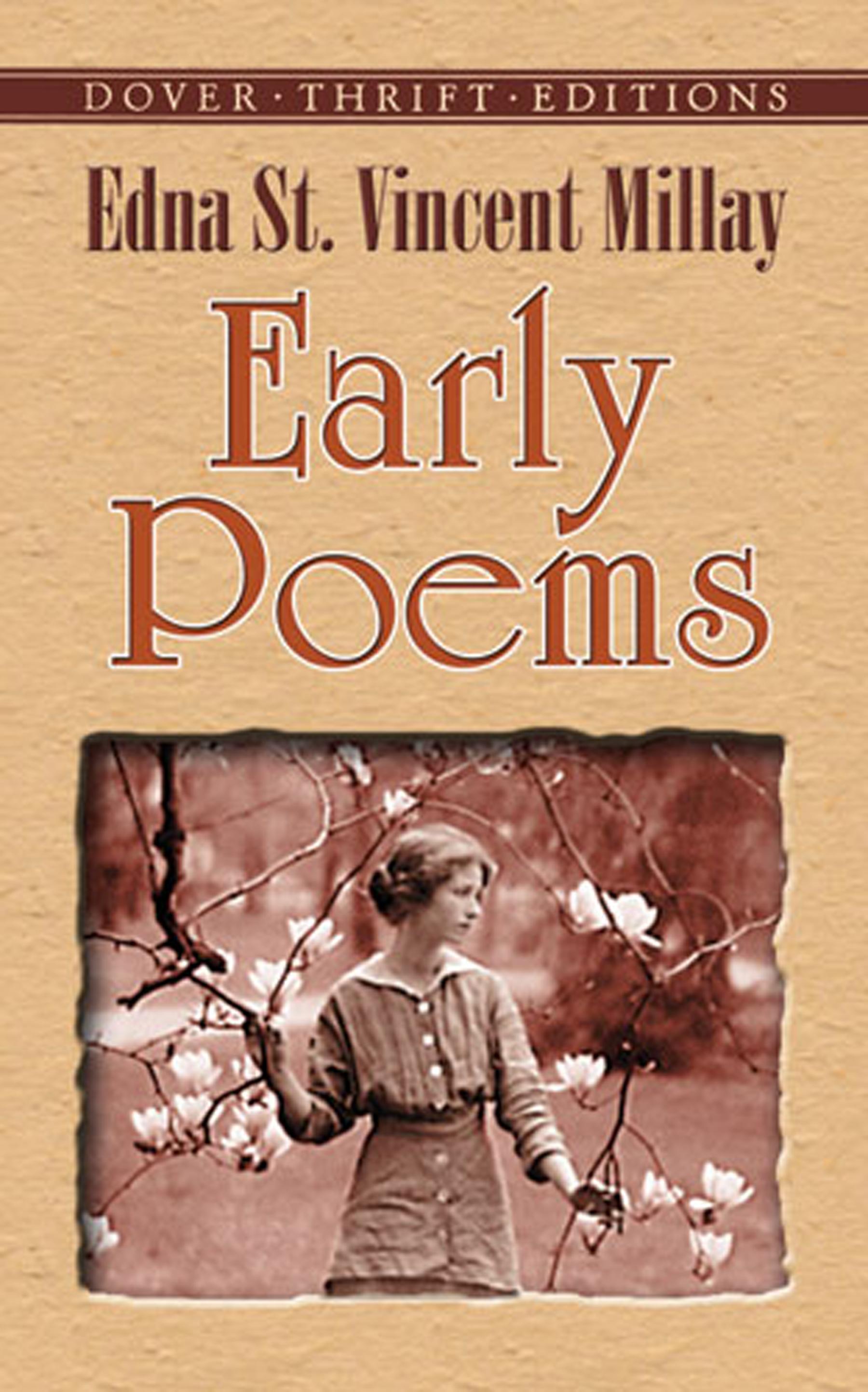
One of the most successful poets in America and a fascinating literary figure of the early twentieth century, Edna St. Vincent Millay found her voice in a national poetry contest at the age of twenty. Her poems received critical praise and became the first step toward receiving the Pulitzer Award years later. An acclaimed poet of the Jazz Age, this liberated, often rebellious, woman enchanted us with her beautiful sonnets and lyrics, even as she surprised us with her unconventional personal life. This vibrant volume includes the complete selection of poems from Millay's first three books. Each gem reflects a different facet of the author's versatility.
Renascence and Other Poems was Millay's first collection of poetry, a literary sensation when it was published in 1912. Acclaimed by critics for its remarkable use of compelling language and imagery, it is a deeply personal work that reflects the poet's spiritual awakening, using the themes of death and resurrection. In contrast, the poetry in A Few Figs from Thistles represents a cynical stage, a time of rebellion, and a search for personal freedom, as depicted in her famous line, "My candle burns at both ends." Part beauty, part despair, the free verse and heartfelt sonnets of Second April are an expression of Millay's feelings about love and disillusionment. Eloquent, daring, and sometimes bittersweet, these masterful lyrics exemplify the best work of a complex, passionate, and gifted poet. Includes a selection from the Common Core State Standards Initiative: "Afternoon on a Hill."
Renascence and Other Poems was Millay's first collection of poetry, a literary sensation when it was published in 1912. Acclaimed by critics for its remarkable use of compelling language and imagery, it is a deeply personal work that reflects the poet's spiritual awakening, using the themes of death and resurrection. In contrast, the poetry in A Few Figs from Thistles represents a cynical stage, a time of rebellion, and a search for personal freedom, as depicted in her famous line, "My candle burns at both ends." Part beauty, part despair, the free verse and heartfelt sonnets of Second April are an expression of Millay's feelings about love and disillusionment. Eloquent, daring, and sometimes bittersweet, these masterful lyrics exemplify the best work of a complex, passionate, and gifted poet. Includes a selection from the Common Core State Standards Initiative: "Afternoon on a Hill."
Pay easily by card, Klarna, Apple Pay or Google Pay. Not happy? You always have a 14-day money-back guarantee. Read more in our terms. If you have any questions, email us at hello@memmo.org.
Memmo makes studying easier – wherever you are in the world. We bring your course books and smart study tools together in one place: summaries, quizzes, podcasts and flashcards. Plus Ted, your study buddy who answers anything you wonder. Over 50,000 students already study here – built to help you learn faster and stress less.
You might also like
Buy the book0