
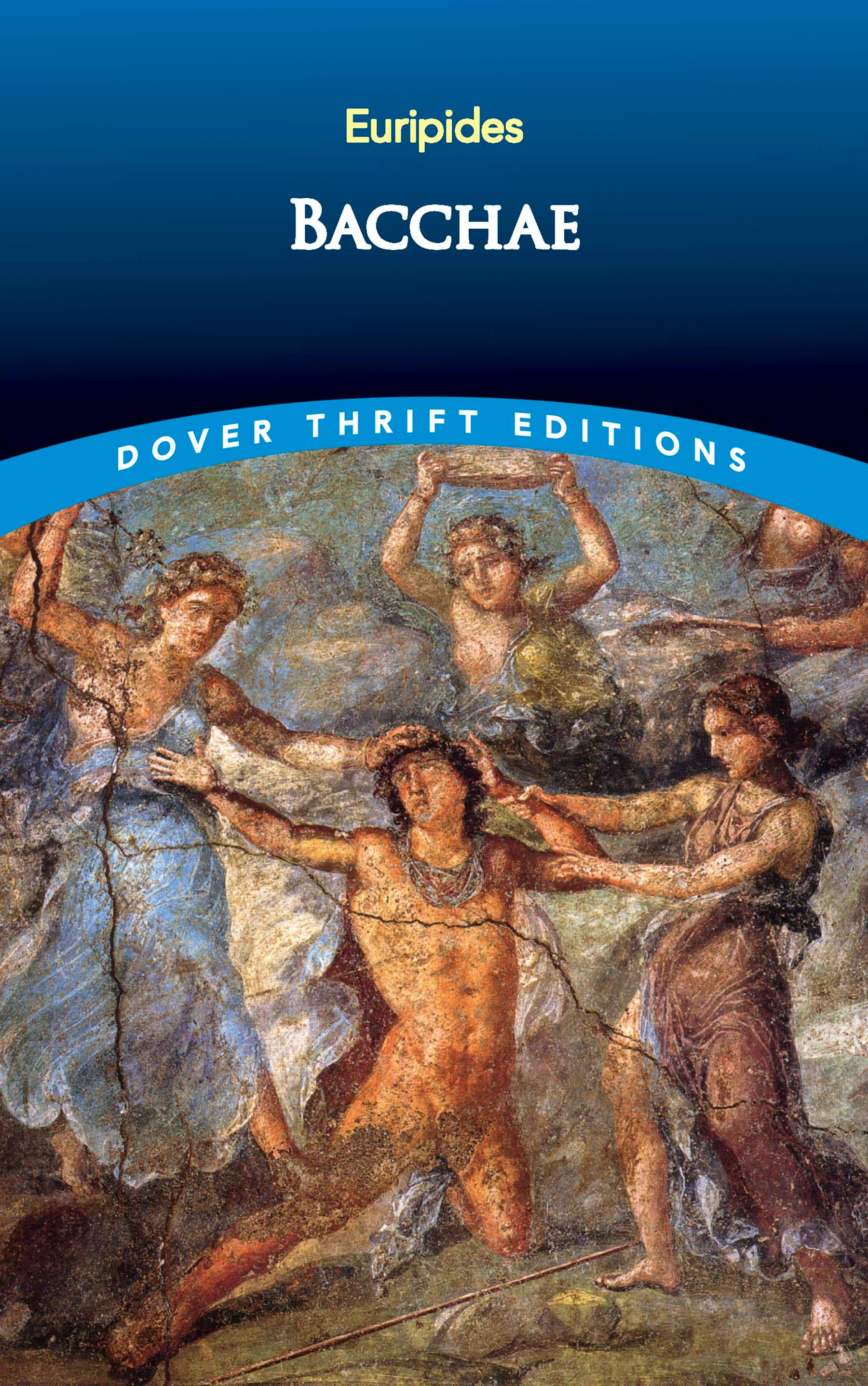
The youngest of the three great Greek tragedians, following Aeschylus and Sophocles, Euripides (ca. 484–406 B.C.) is reputed to have written ninety-two plays, nineteen of which survive. The Bacchae, a late play staged posthumously, concerns the cult of Dionysus, god of wine, whose worship hinged largely on orgiastic and frenzied nature rites.
When Dionysus (in disguise) attempts to spread his cult among the people (especially the women) of Thebes, their king, Pentheus, imprisons Dionysus and tries to suppress his cult. The king's misguided attempt to thwart the will of a god leads to catastrophe. Full of striking scenes, frenzied emotion, and choral songs of great power and beauty, the play is a fine example of Euripides' ability to exploit and manipulate traditional Greek myth to serve his own ends in probing man's psychological makeup and understanding of himself.
Pay easily by card, Klarna, Apple Pay or Google Pay. Not happy? You always have a 14-day money-back guarantee. Read more in our terms. If you have any questions, email us at hello@memmo.org.
Memmo makes studying easier – wherever you are in the world. We bring your course books and smart study tools together in one place: summaries, quizzes, podcasts and flashcards. Plus Ted, your study buddy who answers anything you wonder. Over 75,000 students already study here – built to help you learn faster and stress less.