
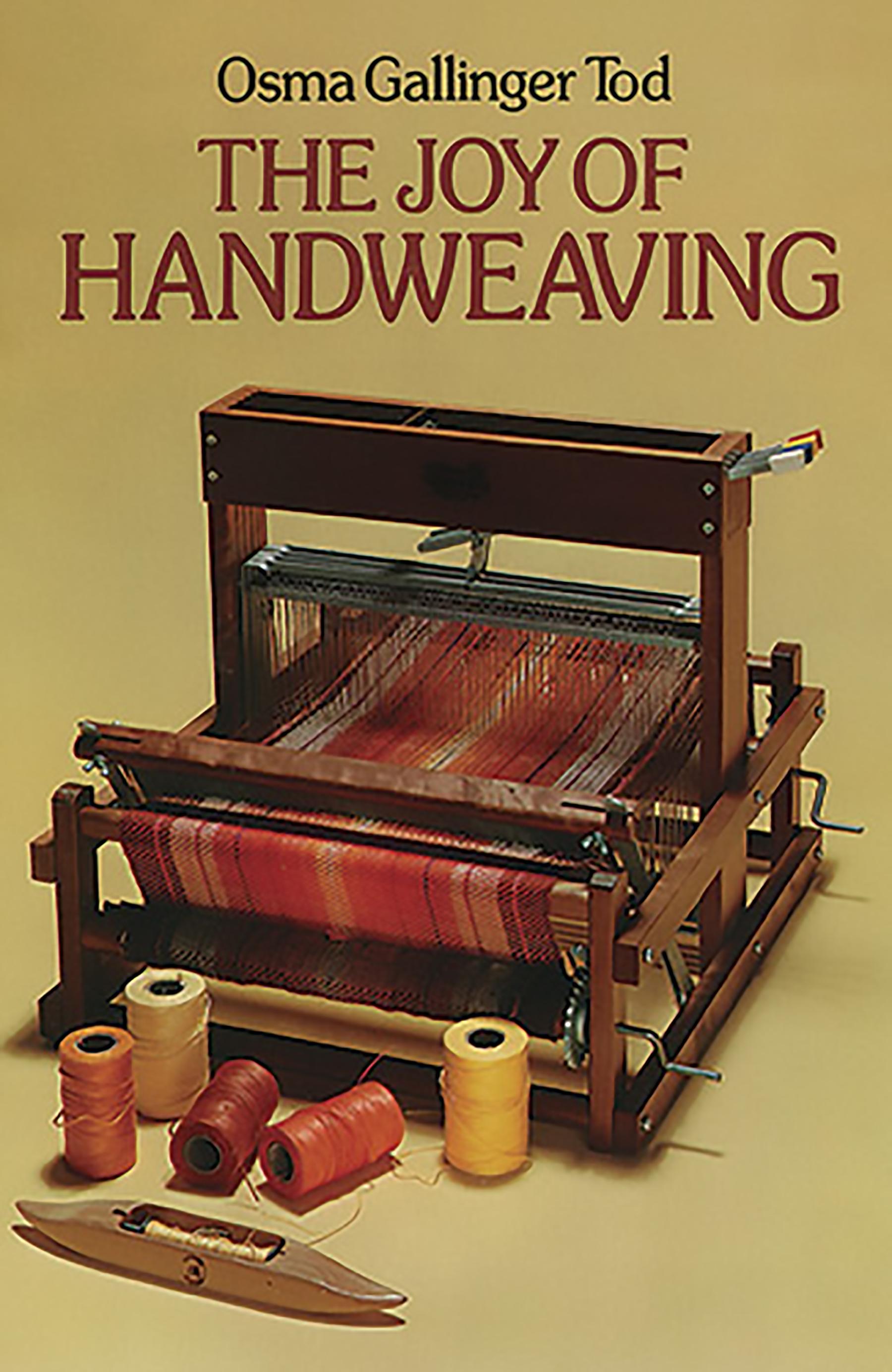
This is the first paperback edition of a manual well known to weavers for its great thoroughness, clarity, and value to beginning and professional weavers alike. The author has drawn upon many years of experience as a teacher and writer in preparing this practical text of basic weaving techniques and projects from the simplest to the extremely complex.
Each topic of weaving theory and technique is presented with its practical applications in mind. Within the first thirty pages, readers learn enough to complete their first weaving project, a bookmark, and this leads directly to the weaving of rugs on a loom, the process of weaving on a two-harness loom, threading plain weave from a draft, making a two-harness table loom (readers following the clear diagram and instructions will have no trouble building the loom), preparing the weft, handling of threads, two-harness design methods, the weaving of rag rugs in plain weave, useful articles woven with striped warps and wefts, tapestry techniques, and design weaves.
For advanced weavers, the second major section of the book covers a great variety of weaves for the four-harness loom and related information: how to warp and thread a four-harness loom, weaving both plain and pattern weave, the twill family of weaves and herringbone variations, the principles of overshot pattern weaving, the diamond or cross family, the monk's belt pattern and its uses, practical overshot patterns, designing drafts and special techniques, ways of weaving overshot, special four-harness techniques (summer and winter weave, the Bronson weave, the M's and O's weave, the crackle weave, the waffle weave, matta technique, syncopation, double weaving on a four-harness loom).
The author then details multi-harness weaves such as multi-harness twill, eight-harness damask design, and several others. Then follow discussions of the uses of color in weaving designs, planning borders, the various draft notations (European and American), weaving with synthetic fibers, thread sizes, counts and yardage, and costs of handwoven fabrics. There is a thread chart of warp settings and suitable wefts. A final chapter gives instructions for making several projects from hand-woven fabrics (a folder for linens, a small ornamental box, jackets and suits, and others). The text is fully illustrated throughout with photographs and labelled diagrams.
Pay easily by card, Klarna, Apple Pay or Google Pay. Not happy? You always have a 14-day money-back guarantee. Read more in our terms. If you have any questions, email us at hello@memmo.org.
Memmo makes studying easier – wherever you are in the world. We bring your course books and smart study tools together in one place: summaries, quizzes, podcasts and flashcards. Plus Ted, your study buddy who answers anything you wonder. Over 50,000 students already study here – built to help you learn faster and stress less.