
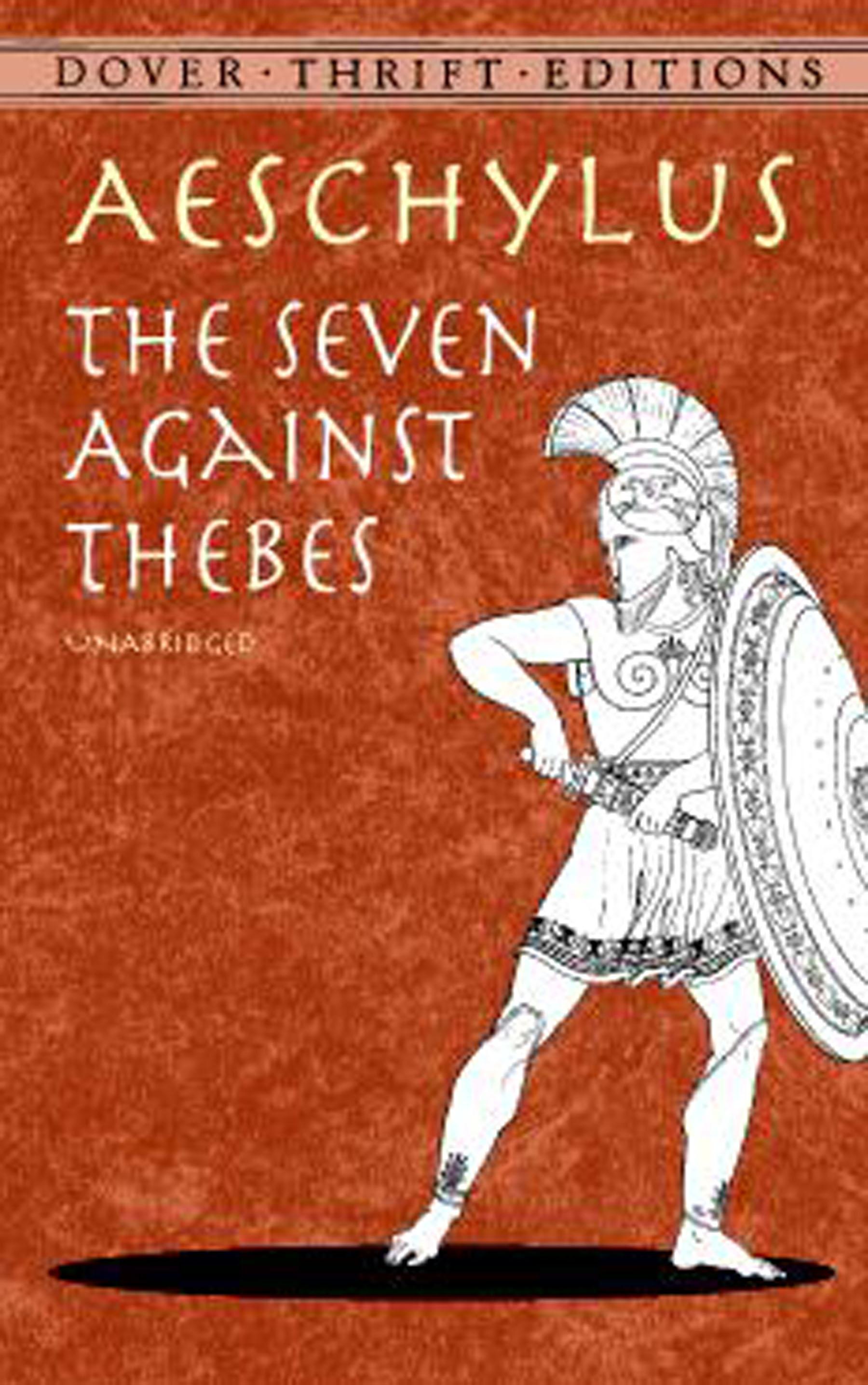
Often called the father of Greek tragedy, Aeschylus (525–456 B.C.) was the earliest and possibly the greatest of the Greek tragic poets. Altogether he may have written as many as 90 plays (including satyr plays as well as tragedies), but only seven have survived.
The Seven Against Thebes (first produced in 467 B.C.) was the final play in a trilogy (the other two are lost) dramatizing the well-known legend of Laius and his son Oedipus. In this culminating play, Oedipus is dead after his banishment from Thebes, and his two sons vie for the crown. The victor, Eteocles, expels his brother, Polynices, who flees to Argos and recruits a force of seven champions to lead an assault on Thebes. The tragic outcome is the fulfillment of the curse of Oedipus — that his sons should divide their inheritance with the sword.
Although Sophocles' treatment of the Oedipus legend is better known, the dialogue and imagery in Aeschylus's play retain an immediacy that resonates with modern readers and audiences. The result is a deeply moving theatrical milestone that is essential reading for students of literature, drama, and the classics.
Pay easily by card, Klarna, Apple Pay or Google Pay. Not happy? You always have a 14-day money-back guarantee. Read more in our terms. If you have any questions, email us at hello@memmo.org.
Memmo makes studying easier – wherever you are in the world. We bring your course books and smart study tools together in one place: summaries, quizzes, podcasts and flashcards. Plus Ted, your study buddy who answers anything you wonder. Over 75,000 students already study here – built to help you learn faster and stress less.