
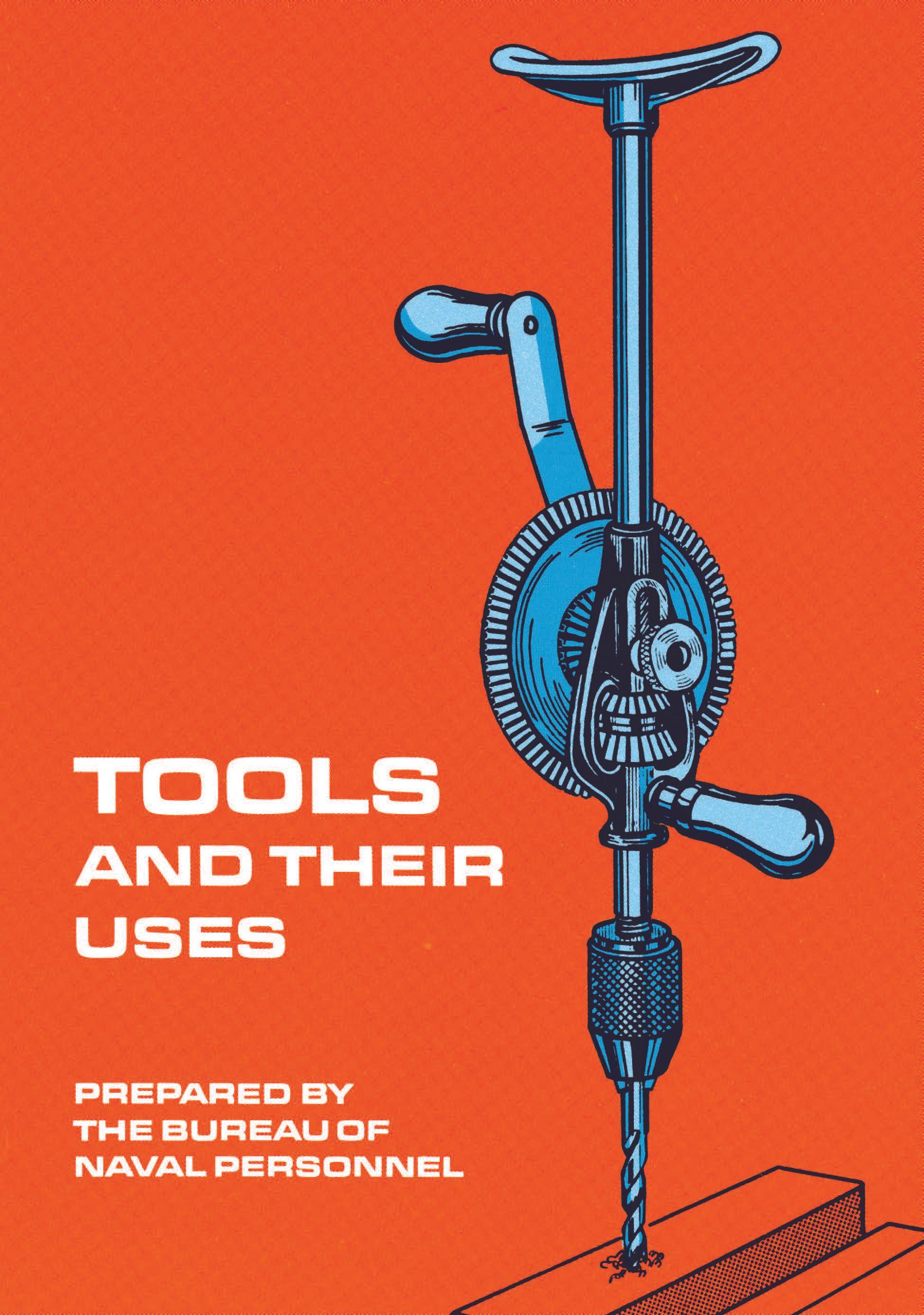
Do you have trouble with tools — find that they wear out too quickly, find that you can't decide which tools to buy or which tools to use for a specific job, find that little things continually go wrong? The only way to learn to use tools, of course, is by using them, but first you have to know which tools to use and why.
This manual, originally prepared for the use of naval personnel, was designed to present the basic hand and power tools that the ordinary person is likely to use. Through a wealth of diagrams, clear explanations, safety tips, and operating instructions you will soon learn the basics of choosing tools and using them as they were meant to be used. Nearly every hand tool you are likely to use around the house is described in the first chapter: hammers, wrenches, screwdrivers, wood saws, planes, wood chisels, metal chisels, dies, drills, files, hacksaws, punches, reamers, taps, clamps, vises, pliers, knives. Chapter two covers the common power tools: drills, grinders, sanders. Chapter three covers measuring tools from rules and tapes to calipers, micrometers, and squares with detailed instructions on how to use each one. Chapter four describes the common nails, screws, bolts, nuts, rivets, and other fasteners you are likely to use. Chapter five describes grinders and shows how to sharpen and care for screwdrivers, chisels, drills, and snips. The final two chapters cover such miscellaneous tasks and tools as metal cutting operations, stripping insulated wire, and soldering techniques.
By the time you finish you should know the names, general uses, and correct operation of all the basic tools, fasteners, and measuring devices you are likely to need around the house. You should be able to select tools for a basic kit for doing simple home repairs. And you should be confident in beginning to use tools for yourself to perform all those simple but necessary repair jobs.
Pay easily by card, Klarna, Apple Pay or Google Pay. Not happy? You always have a 14-day money-back guarantee. Read more in our terms. If you have any questions, email us at hello@memmo.org.
Memmo makes studying easier – wherever you are in the world. We bring your course books and smart study tools together in one place: summaries, quizzes, podcasts and flashcards. Plus Ted, your study buddy who answers anything you wonder. Over 50,000 students already study here – built to help you learn faster and stress less.