
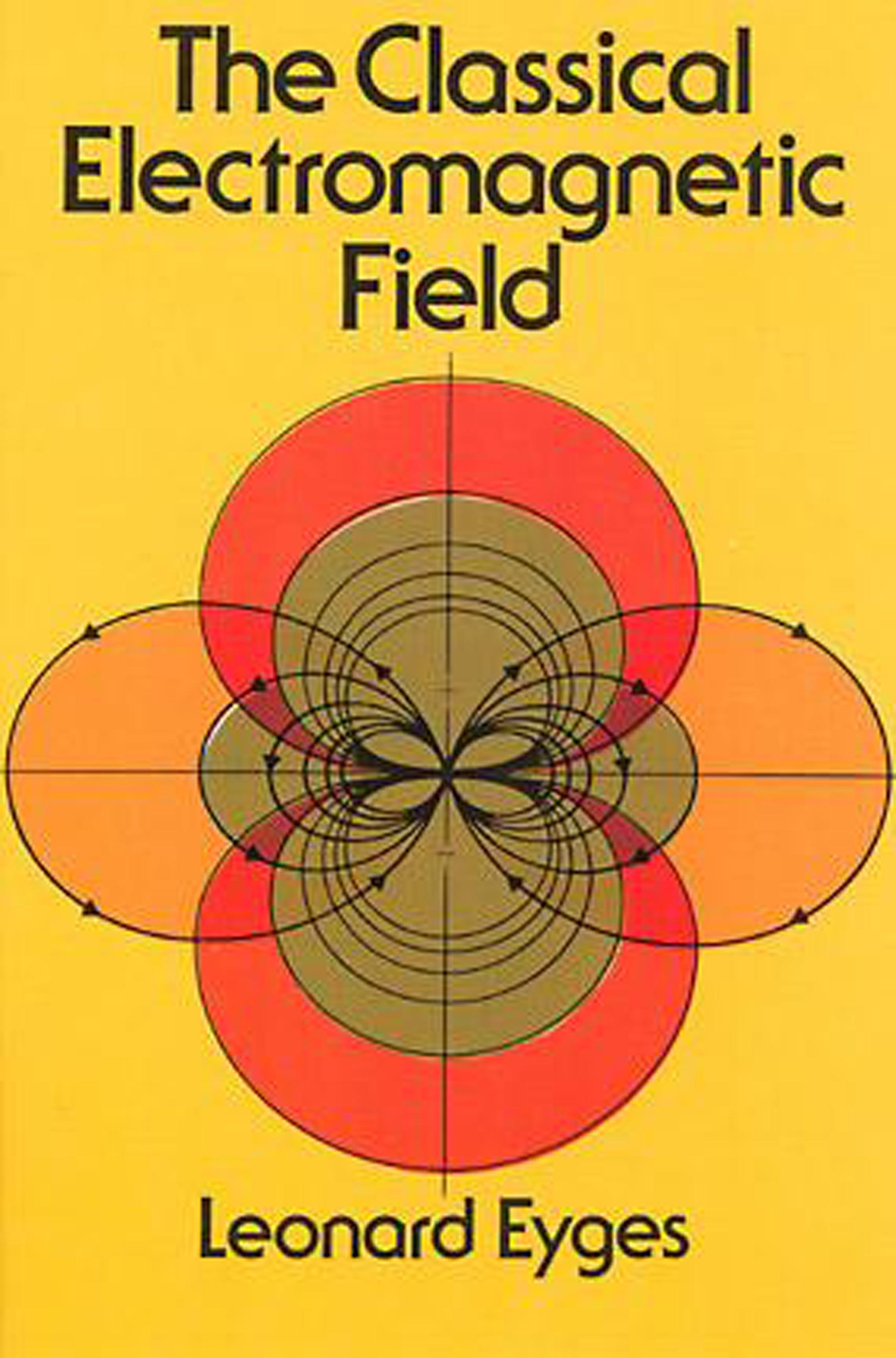
The Classical Electromagnetic Field emphasizes physics first, then mathematics. This and the fact that lucid exposition of theory receives priority over subsequent manipulation marks the book unusual, not to say unique, among field physics texts for advanced undergraduates and graduate students. Long experience of and dissatisfaction with existing texts used in teaching electromagnetic theory at MIT prompted the author to clarify his own approach, resulting in this book. Dr. Eyges is now a Senior Research Physicist at the Rome Air Development Center, Hanscom Air Force Base.
Electromagnetic theory is basic to classical and relativistic physics at every level. This text covers material for a year's course in advanced theoretical electromagnetism, at all times keeping mathematics ancillary to the physics. Prior knowledge of differential equations and vector analysis will prepare the reader for inquiry into:
• meaning and definition of vectors D and H inside matter
• interpretations of the conservation laws for energy, momentum and angular momentum
• localization and flow of electromagnetic energy
• concepts of invariance, form invariance and covariance in special relativity
Summation problems form a kind of pattern in treating all the topics, which include general boundary value, dielectrics, time-varying fields, time-harmonic currents and propagation in imperfect conductors. Problems (no solutions) and references (annotated) are found at the end of each chapter; a general bibliography is also appended. Students have discovered this book in its earlier hardcover edition to be a stimulating exploration of theory, self-contained and suitable for unsupervised study; physicists and professors will find more than one fresh insight into their field.
Electromagnetic theory is basic to classical and relativistic physics at every level. This text covers material for a year's course in advanced theoretical electromagnetism, at all times keeping mathematics ancillary to the physics. Prior knowledge of differential equations and vector analysis will prepare the reader for inquiry into:
• meaning and definition of vectors D and H inside matter
• interpretations of the conservation laws for energy, momentum and angular momentum
• localization and flow of electromagnetic energy
• concepts of invariance, form invariance and covariance in special relativity
Summation problems form a kind of pattern in treating all the topics, which include general boundary value, dielectrics, time-varying fields, time-harmonic currents and propagation in imperfect conductors. Problems (no solutions) and references (annotated) are found at the end of each chapter; a general bibliography is also appended. Students have discovered this book in its earlier hardcover edition to be a stimulating exploration of theory, self-contained and suitable for unsupervised study; physicists and professors will find more than one fresh insight into their field.
Pay easily by card, Klarna, Apple Pay or Google Pay. Not happy? You always have a 14-day money-back guarantee. Read more in our terms. If you have any questions, email us at hello@memmo.org.
Memmo makes studying easier – wherever you are in the world. We bring your course books and smart study tools together in one place: summaries, quizzes, podcasts and flashcards. Plus Ted, your study buddy who answers anything you wonder. Over 50,000 students already study here – built to help you learn faster and stress less.
You might also like
Buy the book0