
“The most sensible book and the most exempt from prejudice that ever was written in that science.” — Horace Walpole.
Born in Stockholm to Scottish parents, taken to London at the age of two and then on to India, William Chambers (1723-96) later studied architecture in Italy and France before finally settling in London. There he gained royal favor as the tutor in architecture of the Prince of Wales (later George III), which proved to be a definite asset throughout his career.
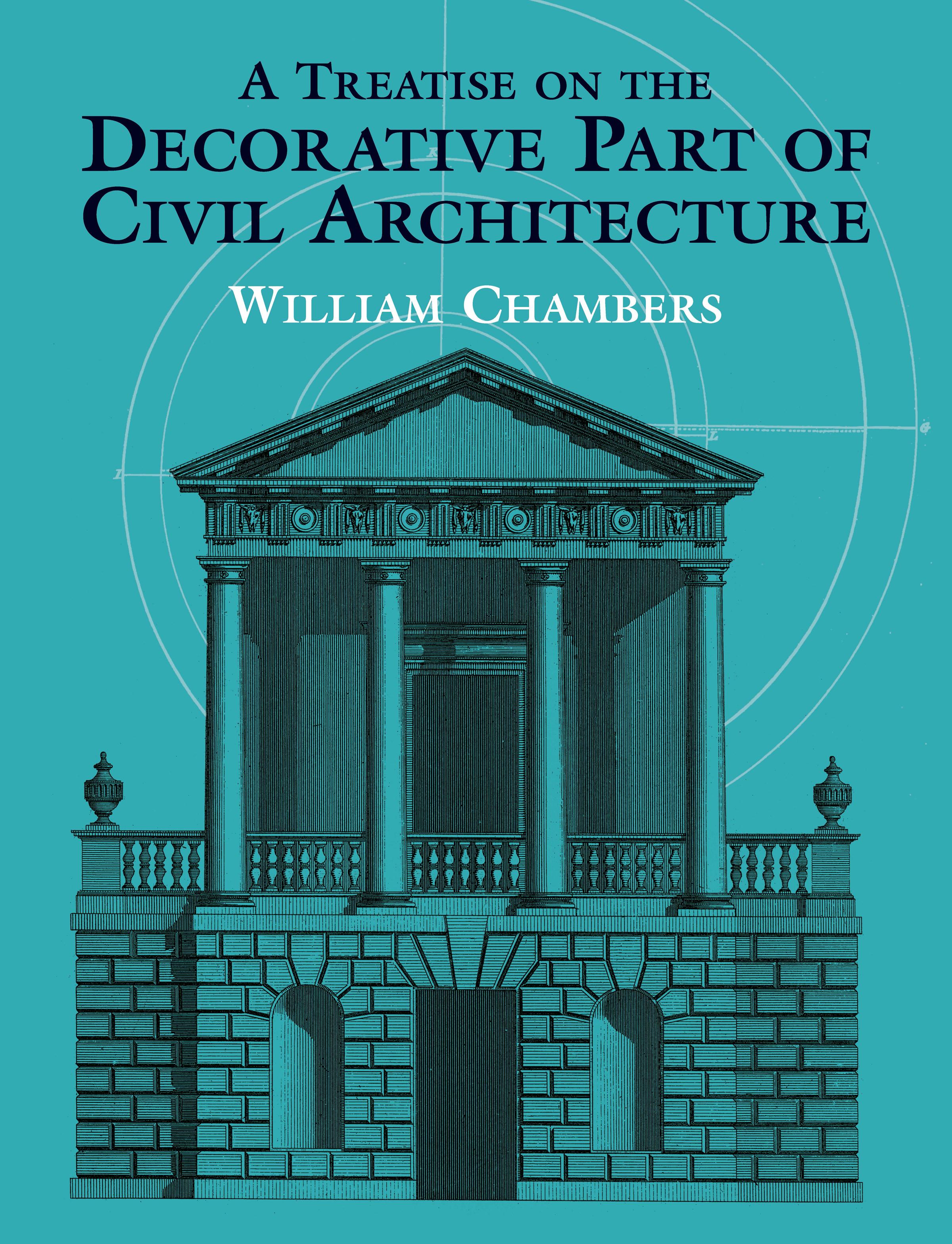
His Treatise, originally published in 1791, was reprinted 32 years later with additional illustrations, articles, and an introduction discussing the qualifications and duties of an architect. This beautifully illustrated reproduction of the rare 1791 edition — originally designed to aid students in their study of architecture — contains 55 superbly engraved, fine-line plates displaying ornate compartments for coved ceilings; plans and elevations of pilaster capitals; pedestals for columns; arches; balusters; and other architectural features.
An extremely influential book on British architectural practices of the eighteenth century, it is still widely regarded as the standard English text on the subject.
Born in Stockholm to Scottish parents, taken to London at the age of two and then on to India, William Chambers (1723-96) later studied architecture in Italy and France before finally settling in London. There he gained royal favor as the tutor in architecture of the Prince of Wales (later George III), which proved to be a definite asset throughout his career.
His Treatise, originally published in 1791, was reprinted 32 years later with additional illustrations, articles, and an introduction discussing the qualifications and duties of an architect. This beautifully illustrated reproduction of the rare 1791 edition — originally designed to aid students in their study of architecture — contains 55 superbly engraved, fine-line plates displaying ornate compartments for coved ceilings; plans and elevations of pilaster capitals; pedestals for columns; arches; balusters; and other architectural features.
An extremely influential book on British architectural practices of the eighteenth century, it is still widely regarded as the standard English text on the subject.
Pay easily by card, Klarna, Apple Pay or Google Pay. Not happy? You always have a 14-day money-back guarantee. Read more in our terms. If you have any questions, email us at hello@memmo.org.
Memmo makes studying easier – wherever you are in the world. We bring your course books and smart study tools together in one place: summaries, quizzes, podcasts and flashcards. Plus Ted, your study buddy who answers anything you wonder. Over 75,000 students already study here – built to help you learn faster and stress less.
You might also like
Buy the book0