
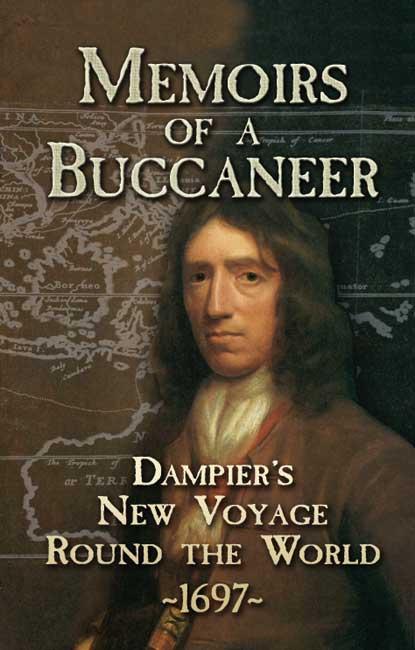
It was William Dampier's passion to see the world that turned him into a buccaneer. He possessed remarkable powers of observation and analysis, and his life as a seventeenth-century navigator aboard pirate and privateering ships is brilliantly detailed in his journal. Throughout his travels of Central and South America and the East Indies, Dampier provides riveting accounts of sea battles against Spanish treasure ships, as well as pirate life, lore, and customs. Originally published in 1697 as the New Voyage, his journal became an instant success, and has been read ever since as one of the greatest travel and adventure accounts ever written.
But Memoirs of a Buccaneer is far more than historical adventure. Dampier was a man of intelligence and education with a strong naturalist's urge, and his book quickly became a vital source of information on the geology, biology, zoology, and peoples of the lands he visited. His descriptions of the West Indian manatee, booby birds, cacao, and mangrove trees—flora and fauna never before heard of in England and the Continent—are incredibly accurate. His notes on the produce of Guam and Mindanao—coconuts, vanilla beans, bananas, breadfruit, and more—exerted a powerful influence on Britain's explorations and colonizations. And his depictions of Central America's Mosquito Indians and the natives of Mindanao proved to be highly reliable.
The influence of this classic book on the work of later travelers is incalculable, leading writers such as Defoe, Swift, and Coleridge to borrow both facts and literary style from it. It continues to inspire readers today.
But Memoirs of a Buccaneer is far more than historical adventure. Dampier was a man of intelligence and education with a strong naturalist's urge, and his book quickly became a vital source of information on the geology, biology, zoology, and peoples of the lands he visited. His descriptions of the West Indian manatee, booby birds, cacao, and mangrove trees—flora and fauna never before heard of in England and the Continent—are incredibly accurate. His notes on the produce of Guam and Mindanao—coconuts, vanilla beans, bananas, breadfruit, and more—exerted a powerful influence on Britain's explorations and colonizations. And his depictions of Central America's Mosquito Indians and the natives of Mindanao proved to be highly reliable.
The influence of this classic book on the work of later travelers is incalculable, leading writers such as Defoe, Swift, and Coleridge to borrow both facts and literary style from it. It continues to inspire readers today.
Pages: 448
Category: Biografi & Memoarer
e-ISBN: 9780486145730
Shipping weight: 1.2 kg
Ships in: 1-2 days
Pay easily by card, Klarna, Apple Pay or Google Pay. Not happy? You always have a 14-day money-back guarantee. Read more in our terms. If you have any questions, email us at hello@memmo.org.
Memmo makes studying easier – wherever you are in the world. We bring your course books and smart study tools together in one place: summaries, quizzes, podcasts and flashcards. Plus Ted, your study buddy who answers anything you wonder. Over 50,000 students already study here – built to help you learn faster and stress less.
You might also like
Buy the book0