
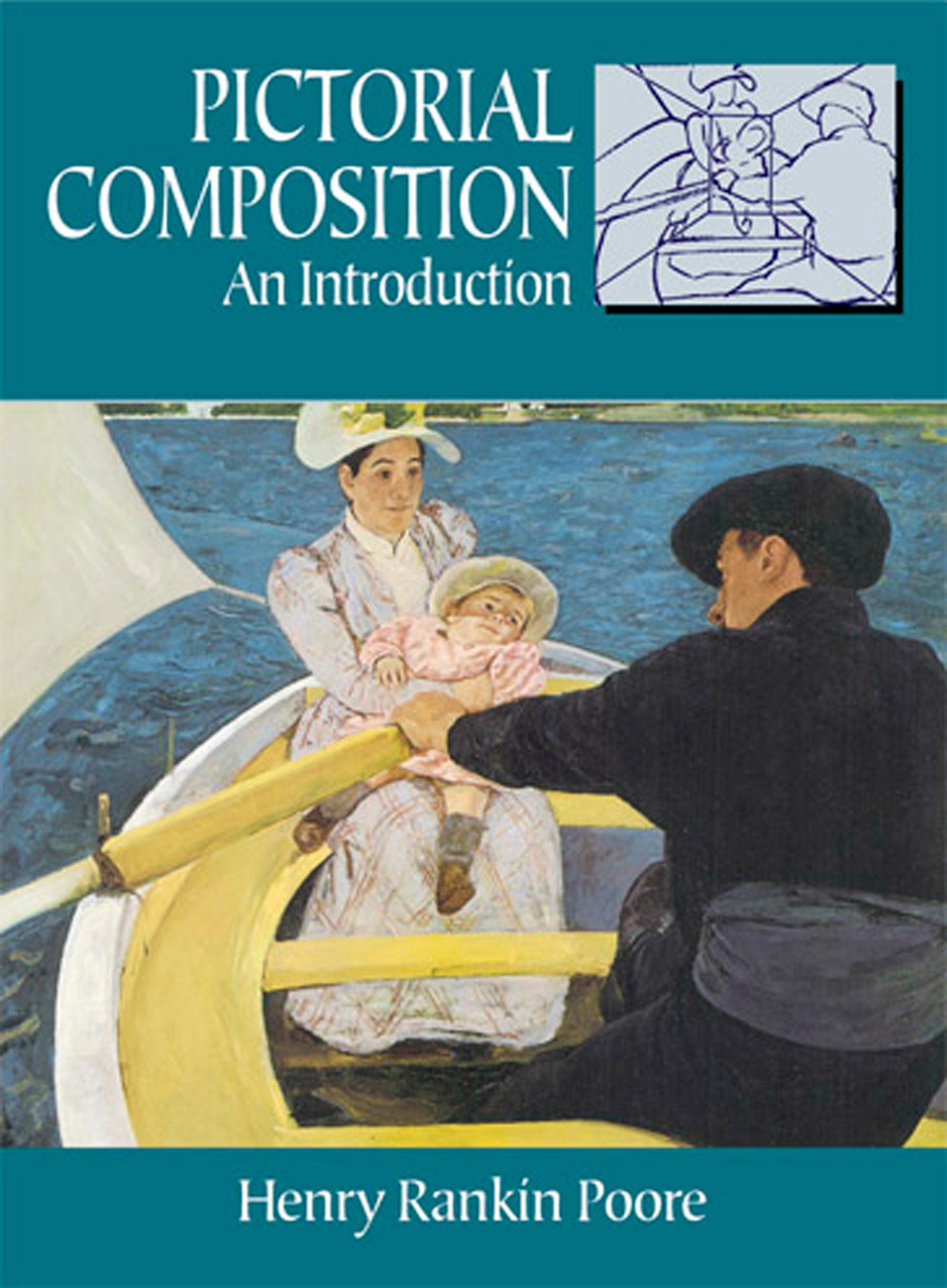
A painting's technique, color, and perspective may all be excellent, yet the painting will fail unless its composition succeeds. Composition is the harmonious arranging of the component parts of a work of art into a unified whole. Henry Poore examines the works of old masters and moderns in this book and uses these examples to explain the principles of compositions in art.
All the paintings that the author analyzes are illustrated in the text — 166 illustrations, including 9 in full color. Thirty-two diagrams by the author accompany his textural discussion of such topics as the importance of balance, entrance and exit, circular observation, angular composition, composition with one or more units, and light and shade. Balance is the most important of these topics, and it is considered in the greatest detail — balance of the steelyard, vertical and horizontal balance, and so on. A complete index enables the reader to locate his own specific areas of interest.
To see how a painting by Cézanne, Goya, or Hopper, for example, follows definite principles of composition allows the practicing artist or art student to learn composition from the finest instructors — the artists themselves. This book is also very useful to the art devotee, who will find his appreciation of the subject greatly enhanced.
Pay easily by card, Klarna, Apple Pay or Google Pay. Not happy? You always have a 14-day money-back guarantee. Read more in our terms. If you have any questions, email us at hello@memmo.org.
Memmo makes studying easier – wherever you are in the world. We bring your course books and smart study tools together in one place: summaries, quizzes, podcasts and flashcards. Plus Ted, your study buddy who answers anything you wonder. Over 50,000 students already study here – built to help you learn faster and stress less.