
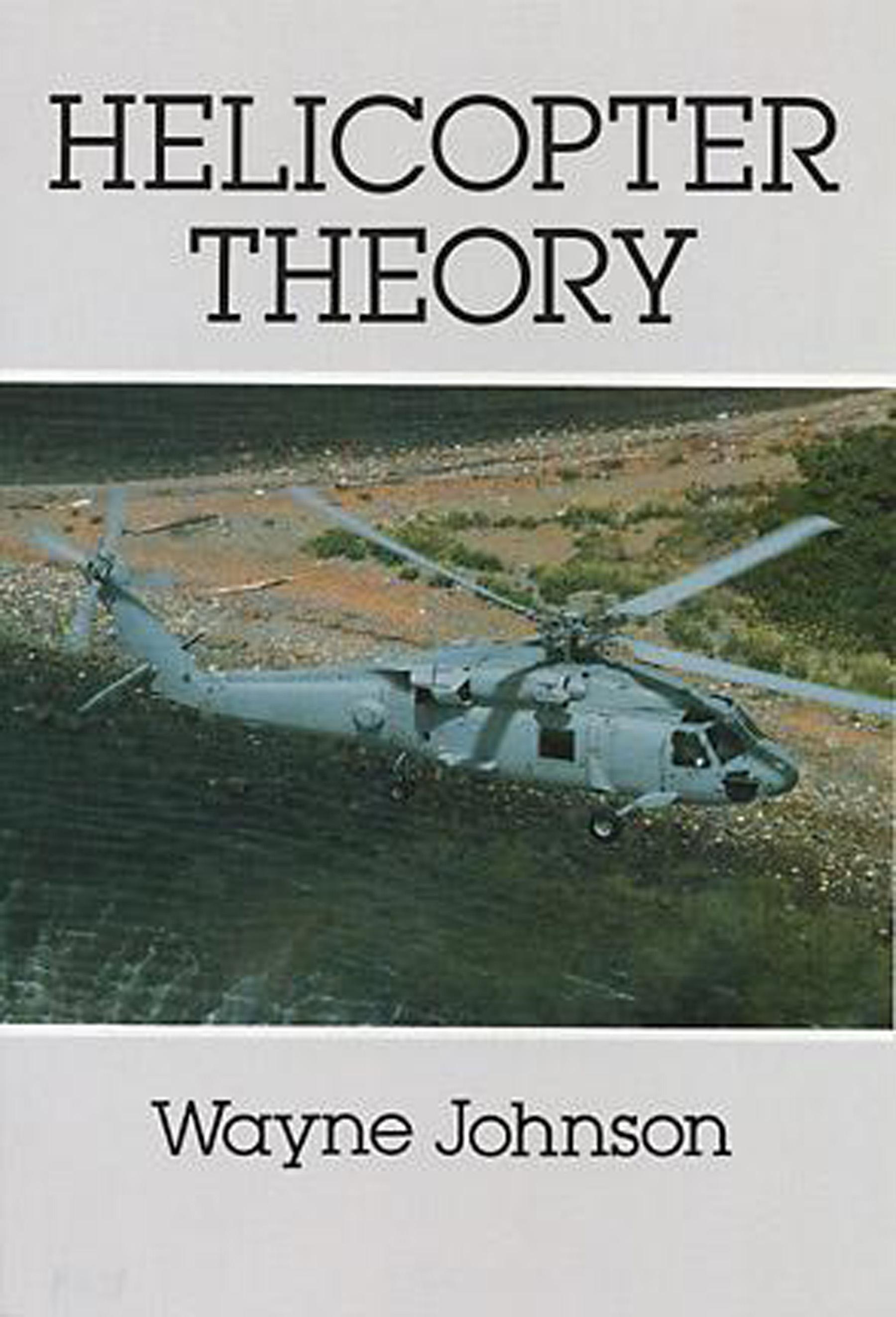
The history of the helicopter may be traced back to the Chinese flying top (c. 400 B.C.) and to the work of Leonardo da Vinci, who sketched designs for a vertical flight machine utilizing a screw-type propeller. In the late nineteenth century, Thomas Edison experimented with helicopter models, realizing that no such machine would be able to fly until the development of a sufficiently lightweight engine. When the internal combustion gasoline engine came on the scene around 1900, the stage was set for the real development of helicopter technology.
While this text provides a concise history of helicopter development, its true purpose is to provide the engineering analysis required to design a highly successful rotorcraft. Toward that end the book offers thorough, comprehensive coverage of the theory of helicopter flight: the elements of vertical flight, forward flight, performance, design, mathematics of rotating systems, rotary wing dynamics and aerodynamics, aeroelasticity, stability and control, stall, noise and more.
Wayne Johnson has worked for the U.S. Army and NASA at the Ames Research Center in California. Through his company Johnson Aeronautics, he is engaged in the development of software that is used throughout the world for the analysis of rotorcraft. In this book, Dr. Johnson has compiled a monumental resource that is essential reading for any student or aeronautical engineer interested in the design and development of vertical-flight aircraft.
Pay easily by card, Klarna, Apple Pay or Google Pay. Not happy? You always have a 14-day money-back guarantee. Read more in our terms. If you have any questions, email us at hello@memmo.org.
Memmo makes studying easier – wherever you are in the world. We bring your course books and smart study tools together in one place: summaries, quizzes, podcasts and flashcards. Plus Ted, your study buddy who answers anything you wonder. Over 50,000 students already study here – built to help you learn faster and stress less.