
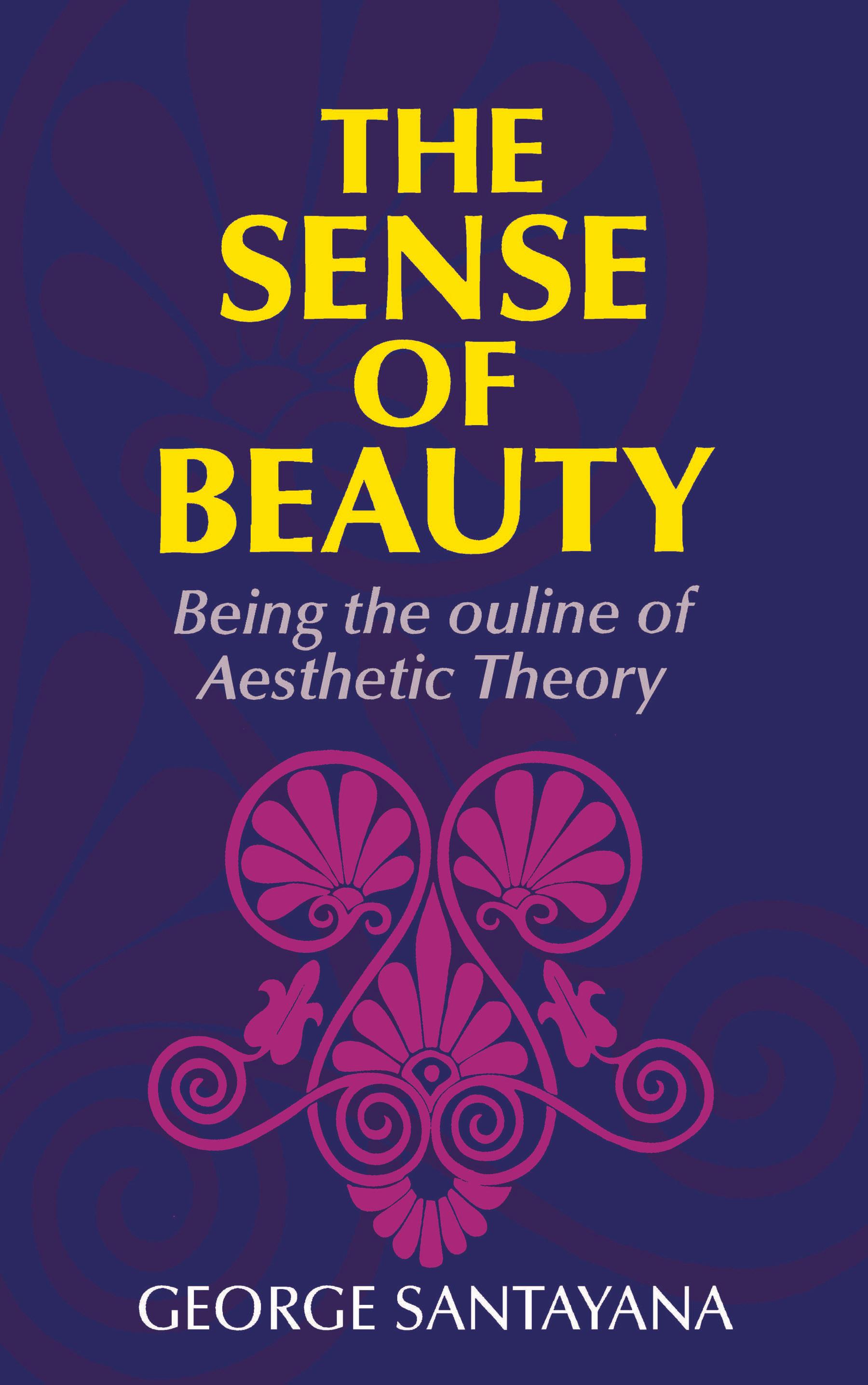
It is remarkably appropriate that this work on aesthetics should have been written by George Santayana, who is probably the most brilliant philosophic writer and the philosopher with the strongest sense of beauty since Plato. It is not a dry metaphysical treatise, as works on aesthetics so often are, but is itself a fascinating document: as much a revelation of the beauty of language as of the concept of beauty.
This unabridged reproduction of the 1896 edition of lectures delivered at Harvard College is a study of "why, when, and how beauty appears, what conditions an object must fulfill to be beautiful, what elements of our nature make us sensible of beauty, and what the relation is between the constitution of the object and the excitement of our susceptibility."
Santayana first analyzes the nature of beauty, finding it irrational, "pleasure regarded as the quality of a thing." He then proceeds to the materials of beauty, showing what all human functions can contribute: love, social instincts, senses, etc. Beauty of form is then analyzed, and finally the author discusses the expression of beauty. Literature, religion, values, evil, wit, humor, and the possibility of finite perfection are all examined. Presentation throughout the work is concrete and easy to follow, with examples drawn from art, history, anthropology, psychology, and similar areas.
Pay easily by card, Klarna, Apple Pay or Google Pay. Not happy? You always have a 14-day money-back guarantee. Read more in our terms. If you have any questions, email us at hello@memmo.org.
Memmo makes studying easier – wherever you are in the world. We bring your course books and smart study tools together in one place: summaries, quizzes, podcasts and flashcards. Plus Ted, your study buddy who answers anything you wonder. Over 50,000 students already study here – built to help you learn faster and stress less.