
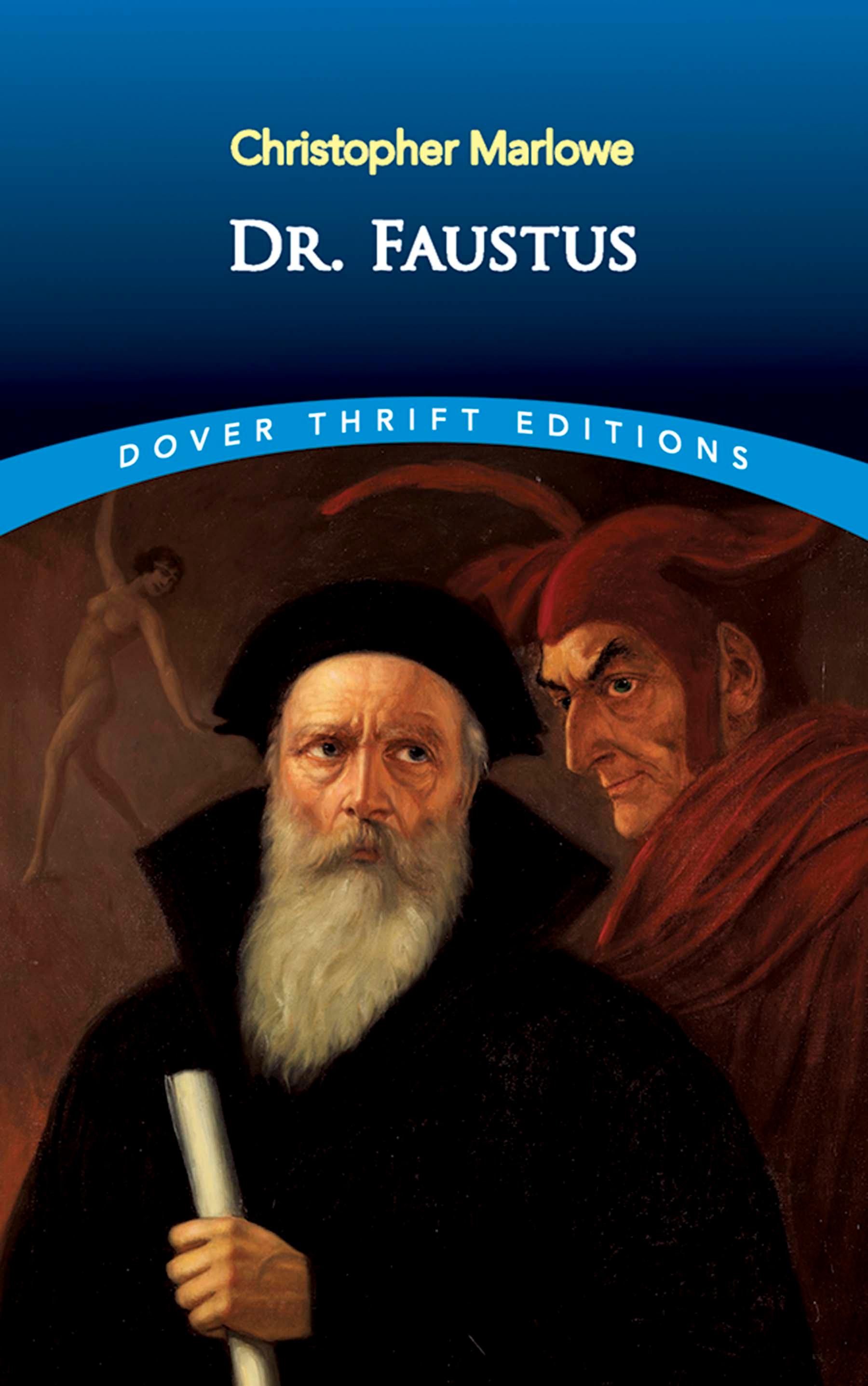
One of the most durable myths in Western culture, the story of Faust tells of a learned German doctor who sells his soul to the devil in exchange for knowledge and power. Early enactments of Faust's damnation were often the raffish fare of clowns and low comedians. But the young Elizabethan playwright Christopher Marlowe (1564–1593) recognized in the story of Faust's temptation and fall the elements of tragedy.
In his epic treatment of the Faust legend, Marlowe retains much of the rich phantasmagoria of its origins. There are florid visions of an enraged Lucifer, dueling angels, the Seven Deadly Sins, Faustus tormenting the Pope, and his summoning of the spirit of Alexander the Great. But the playwright created equally powerful scenes that invest the work with tragic dignity, among them the doomed man's calling upon Christ to save him and his ultimate rejection of salvation for the embrace of Helen of Troy.
With immense poetic skill, and psychological insight that foreshadowed the later work of Shakespeare and the Jacobean playwrights, Marlowe created in Dr. Faustus one of the first true tragedies in English. Vividly dramatic, rich in poetic grandeur, this classic play remains a robust and lively exemplar of the glories of Elizabethan drama.
Pay easily by card, Klarna, Apple Pay or Google Pay. Not happy? You always have a 14-day money-back guarantee. Read more in our terms. If you have any questions, email us at hello@memmo.org.
Memmo makes studying easier – wherever you are in the world. We bring your course books and smart study tools together in one place: summaries, quizzes, podcasts and flashcards. Plus Ted, your study buddy who answers anything you wonder. Over 75,000 students already study here – built to help you learn faster and stress less.