
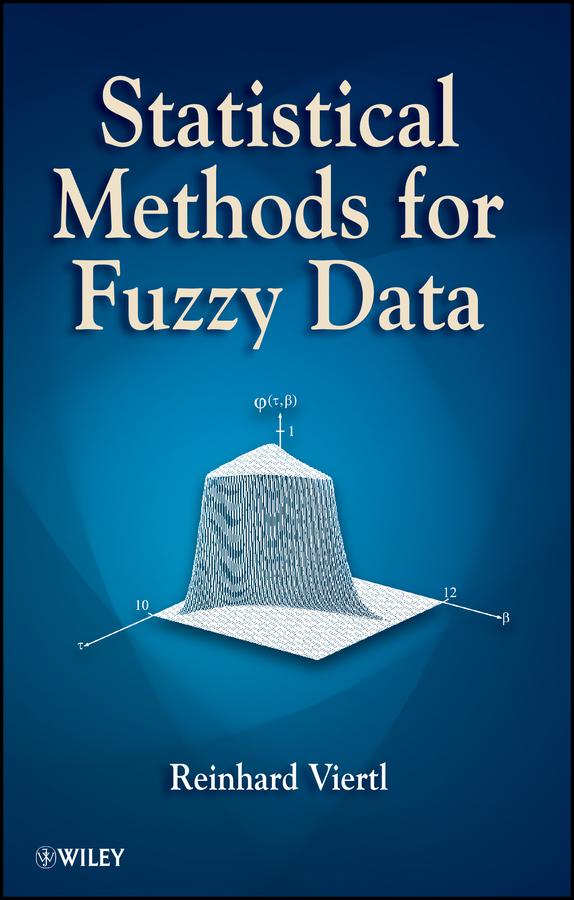
Statistical analysis methods have to be adapted for the analysis of fuzzy data. In this book, the foundations of the description of fuzzy data are explained, including methods on how to obtain the characterizing function of fuzzy measurement results. Furthermore, statistical methods are then generalized to the analysis of fuzzy data and fuzzy a-priori information.
Key Features:
- Provides basic methods for the mathematical description of fuzzy data, as well as statistical methods that can be used to analyze fuzzy data.
- Describes methods of increasing importance with applications in areas such as environmental statistics and social science.
- Complements the theory with exercises and solutions and is illustrated throughout with diagrams and examples.
- Explores areas such quantitative description of data uncertainty and mathematical description of fuzzy data.
This work is aimed at statisticians working with fuzzy logic, engineering statisticians, finance researchers, and environmental statisticians. It is written for readers who are familiar with elementary stochastic models and basic statistical methods.
Pay easily by card, Klarna, Apple Pay or Google Pay. Not happy? You always have a 14-day money-back guarantee. Read more in our terms. If you have any questions, email us at hello@memmo.org.
Memmo makes studying easier – wherever you are in the world. We bring your course books and smart study tools together in one place: summaries, quizzes, podcasts and flashcards. Plus Ted, your study buddy who answers anything you wonder. Over 75,000 students already study here – built to help you learn faster and stress less.