
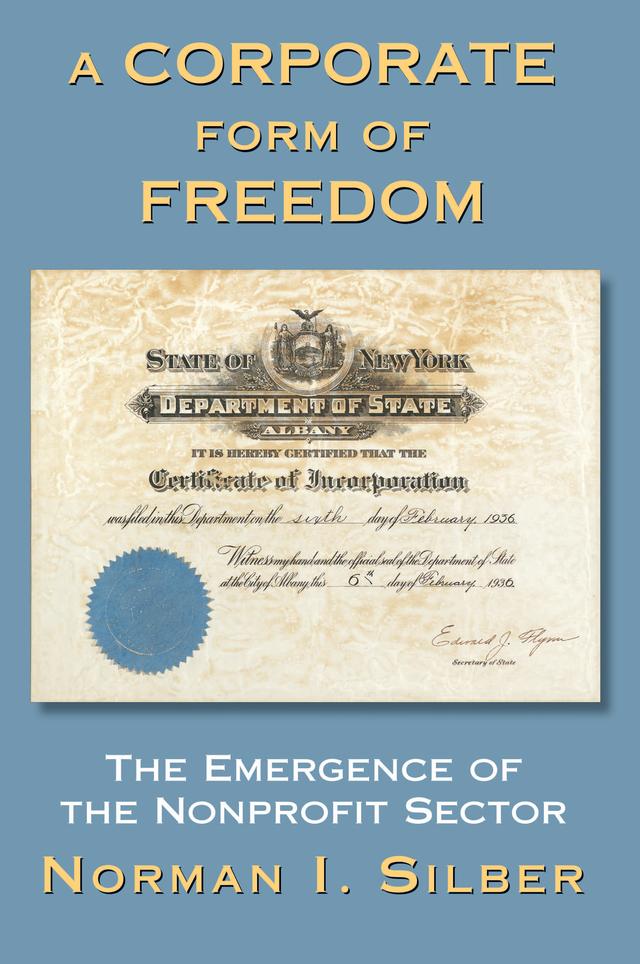
A Corporate Form of Freedom explores how courts and legislatures have decided which nonprofit groups can pursue their missions as corporations. For many years it was a privilege to hold a nonprofit charter. This view changed during the 1950s and 1960s. A new generation contended that legal theory, racial justice, and democratic values demanded that the nonprofit corporate form be available to all groups as a matter of right. As a result, nonprofit corporate status became America's corporate form for free expression. The new perspective did more than enlarge public discourse, however. It also reduced official authority to supervise or otherwise hold nonprofit organizations accountable for their activities. Norman I. Silber examines how the nonprofit world was transformed -- a transformation which refashioned political and social discourse, altered the economy, and created many of the difficulties the nonprofit sector faces today.
Pay easily by card, Klarna, Apple Pay or Google Pay. Not happy? You always have a 14-day money-back guarantee. Read more in our terms. If you have any questions, email us at hello@memmo.org.
Memmo makes studying easier – wherever you are in the world. We bring your course books and smart study tools together in one place: summaries, quizzes, podcasts and flashcards. Plus Ted, your study buddy who answers anything you wonder. Over 50,000 students already study here – built to help you learn faster and stress less.
You might also like
Buy the book0