
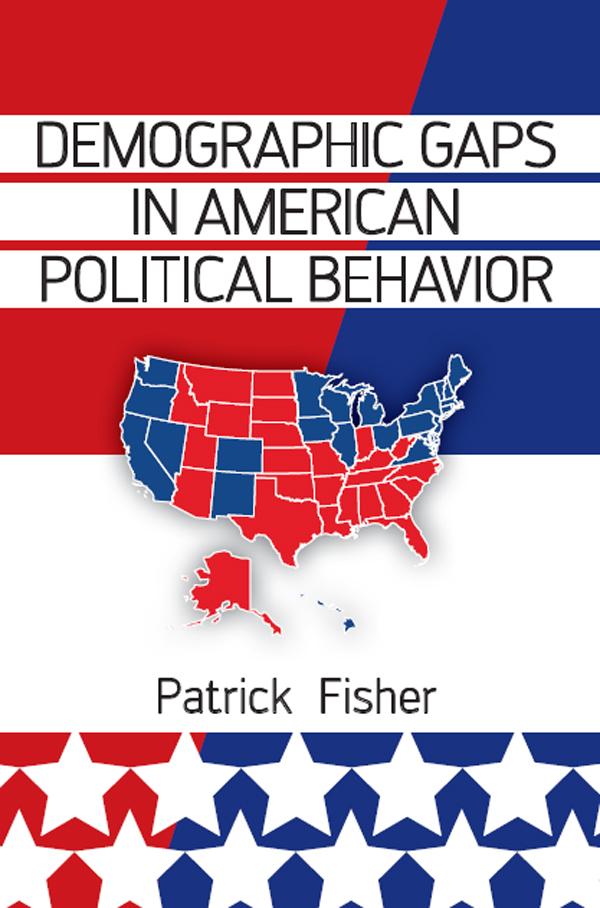
Demographic Gaps in American Political Behavior examines the political behavior of various groups in the United States in an effort to demonstrate how demographic backgrounds and socialization affect political behavior. Media coverage has disproportionately focused on the red state versus blue state divide, leaving the impression that American political behavior is determined solely by place of residence. This, however, ignores the numerous other political divides that exist in the United States today. In order to better conceptualize the landscape of American political behavior, Patrick Fisher analyzes the political gaps in six different demographics (income, religion, gender, race, age, and geography) and examines the effect these political gaps have on public opinion, policy, and party positioning. Written in an accessible fashion, Demographic Gaps in American Political Behavior uses contemporary examples and data from the 2008 and 2012 elections to help readers understand how and why demographic background has the potential to greatly influence political opinions and behavior.
Pay easily by card, Klarna, Apple Pay or Google Pay. Not happy? You always have a 14-day money-back guarantee. Read more in our terms. If you have any questions, email us at hello@memmo.org.
Memmo makes studying easier – wherever you are in the world. We bring your course books and smart study tools together in one place: summaries, quizzes, podcasts and flashcards. Plus Ted, your study buddy who answers anything you wonder. Over 50,000 students already study here – built to help you learn faster and stress less.