
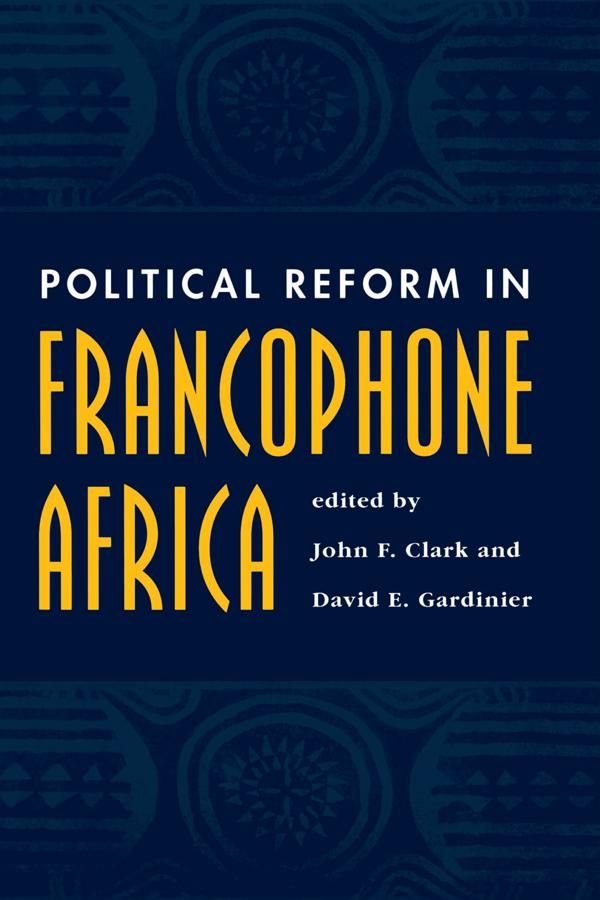
Most African states experienced only a few fleeting years of democratic rule after independence before succumbing to authoritarianism. During the 1970s and 1980s, Africans and Westerners alike came to view dictatorship to be as much a part of the region’s social landscape as its grinding poverty. Yet the end of the Cold War and the sharpening of the economic crisis at the end of the 1980s have breathed new life into campaigns for democracy in Africa, shaking the foundations of many long-standing autocracies. In some cases, dramatic transitions took place, though the fate of the new democracies is far from certain. This volume explores the origins and evolution of political reform movements in several states of francophone Africa. The authors first make the case for the distinctiveness of francophone Africa, based on the influences of colonial history, language, and France’s contemporary role in Africa, then survey the challenges of reform, including the problems of transition from authoritarianism and consolidation of democratic regimes. Case studies of thirteen former French and Belgian colonies follow, organized by level of reform achieved: peaceful regime change, incremental reforms, repressed reform efforts, and reform in the midst of war.
Pay easily by card, Klarna, Apple Pay or Google Pay. Not happy? You always have a 14-day money-back guarantee. Read more in our terms. If you have any questions, email us at hello@memmo.org.
Memmo makes studying easier – wherever you are in the world. We bring your course books and smart study tools together in one place: summaries, quizzes, podcasts and flashcards. Plus Ted, your study buddy who answers anything you wonder. Over 50,000 students already study here – built to help you learn faster and stress less.
You might also like
Buy the book0