
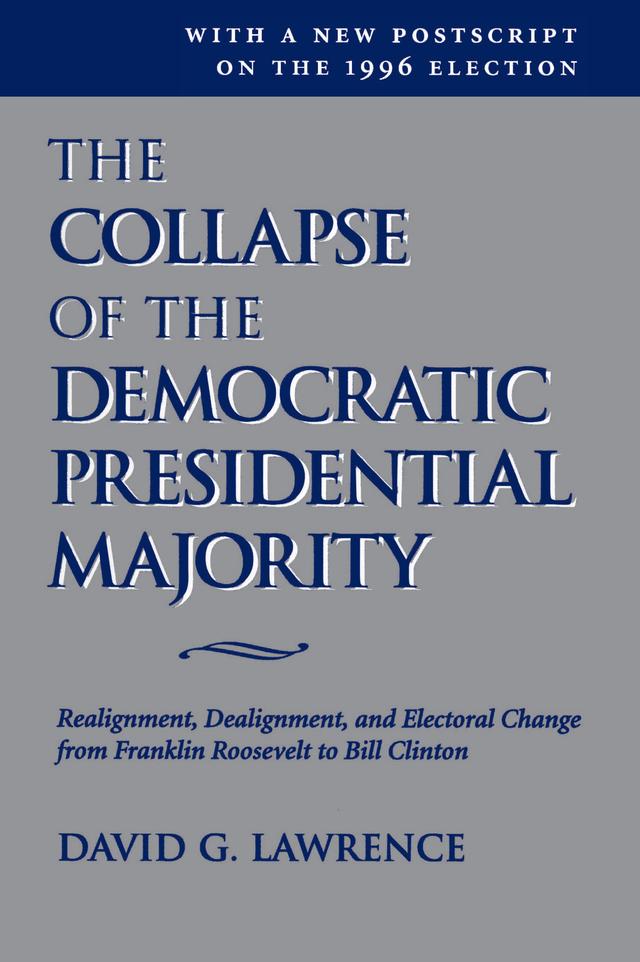
The Collapse of the Democratic Presidential Majority makes sense of the last half century of American presidential elections as part of a transition from a world in which realignment was still possible to a dealigned political universe. The book combines analysis of presidential elections in the postwar world with theories of electoral changeshowing how Reagan bridged the eras of re- and dealignment and why Clinton was elected despite the postwar trend. American electoral politics since World War II stubbornly refuse to fit the theories of political scientists. The long collapse of the Democratic presidential majority does not look much like the classic realignments of the past: The Republicans made no corresponding gains in sub-presidential elections and never won the loyalty of a majority of the electorate in terms of party identification. And yet, the period shows a stability of Republican dominance quite at odds with the volatility and unpredictability central to the competing theory of dealignment. The Collapse of the Democratic Presidential Majority makes sense of the last half century of American presidential elections as part of a transition from a world in which realignment was still possible to a dealigned political universe. The book combines analysis of presidential elections in the postwar world with theories of electoral changeshowing how Reagan bridged the eras of re- and dealignment and why Clinton was elected despite the postwar trend.
Pay easily by card, Klarna, Apple Pay or Google Pay. Not happy? You always have a 14-day money-back guarantee. Read more in our terms. If you have any questions, email us at hello@memmo.org.
Memmo makes studying easier – wherever you are in the world. We bring your course books and smart study tools together in one place: summaries, quizzes, podcasts and flashcards. Plus Ted, your study buddy who answers anything you wonder. Over 50,000 students already study here – built to help you learn faster and stress less.
You might also like
Buy the book0