
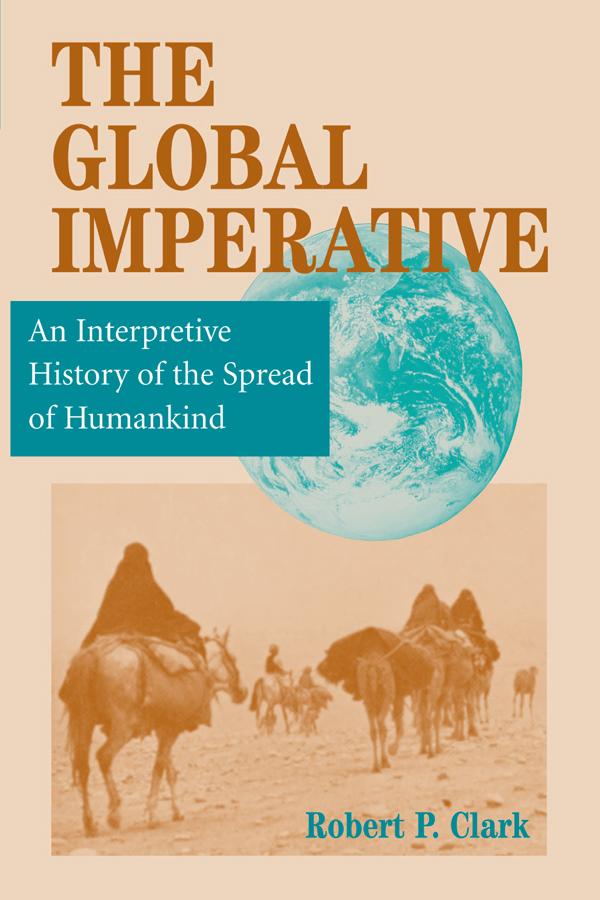
Robert Clark delves into 100 millennia of human history to create a unified and consistent explanation for humankind's inner need to spread itself across the globe. He examines key events from different eras, such as the voyages of the Chinese treasure fleet, the shaping of the Aztec's trade system in MesoAmerica, the role of steam-powered transport in the supply of an English city, the rise of the gas-powered engine, and the digitization of information in the computer age, melding them together to form a framework for understanding the process of globalization.Drawing on a variety of academic disciplines including the physical sciences, biology, anthropology, geography, economics, political science, sociology, and demography, Clark reveals the spread of humans and their cultures to be part of an ongoing struggle to supply the energy needs of an increasingly large and complex society. ?Entropy? and ?thermodynamics,? terms often ignored or misunderstood by social science students, clearly frame a fascinating vision of humans' inherent tendency toward a globalized world.Although human expansion has drawn increasing attention in the last several decades, as this tumultuous century has progressed, Clark shows that the process of globalization is not a recent concept. From the very roots of the species, humankind has been driven by a range of internal and external factors to expand in order to survive the increasing complexity of human civilization.
Pay easily by card, Klarna, Apple Pay or Google Pay. Not happy? You always have a 14-day money-back guarantee. Read more in our terms. If you have any questions, email us at hello@memmo.org.
Memmo makes studying easier – wherever you are in the world. We bring your course books and smart study tools together in one place: summaries, quizzes, podcasts and flashcards. Plus Ted, your study buddy who answers anything you wonder. Over 50,000 students already study here – built to help you learn faster and stress less.
You might also like
Buy the book0