
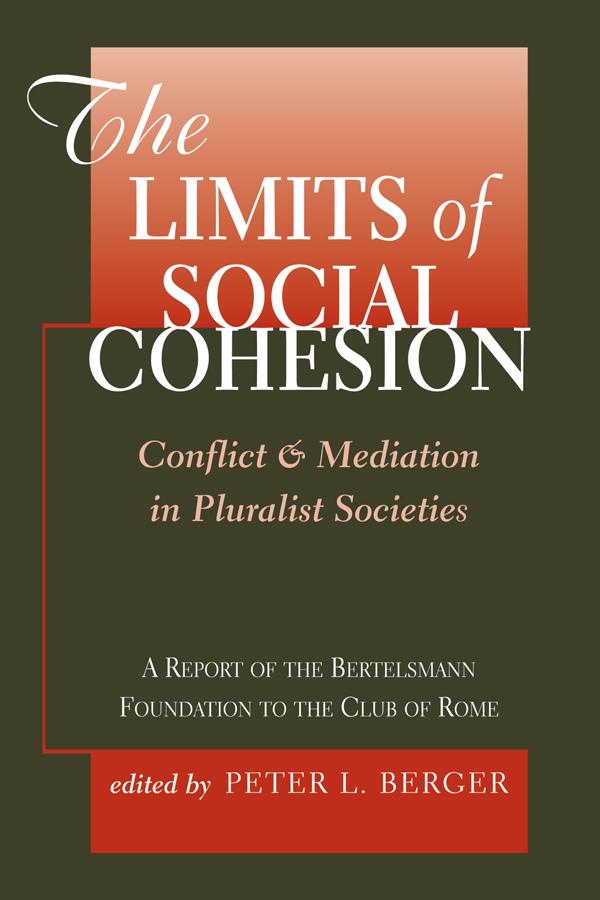
Normative conflicts center on fundamental disagreements over issues of public morality and the identity of a society. In thinking about normative conflicts on a global scale, two principal questions arise. First, are there common characteristics of such conflicts worldwide? Second, which institutions polarize such conflicts and which can serve to mediate them? This pathbreaking book, edited by renowned sociologist Peter Berger, examines both questions through findings gained from a study of normative conflicts in eleven societies located in different parts of the world and at different levels of economic development. On both points, the findings have proved surprising. Although there are, of course, normative conflicts peculiar to individual societies, two features emerged as common to most of the societies examined: one concerns disputes over the place of religion in the state and in public life; the other is a clash of values between a cultural elite and the broad masses of the population. Often the two features coincide. For instance, in many countries the elite is the least religious group within the population, and therefore, resentments against the elite are often mobilized under religious banners. On the institutional question, the study started out with a bias toward the institutions of so-called “civil society” that is, the institutions that stand between the personal life of individuals and the vast mega-structures of a modern society. The finding is that the same institutions can either polarize or mediate normative conflicts. The conclusion suggests one must ask not just what sort of institutions one looks to for social cohesion, but what ideas and values inspire these institutions. Comprising reports from some of the leading scholars dealing with normative conflict, this book is an important contribution to understanding the cultural fault lines that threaten social cohesion.
Pay easily by card, Klarna, Apple Pay or Google Pay. Not happy? You always have a 14-day money-back guarantee. Read more in our terms. If you have any questions, email us at hello@memmo.org.
Memmo makes studying easier – wherever you are in the world. We bring your course books and smart study tools together in one place: summaries, quizzes, podcasts and flashcards. Plus Ted, your study buddy who answers anything you wonder. Over 50,000 students already study here – built to help you learn faster and stress less.
You might also like
Buy the book0