
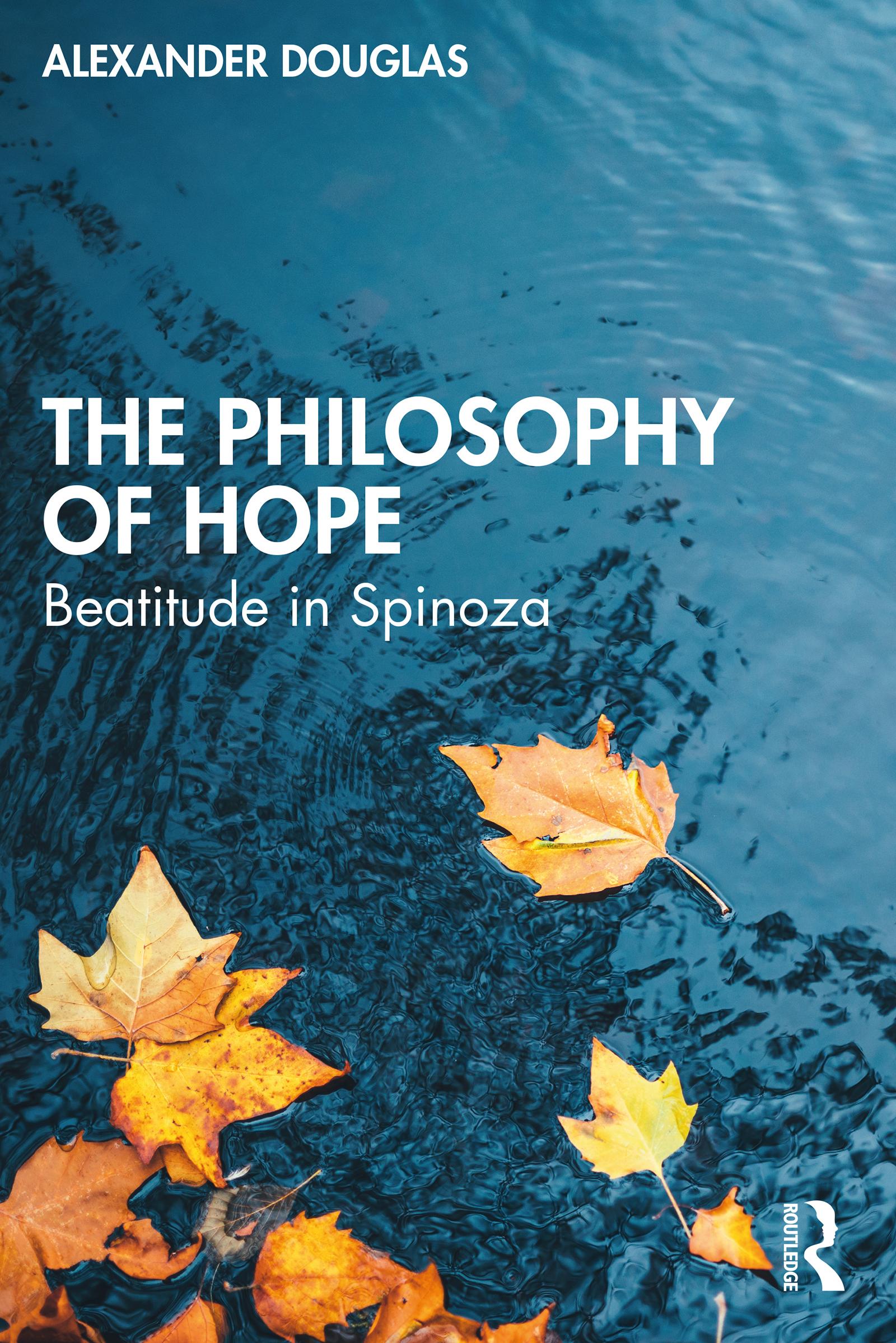
Can philosophy be a source of hope? Today it is common to believe that the answer is no – that providing hope, if it is possible at all, belongs either to the predictive sciences or to religion.
In this exciting and stimulating book, however, Alexander Douglas argues that the philosophy of Spinoza can offer something akin to religious hope. Douglas shows how Spinoza is able, without appealing to belief in any traditional afterlife or supernatural grace, to develop a profound and original theory of how humans can escape from the conditions of death and sin.
Douglas argues that this theory of escape, which Spinoza calls beatitude, is the centrepiece of his entire philosophy, though scholars have often downplayed or ignored it.
One reason for this scholarly neglect might be the difficulty of understanding Spinoza’s theory, which departs from the standard doctrines and methods of Western philosophy. Douglas's interpretation therefore seeks inspiration beyond the Western tradition, drawing especially on the classical Daoist text Zhuangzi and its commentaries. Here, Douglas argues, surprising resonances with Spinoza’s core ideas can be found, leading to a new way of understanding his strange yet compelling theory of beatitude.
Pay easily by card, Klarna, Apple Pay or Google Pay. Not happy? You always have a 14-day money-back guarantee. Read more in our terms. If you have any questions, email us at hello@memmo.org.
Memmo makes studying easier – wherever you are in the world. We bring your course books and smart study tools together in one place: summaries, quizzes, podcasts and flashcards. Plus Ted, your study buddy who answers anything you wonder. Over 50,000 students already study here – built to help you learn faster and stress less.