
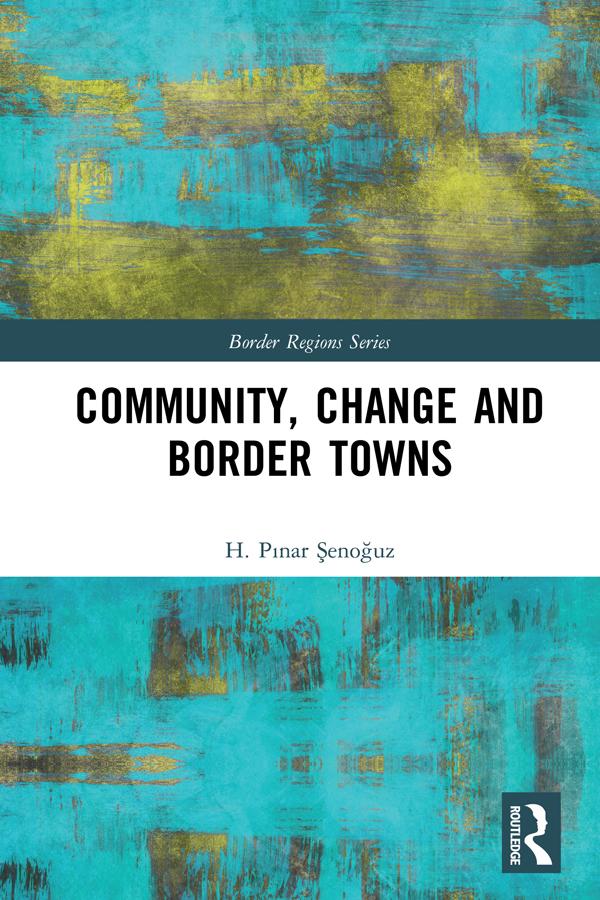
This book provides an interdisciplinary approach to power, inclusion/exclusion and hierarchy in a Turkish border town, with a focus on the impact of nation-state border on social stratification and change.
Through the lens of ethnographic research and oral history, the book explores social mobility among various strata within the context of transition from Ottoman rule to the Republican regime, in order to reveal culturally informed strategies of border dwellers in coming to grips with new border contexts. It is suggested that the border perspective will move the social analysis beyond "methodological territorialism" and provide a theoretical framework that explores social change at the intersection of local, national and transnational processes.
This book will appeal to readers interested in borders and circulations, social structure and power relations in border regions, as well as transnational shadow networks in the Turkish/Middle Eastern context. The book is a valuable resource for students and scholars of border anthropology, political and economic geography, studies of globalization and transnationalism, anthropology of illegality and Turkish and Middle Eastern studies. It will be a useful grounding for humanitarian professionals who are learning about the social and economic landscape of border towns.
Pay easily by card, Klarna, Apple Pay or Google Pay. Not happy? You always have a 14-day money-back guarantee. Read more in our terms. If you have any questions, email us at hello@memmo.org.
Memmo makes studying easier – wherever you are in the world. We bring your course books and smart study tools together in one place: summaries, quizzes, podcasts and flashcards. Plus Ted, your study buddy who answers anything you wonder. Over 50,000 students already study here – built to help you learn faster and stress less.