
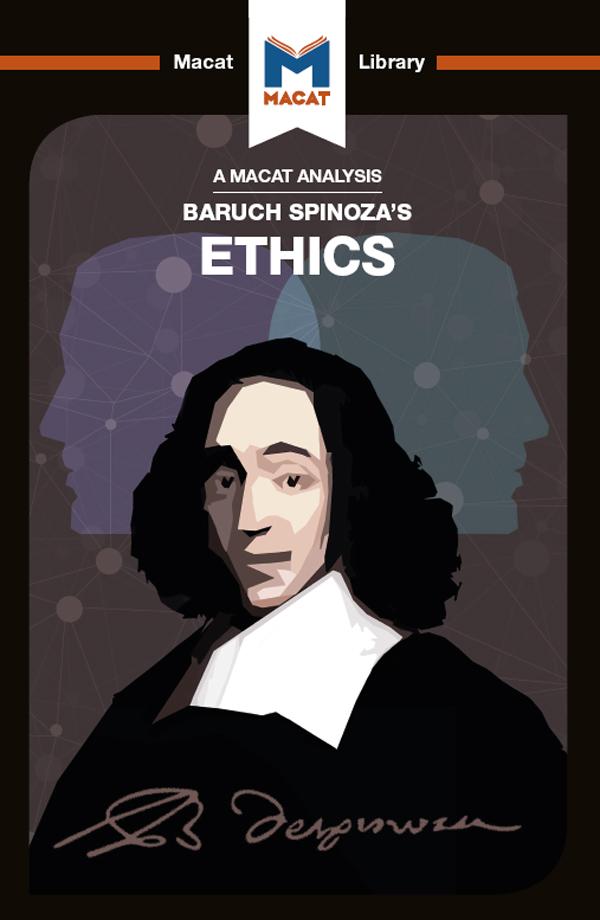
Baruch Spinoza’s Ethics is a dense masterpiece of sustained argumentative reasoning. It earned its place as one of the most important and influential books in Western philosophy by virtue of its uncompromisingly direct arguments about the nature of God, the universe, free will, and human morals.
Though it remains one of the densest and most challenging texts in the entire canon of Western philosophy, Ethics is also famous for Spinoza’s unique approach to ordering and constructing its arguments. As its full title – Ethics, Demonstrated in Geometrical Order – suggests, Spinoza decided to use the rigorous format of mathematical-style propositions to lay out his arguments, just as the Ancient Greek mathematician Euclid had used geometrical propositions to lay out the basic rules of geometry.
In choosing such a systematic method, Spinoza’s masterwork shows the crucial aspects of good reasoning skills being employed at the highest level. The key use of reasoning is the production of an argument that is well-organised, supports its conclusions and proceeds logically towards its end. Just as a mathematician might demonstrate a geometrical proof, Spinoza sought to lay out a comprehensive philosophy for human existence – an attempt that has influenced generations of philosophers since.
Pay easily by card, Klarna, Apple Pay or Google Pay. Not happy? You always have a 14-day money-back guarantee. Read more in our terms. If you have any questions, email us at hello@memmo.org.
Memmo makes studying easier – wherever you are in the world. We bring your course books and smart study tools together in one place: summaries, quizzes, podcasts and flashcards. Plus Ted, your study buddy who answers anything you wonder. Over 50,000 students already study here – built to help you learn faster and stress less.