
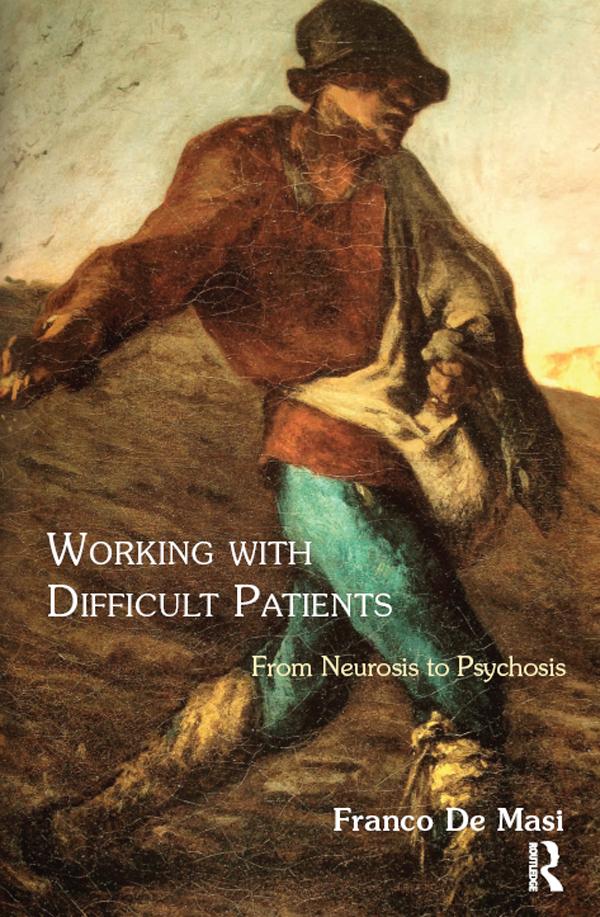
In this book the author examines the series of connections that give rise to the intimate relationship between environment and individual in the construction of emotional suffering, emphasising both the undisputed pathogenic action of environmental stimuli and the active participation of whoever is obliged to suffer the negative situation. The author shows that the way in which one tries to escape suffering is what often seriously jeopardises growth. Working with Difficult Patients points out the intrinsic link between some forms of mental suffering and the distorted responses that the patient has received from his or her original environment. For this reason the author explores the concept of the emotional trauma in particular, since this trauma, which occurs in the primary relationship, often impels the child into relational withdrawal and towards constructing pathological structures that will accompany him or her for the rest of their life. The chapters are ordered according to a scale of increasing treatment difficulty, which is proportional to the potential pathogenicity of the underlying psychopathological structure.
Pay easily by card, Klarna, Apple Pay or Google Pay. Not happy? You always have a 14-day money-back guarantee. Read more in our terms. If you have any questions, email us at hello@memmo.org.
Memmo makes studying easier – wherever you are in the world. We bring your course books and smart study tools together in one place: summaries, quizzes, podcasts and flashcards. Plus Ted, your study buddy who answers anything you wonder. Over 50,000 students already study here – built to help you learn faster and stress less.