
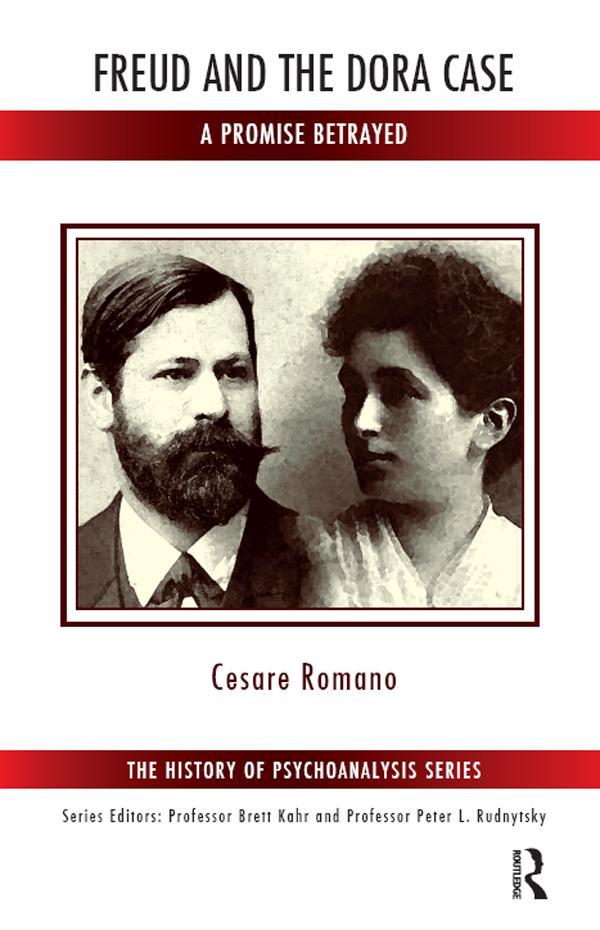
Cesare Romano revisits Dora's clinical case in light of Freud's own seduction theory. His central thesis is that Freud failed to follow through with his initial proposition of confirming his theories on the traumatic aetiology of hysteria. He also suggests a new dating for the duration of Dora's therapy, placing the beginning of the analysis within the context of Freud's concurrent and recent life events. A detailed analysis of Dora's first dream shows that Freud did not go back to Dora's first infantile traumas, but stopped instead at the period of her infantile masturbation. In analysing this dream, Romano's theory begins to take shape around the idea that Dora suffered an early trauma: possibly, a sexual abuse inflicted by her father. Drawing on Ferenczi, the author uses the notion of the 'traumatolytic function of the dream' to show that Dora, through her two dreams, was elaborating her early sexual trauma. Dora's analysis is investigated alongside what was happening in Freud's life at the time of the therapy.
Pay easily by card, Klarna, Apple Pay or Google Pay. Not happy? You always have a 14-day money-back guarantee. Read more in our terms. If you have any questions, email us at hello@memmo.org.
Memmo makes studying easier – wherever you are in the world. We bring your course books and smart study tools together in one place: summaries, quizzes, podcasts and flashcards. Plus Ted, your study buddy who answers anything you wonder. Over 50,000 students already study here – built to help you learn faster and stress less.
You might also like
Buy the book0