
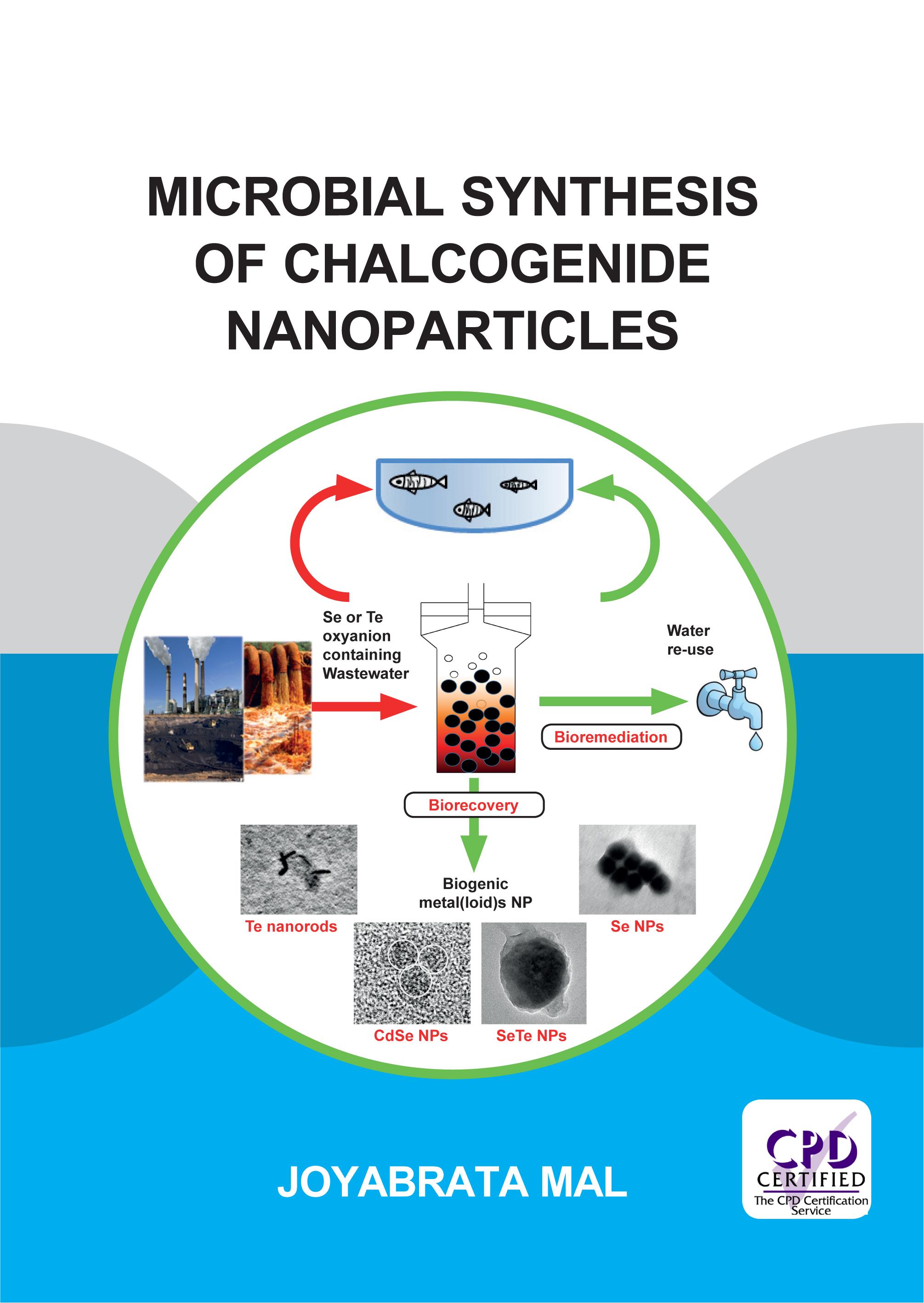
Recent years have seen a growing interest in the application of chalcogenide nanoparticles (NPs), e.g. Se, Te, CdSe and CdTe NPs, in various industrial sectors including energy, petroleum refining and in the field of biology and medicine. Moreover, due to the high toxicity of chalcogen oxyanions, their release into the environment is of great concern. Thus, emphasis was given in this study on the development of a novel microbial synthesis process of chalcogenide NPs by combining biological treatment of Se/Te containing wastewaters with biorecovery in the form of Se NPs, Te NPs and CdSe NPs. Enrichment of Se-oxyanion reducing microorganisms was carried out to simultaneously remove selenite (Se(IV)) and cadmium (Cd(II)) from wastewaters by combining bioremediation of toxic Se-rich wastewater with the biorecovery of Se as CdSe NPs. The results showed compositional changes in the extracellular polymeric substances (EPS) matrix of the anaerobic granular sludge upon exposure to Cd(II) and Se(IV) and identified the roles of EPS fractions in the biogenesis of CdSe NPs. Besides, it was found that the EPS on the surface of the biogenic Se NPs play a major role in lowering the bioavailability and toxicity of biogenic Se(0) compared to chemogenic Se(0) NPs. An upflow anaerobic sludge blanket (UASB) reactor was used for the first time to continuously remove tellurite from wastewater and recover biogenic Te(0).
Pay easily by card, Klarna, Apple Pay or Google Pay. Not happy? You always have a 14-day money-back guarantee. Read more in our terms. If you have any questions, email us at hello@memmo.org.
Memmo makes studying easier – wherever you are in the world. We bring your course books and smart study tools together in one place: summaries, quizzes, podcasts and flashcards. Plus Ted, your study buddy who answers anything you wonder. Over 75,000 students already study here – built to help you learn faster and stress less.