
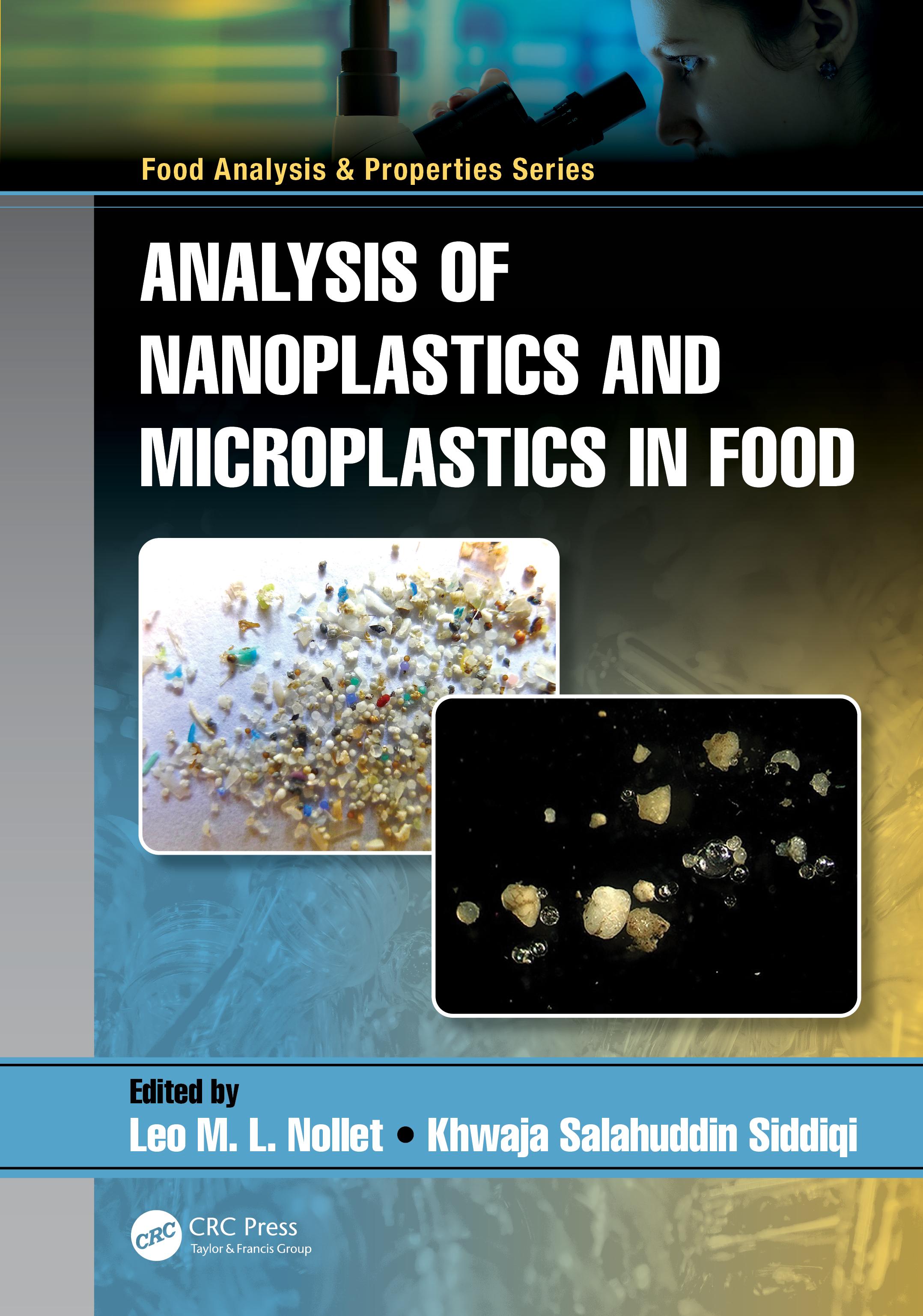
The world’s ever increasing use of plastics has created large areas of floating plastic waste in the oceans—so-called plastic soup. This floating plastic debris is gradually fragmenting into smaller particles which eventually become microplastics, and even nanoplastics.
Analysis of Nanoplastics and Microplastics in Food compiles data on nanoplastics and microplastics in food. To date, there is some data on this, particularly for the marine environment. Fish show high concentrations, but because microplastics are mostly present in the stomach and intestines, they are usually removed and consumers are not exposed. But in crustaceans and bivalve molluscs like oysters and mussels, the digestive tract is consumed, so there is some exposure. Microplastics have also been reported in honey, beer, and table salt.
Key Features:
- Discusses sampling and analysis of nano- and microplastics
- Details the impacts of plastic residues in diverse compartments of the environment
- Includes a discussion of microplastics in freshwater
- Discusses interactions of microplastics and POPs
This book brings to light the reality—and dangers—of microplastics in food. Pollutants like polychlorinated biphenyls (PCBs) and polycyclic aromatic hydrocarbons (PAHs) can accumulate in microplastics. Some studies suggest that, after consuming microplastics in food, these substances may transfer into tissues. So, it is important to estimate the average intake. Since engineered nanoparticles (from different types of nanomaterials) can enter human cells, this reality can pose consequences for human health.
Also available in the Food Analysis and Properties Series:
Mass Spectrometry Imaging in Food Analysis, edited by Leo M. L. Nollet (ISBN: 978-1-138-37069-2)
Proteomics for Food Authentication, edited by Leo M. L. Nollet and Semih Ӧtleş (ISBN: 978-0-367-20505-8)
Food Aroma Evolution: During Food Processing, Cooking, and Aging, edited by
Matteo Bordiga and Leo M. L. Nollet (ISBN: 978-1-138-33824-1)
For a complete list of books in this series, please visit our website at:
www.crcpress.com/Food-Analysis--Properties/book-series/CRCFOODANPRO
Pay easily by card, Klarna, Apple Pay or Google Pay. Not happy? You always have a 14-day money-back guarantee. Read more in our terms. If you have any questions, email us at hello@memmo.org.
Memmo makes studying easier – wherever you are in the world. We bring your course books and smart study tools together in one place: summaries, quizzes, podcasts and flashcards. Plus Ted, your study buddy who answers anything you wonder. Over 50,000 students already study here – built to help you learn faster and stress less.